Your 2016 New Orleans Music Buying Guide – Part Two

So much great music, I couldn’t put it all in one post so here’s part two. (Check out 2016 Part 1)  As you will quickly notice, there is no order to my lists. The only rule is I only list music from New Orleans (and nearby locales) I play on my show.  Like the following:
coreyhenry-15
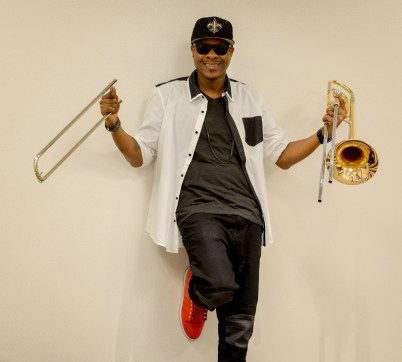
Corey Henry

Corey Henry  I’ve been waiting for Lapeitah, Henry’s debut solo album, ever since I heard “Boe Money” the song that carries his nickname on Galactic’s 2010 Ya Ka May release.  Henry’s powerful trombone and songwriting mix of funk, R&B, soul and hip hop creates the experience I associate with the music I hear at New Orleans nightclubs. It’s no coincidence that Henry and his Treme Funket was the undisputed heir apparent of Kermit Ruffins legendary Thursday spot at Vaughn’s. Lapeitah does an excellent job of putting you in that Ninth Ward club with him.

The New Orleans Suspects Just as you would not want to ever miss a live performance of the New Orleans Suspects, you should not go without possessing their fourth album–and second one with original songs.  Kaleidoscoped delivers eight original numbers that makes me miss New Orleans and the original grooves that these journeymen musicians produce.

Kenny Neal – Bloodline  hooks you from  the opening number “Ain’t Gon Let the Blues Die.” And the rest of the album holds true to the promise. Nominated for best contemporary blues album grammy, this 2016 release is a full nod toward the amazing support this successful blues artist has received from his family members, who back him up on vocals and instruments throughout the album.

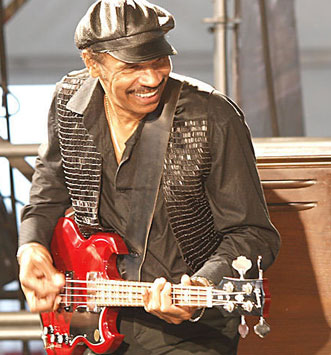
Bobby Rush – Porcupine Meat just scored Rush’s fourth grammy nomination– this time for best traditional blues album. Though he lives in Mississippi by way of Chicago and his birthplace Homer, La., this release is actually the first one that the 83-year-old  blues veteran has recorded in New Orleans and some cool folks stop by to help out, such as Cornell Williams (bass), Kirk Joseph (sousaphone),  Shane Theriot (guitar), and David Torkanowsky (keyboards). Be sure to cue up and listen to “Funk O De Funk.”
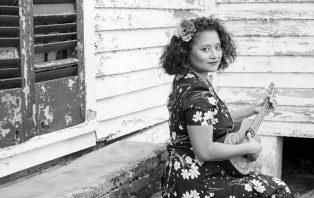
misssophieukeMiss Sophie Lee Nightclub owner Sophie Lee returns to the recording studio with Traverse the UniverseShe has a sweet voice and her band does a nice turn with the handful of standards on the album but its her original songs, particularly her title track, that had me reaching for it to play regularly on my show.

Jeff Chaz – Chaz and his trio are hardworking blues musicians who can be seen regularly playing on Frenchmen Street and the French Quarter. He put out two releases this year: Sounds Like the Blues to Me and The Silence is Killing Me. Both are solid blues albums with numbers like “Fried Chicken Store” and “Savin’ Everything for You.” The latter release offers a holiday tune as well – “Merry Christmas to You.”

Herlin Riley A regular with the Lincoln Center Jazz Orchestra, Riley can be a straight up jazz drummer but there’s no question where his roots lie. As he says: “As a boy growing up in New Orleans, way before you heard that big bass drum in the street parades, you could feel it coming from four or five blocks away, and it would literally beckon you to come on down to the street, check out this music, and participate in it. ” Riley jazzes it up on New Directions  but by the time you get to his hip version of Tutti Ma, you will like the direction he’s headed.

Dr. John –    Recorded in 2014 in the historic Saenger Theater on Canal Street in New Orleans, The Musical Mojo of Dr. John offers two discs of many of New Orleans elite such as Irma Thomas, Cyril and Aaron Neville, Anders Osborne, Big Chief Monk Boudreaux, Zigaboo Modeliste and Dave Malone,  paired with familiar outsiders like Bruce Springsteen, John Fogerty, Chuck Leavell, and Mavis Staples. With the venerable Mac Rebennak (Dr. John) in the middle, how can you not be satisfied wit dat package!

Smoky Greenwell – Another visiting musician who came to the city for a gig and stayed a lifetime, Greenwell has been cranking out the blues in New Orleans for 35 years and his last two releases are arguably his best.  I particularly like it when he puts down his harmonica and reaches for his saxophone on South Louisiana Blues.
close-up-photo-by-ken-swartz-150x150
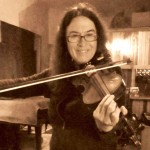
Gina Forsyth

Gina Forsyth – This New Orleans-based musician is wickedly good on fiddle and guitar. Yea, you don’t expect this type of music in New Orleans. So what.  Copper Rooster and Other Tunes and Tales provides a dozen and a half smile inducing old timey numbers that will have you reaching for the play again button.

Mark and the Pentones This blues trio, fronted by guitarist Mark Penton, may be one of the best reasons to stumble down Bourbon Street. Currently anchoring the swing shift at Funky Pirate Blues Club on Fridays and Saturdays, the Pentones released its debut album, Don’t Leave Nothin Behind late last year with some subtle surprises among the 11 tracks. I particularly like “Jodie,” “Too Many Second Lines” and “I B Cing You.”

Keith Stone –  The Prodigal Returns is the aptly named debut album of a native New Orleanian who sowed some wild oats in the 90’s as an area blues guitarist, settled down to be a minister in Kentucky and then came back home after Hurricane Katrina. The album features playful piano, strong guitar licks, and a solid horn arrangements. If you’re a dislocated NOLA homeboy feeling the tug of that big magnet at the end of the Mississippi River, this album will talk to you.

Louisiana Soul Revival Featuring Doug Duffey  Okay, I’ve wandered all the way up to Monroe, La. to grab this one. But all’s fair if the music is great.  From the distinctive bass line opening of “Funky Bidneh” to the inviting saxophone on its last track “Love Into My Life”, this band’s debut release has a full sound that puts you front and center of your own Soul Revival.

Anders OsborneThis prolific musician, songwriter, and producer released two albums this year. Spacedust and Ocean Views  and Flower Box.  My station didn’t get Flower Box  (that happens but don’t let it happen to your album) and I almost missed Spacedust because the music director justifiably placed it in our Folk, Country and Bluegrass shelf. I love his voice and his songs and I don’t care what shelf I have to check, I’ll be regularly reaching for his music to play on my show.
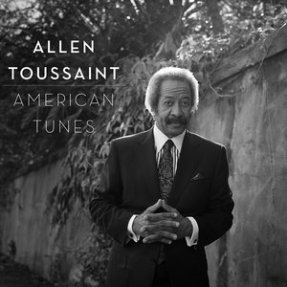
toussaintAllen Toussaint – This one breaks my heart. A year after his death, I still grieve. American Tunes is his last studio album, released this year posthumously. There’s little between you and Toussaint other than his piano, a drummer and bass. He doesn’t even sing except on a Paul Simon cover– though others do. As I listento him run through Big Chief , he’s in the room with me, playing the piano, with his leather sandal and sock clad feet working the pedals.

Now don’t forget that you can catch my show on a live stream at http://www.kaosradio.org every Thursday from 10 a.m. to noon Pacific Coast Time and I serve up podcasts of past shows as well.   Also, you here’s part 1 of this post.
2015 created great opportunities to explore NOLA music

I use this blog as way to prepare for my radio show on the Olympia community radio station, KAOS. Here’s some of the things I learned this year.

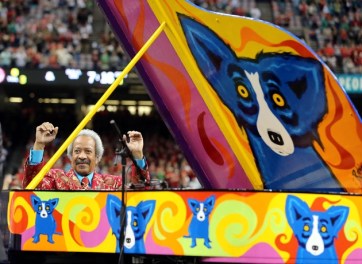
New Orleans "Professor" Allen Toussaint
Allen Toussaint was a featured “professor” in my ongoing series of New Orleans piano players.

Fascinated by the role of the piano in New Orleans, I started a series on New Orleans piano players that now includes James BookerAllen Toussaint, Professor Longhair, Tuts Washington,  and Dr. John. (More to follow).

During the carnival season, I explored the traditions and music of Black Indians of Mardi Gras .  That story led me to write about the importance of African American musicans from New Orleans in creating rock n’ roll.  I followed that up with Fats Domino and the role his performances played in getting black and white audiences to dance to the same beat.

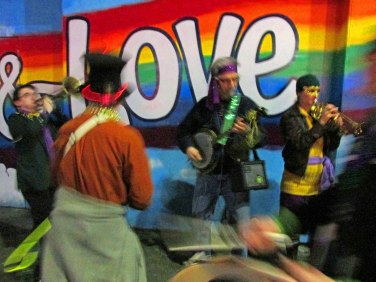
Speaking of Mardi Gras, I provided a personal reminiscence then added a new Mardi Gras experience of bar hopping with the local brass band, Artesian Rumble Arkestra.

All You Need Is Love
Artesian Rumble Arkestra brought a “Mardi Gras” vibe to downtown Olympia as part of bar tour on Fat Tuesday.

My entry on New Orleans women in music resulted in one of my favorite radio shows of the year and helped me grow my knowledge of New Orleans music and the many wonderful women who create it.

I chose my Valentines show to dive into the history of the often recorded “Careless Love.”  Later I looked into the history of another New Orleans standard,  L’il Liza Jane. I also tracked down  songs about “sugar” which, as you’ll find, really are not about sweet granules.  I  also explored the Afro-Cuban connection or what Jelly Roll Morton called the “Spanish Tinge.” (Last year, I wrote an entry on the classic and checkered history of St. James Infirmary.)

One of my more popular entries was about the Galactic tour of 2015 when it played Bellingham, Seattle and Portland. Interestingly, the funk band is playing Seattle and Portland about the same time in February of 2016.

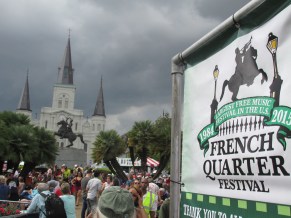
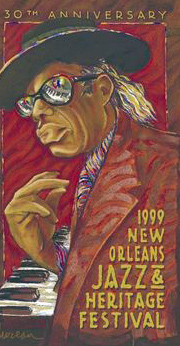
IMG_1454As you might expect, I have several entries on New Orleans institutions, including the New Orleans Jazz and Heritage Festival, Preservation Hall, the jazz funeral,  the Freret Street Festival, French Quarter Festival, and the end of smoking in New Orleans nightclubs.
Drawing on my April trip to New Orleans, I wrote about the magnetic pull of New Orleans to young musicians of all genres. I  also shared my experience of touring the currently closed Dew Drop Inn with the grandson of its founder.

The 10-year anniversary of Hurricane Katrina inspired a couple of entries, including this one that chronicled the activities of some of New Orleans better known musicians. This entry also has links to my two radio shows honoring that anniversary with music and excerpts from Spike Lee’s documentary.

And I finished off the year, as I did last year, with a short catalog of the 2015 New Orleans music releases featured on my show.  Part 1.  Part 2.

I hope you enjoyed the music and the little bit of information I learn and share. I know I do. Subscribe if you’d like to follow what I learn in 2016. Happy New Year.


Professor Longhair “tralla walla” makes us feel fine

This week’s post (and my focus on this week’s radio show) is about the man who sang “we gonna hoola tralla walla malla dalla drink some mellow wine.”

Henry Roeland Byrd, aka Professor Longhair

Henry Roeland Byrd was a tap dancer, card shark, soldier, cook, laborer and general street hustler. He also was one of the greatest New Orleans piano professors of all time – Professor Longhair.

His iconic “Tipitina” inspired the likes of Fats Domino, Allen Toussaint, James Booker, Dr. John and countless others.

Professor Longhair’s style has been described as a rhumba crossed with a blues shuffle.In an interview with Peter Stone Brown not long before he died in 1980, he said:

” I was around a lot of honky-tonk musicians, barrelhouse musicians, blues musicians, and bebop musicians, jazz musicians. I just got a little bit from everybody and used it with what my mother taught me. She played a lot of ragtime music. . . I just mix my ideas up and call it a gumbo. There’s no certain thing at all. It’s just rockin’ rhythm.”

Fess was there at the beginning of the New Orleans Rock and Roll era in New Orleans, cutting his first singles in the J&M Studio (Cosimo Matassa) in 1949.  And in November 1953 with Alvin “Red” Tyler, Lee Allen, Earl Palmer, and Edgar Blanchard backing him up, he recorded “Tipitina” for the first time.

“Girl you hear me calling you. Well you’re three times seven, baby. Knows what you want to do.”

Calibration
Calibration

Born in Bogalusa but raised in New Orleans, Professor Longhair never made the hit parade and never really experienced financial success. By the late 60’s, his career had folded and he was living in poverty. In 1970, Quint Davis and Alison Minor sought him out with the intention of getting him to perform at their fledgling music festival, the New Orleans Jazz and Heritage Festival.

Who they found was a frail, weak man who didn’t seem capable of pounding out his trademark rhythms. But with the help of Davis and Minor, he recovered enough to perform at the second JazzFest in 1971 and demonstrate that, if anything, his playing had gotten better.  His hometown and the world embraced him and his career flourished. Until his death in 1980, he recorded and performed, including at the nightclub created for the purpose of providing him and other aging R&B artists a place to play, named appropriately Tipitina’s.

Join me, won’t you for some Fess and Fess-inspired music this Memorial Day.   Sweeney’s Gumbo YaYa kicks off at 10 a.m. on Monday. Here’s a recording of that show on Mixcloud.

Louisiana delta-inspired music taking on a cry for help

Thanks to Bruce Springsteen’s Born to Run, John Denver’s Rocky Mountain High and hundreds of others, there is little doubt that our environment influences music.

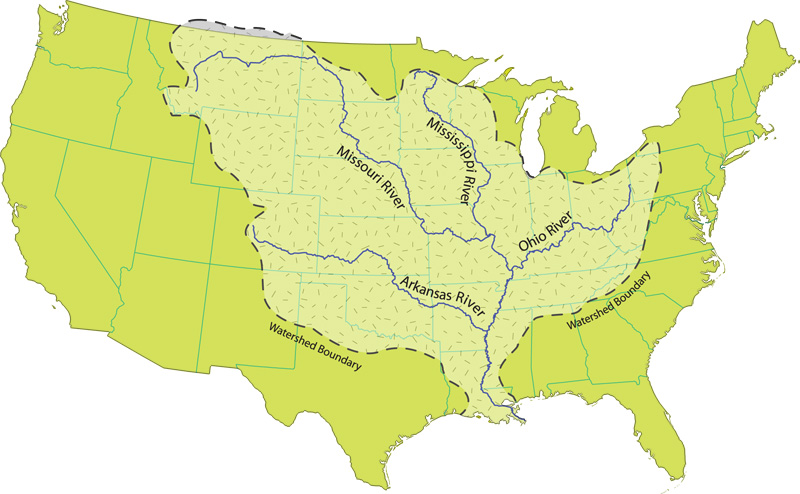
The waters that flow through Louisiana originate in 31 states.

 So it should be no surprise that musicians who reside at the tap end of North America’s largest drainage system write songs about rivers, wetlands, swamps and bayous.

Draining all or part of 31 states, the Mississippi River creates a powerful structure for creatives of all types to tell their stories.

In Louisiana, its the swamp that inpires many to “pole the pirogue down the bayou” (Jambalaya). These musicians may not really have swamp water running through their veins (Fire in the Bayou) but they know how to use the water’s magnetic pull to enliven a song.

Sitting at the soggy end of the 2,300 mile system, Louisiana and its bayou communities (including New Orleans) use the river, and its essential estuaries, as a lush backdrop for setting the mood–from boogie to blue.

In recent years, the music has been paying back in the struggle to restore and revitalize the delta environment. The flow of sediment of the Mississippi is less than half of what it was a century ago due to engineering the river to serve too many purposes. This means essential delta beds are not being replenished. Combine this steady decline in sediment, with the speed of climate change, and the bayou and the life and music it supports becomes more fragile by the day.

Tab Benoit started the Voice of the Wetlands to raise awareness about the importance of revitalizing the river system.

Voice of the Wetlands, started by Louisiana bluesman Tab Benoit, is a non-profit focused on raising awareness about the loss of the wetlands in southern Louisiana.

And as you might expect by an initiative launched by a musician, it uses the music of the Delta to reach the right ears, including performances before Republican and Democratic National conventions and an annual festival in Houma (about 60 miles southwest of New Orleans in bayou country).

The Voice of the Wetlands All-Stars often headlines the festival. Over the years, this recording and live performance ensemble has included Benoit, Dr, John, Cyril Neville, Big Chief Monk Boudreaux, George Porter Jr., Waylon Thibodeaux, Anders Osborn and many others. This year’s festival is in October.

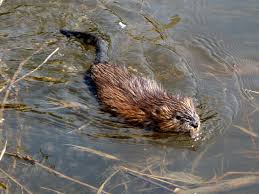
Muskrats, alligators, junebugs, and other critters crawl from the swamp into the music.

I’ve got close to a full two-hour show of songs about the bayou and bayou country so please tune in this Monday on Sweeney’s Gumbo YaYa (or catch it on archive) to hear Muskrat Ramble, Bayou Boogie, Swamp Funk and Junebug Waltz and others.

Also, I’d be honored if you subscribed to this blog. (upper right hand corner of this page.)

Careless Love follows carefree path to our ears

“Oh love, oh careless love, you’ve fly to my head like wine.”

Words of caution during this season of Valentine? Perhaps. But it’s also the opening to another enigmatic traditional song with uncertain origins that has become a New Orleans standard.

Like St. James Infirmary, Careless Love took its form from the 19th Century folk tradition. The song didn’t get locked down until it was recorded in the 1920’s, most notably Bessie Smith’s recording with Louis Armstrong on cornet. Even since then, the song’s lyrics have been malleable, adapted to jazz, blues and even bluegrass.

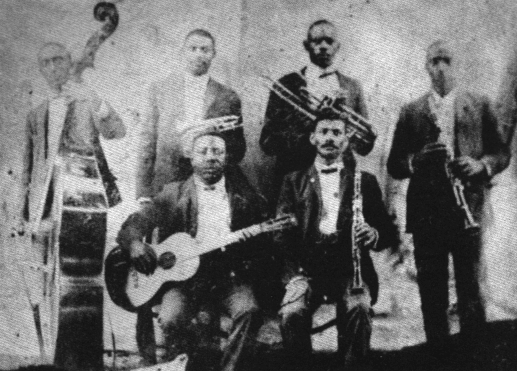
Buddy Bolden, holding the cornet standing in back, was never recorded but he is likely the reason why Careless Love is New Orleans standard today.
Buddy Bolden, holding the cornet standing in back, was never recorded but he is likely the reason why Careless Love is a New Orleans standard today.

The song’s strong association to New Orleans is most likely the result of Buddy Bolden who performed the song regularly at the turn of the 20th Century.  Buddy Bolden and his band performed a more bluesier and improvised form of ragtime and inspired jazz pioneers such as Kid Ory, King Oliver and Bunk Johnson who followed.

While there are no recordings of Bolden and his band, there are literally hundreds of other recorded versions of Careless Love, including those by Pete Seeger, Janis Joplin, Lead Belly, Madeleine Peyroux, Big Joe Turner, Nat King Cole, and Ray Charles.

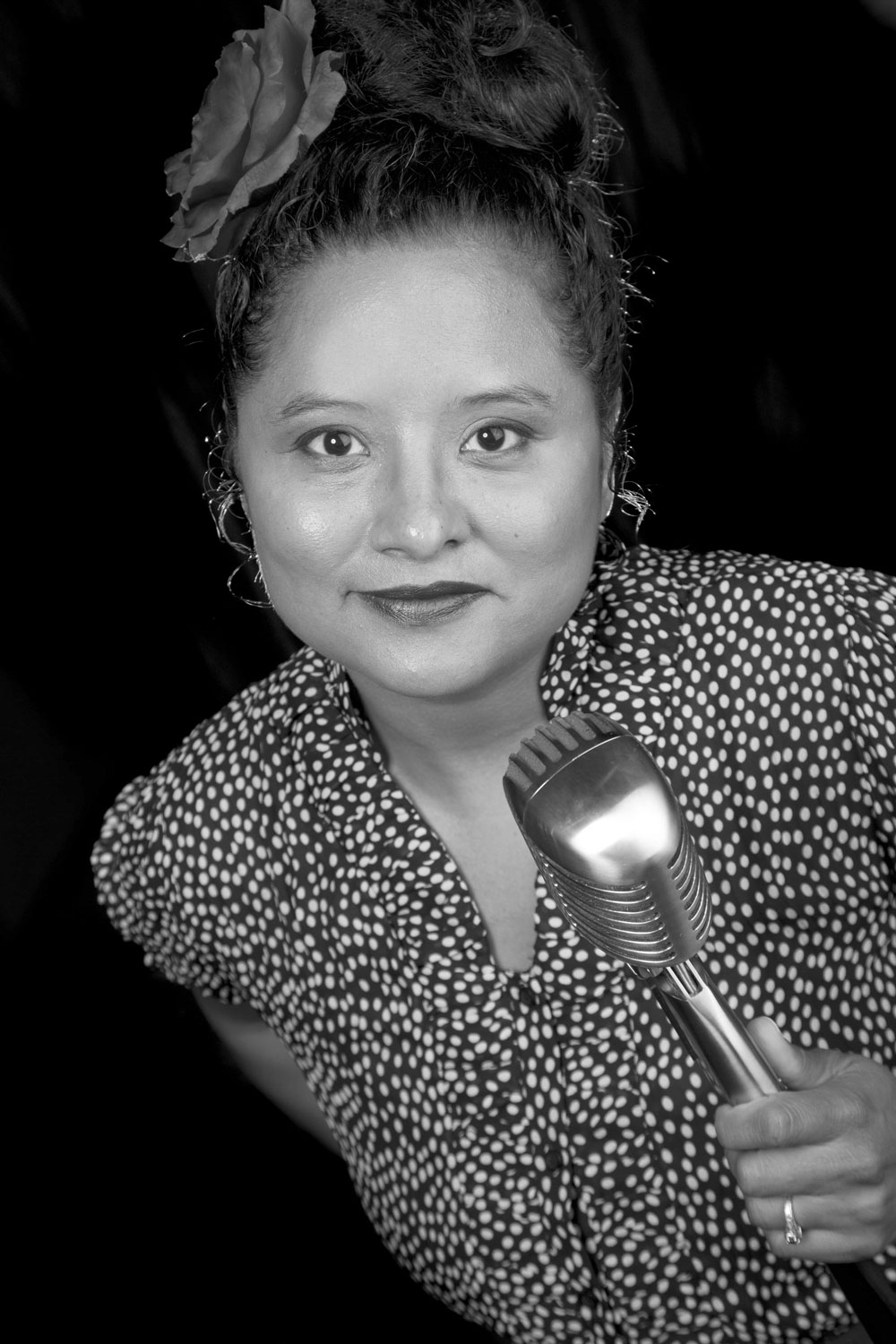
Contemporary New Orleans artists, such Miss Sophie Lee, carry on the New Orleans tradition of performing Careless Love.
Contemporary New Orleans artists, such as Miss Sophie Lee, carry on the New Orleans tradition of performing Careless Love.

As for New Orleans musicians, Careless Love has been recorded by Kid Ory,  Sidney Bechet,  Bunk Johnson,  Dr. John,  Fats Domino, Snooks Eaglin, Champion Jack Dupree and the Preservation Hall Band.

Even today, you’ll hear it played on the streets (Tuba Skinny) and in the nightclubs of New Orleans (Miss Sophie Lee at the Spotted Cat).

And you’ll hear it on Sweeney’s Gumbo YaYa (probably more than once) this Monday.

Happy Valentine’s Day.

James Booker carried the piano tradition forward in his own way

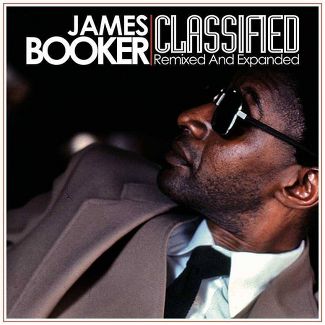
If there is justice in the music world, James Booker would be better known for the genius and artistry of his piano playing.  The fact that his music is still played 30 years after his untimely death in New Orleans offers some hope that justice may ultimately be served.

Classically trained but also taught by Tuts Washington and influenced by Professor Longhair, Booker came of age in the heyday of New Orleans R&B era when Fats Domino, Dave Bartholomew and Huey Smith were rocking the jukebox with singles recorded at Cosimo Matassa’s studio.

Booker got in on the act as a studio musician as well as fronting his own songs with “Doin’ the Hambone” and “Thinkin’ About my Baby.”  His song “Gonzo” charted nationally and his playing style, sometimes described as a nest of spiders on the keyboards, was admired by many, including music lovers in Europe where he spent some time and built a following.

But while Booker was a versatile musician, capable of playing a wide range of styles, including working with Freddie King, Aretha Franklin, Ringo Starr, the Doobie Brothers, Maria Muldaur, and Jerry Garcia, his star never quite rose to the level of his talent and genius. (Check out this sound recording of a rehearsal session with Booker and Garcia.)

It’s a sad but familiar story; he had his issues. Some, in retrospect, have pondered whether he suffered from a mental malady that in our current day might have been more successfully treated by means other than with heroin and alcohol.

He died way too young in the emergency room of Charity Hospital in 1983 at the age of 43.

Booker was able to bring elements of many musical genres together and his interpretations of familiar songs are unique and probably difficult to duplicate given his skill.

Booker’s “absolutely unique style is a polyglot mix of gospel, boogie-woogie, blues, R&B and jazz, all executed with a thrilling virtuosity,” wrote Tom McDermott who is himself an amazing pianist from New Orleans.

When I listen to Booker’s music, I hear shades of the “Spanish Tinge” made famous by Jelly Roll Morton. His hyperactive right hand razmatazz and left hand syncopation are reminiscent of Professor Longhair. And yet, his style builds on those masters rather than replicates.  And he passed the tradition on by tutoring Dr. John and Harry Connick Jr.

As always, its best if you hear for yourself. I’ll be playing from a few of his solo recordings on Monday but if you have time, consider checking out his last recorded performance at the Maple Leaf. He had a regular gig at the Uptown New Orleans bar, often playing to sparse and disinterested audiences. The Booker you see in this video contrasts sharply with the more flamboyant Booker of earlier years. His teeth are fixed, he’s wearing a suit and not wearing his trademark patch with a star on it over his left eye. Here’s a video of that period in his life.

Helping to bring the world’s eye to Booker’s talent is a documentary called the Bayou Marahaja by New Orleans filmmaker Lily Keber.

“Bayou Maharajah explores the life and music of New Orleans piano legend James Booker, the man Dr. John described as “the best black, gay, one-eyed junkie piano genius New Orleans has ever produced.” A brilliant pianist, his eccentricities and showmanship belied a life of struggle, prejudice, and isolation. Illustrated with never-before-seen concert footage, rare personal photos and exclusive interviews, the film paints a portrait of this overlooked genius.”

I have none seen this film; no distributor yet. I’m hoping it can be shown at the Olympia Film Society’s Capitol Theater. But you can check out the trailer and join me in honoring and enjoying his talent. I’ll be spinning some Booker tunes along with my usual mix of New Orleans music this Monday on Sweeney’s Gumbo YaYa.

HBO’s Treme is an excellent introduction to New Orleans music

Occasionally, when someone learns about my New Orleans music show, they’ll ask me: “Have you seen. . .

And I know where they are going.

Yes! I have watched all 36 episodes of HBO’s Treme — some of them more than once including the commentary and music notes. The program is that good at portraying New Orleans.

The show ran from 2010 to 2013 and chronicled the lives of New Orleans residents upon their return to the city after Hurricane Katrina. And the show’s creators, producers and writers nailed it. The show is well regarded in New Orleans as having captured the unique and diverse culture and character of the city–both the good and the not so good.

Treme focused on the lives of musicians. Wendell Pierce, with cap, plays a trombonist struggling to make ends meet. He's marching with Rebirth Brass Band in this show and his trombone was played by Rebirth's Stafford Agee.
Treme focused on the lives of musicians. Wendell Pierce, with cap, plays a trombonist struggling to make ends meet. He’s marching with Rebirth Brass Band in this scene from the show and his trombone was played by Rebirth’s Stafford Agee.

Unfortunately, the show wasn’t sufficiently well regarded beyond the city (at least at the time) so no new episodes are being made. But if you’re reading this blog, you probably already understand the disconnect between being good and being popular. A theme that Treme also explores.

There’s lots of reasons to love this show, the main one for me is the music. There’s lot of New Orleans music in it. Literally hundreds of New Orleans-based musicians participated in its filming. Some of them even acted.

Yesterday, I pulled up the full cast listing of the show on IMDB and did a search for “self” and “selves” as in people and bands portraying themselves. I found over 250 listings. While some of the people playing themselves were politicians, chefs, writers, community activists and Mardi Gras Indian Chiefs, most of them were musicians.

The show featured literally hundreds of musicians. Some well known such as Dr. John (Mac Rebennak)
The show featured literally hundreds of musicians. Some well known such as Dr. John.

Some are well known like Dr. John, Fats Domino, Trombone Shorty and Irma Thomas. Others are not but should be such as Aurora Nealand, John Boutte, Tom McDermott, and Kermit Ruffins.

Several of the fictional characters are musicians attempting to make a living. One is a journeyman trombonists, played by Wendell Pierce, struggling to find gigs so he can pay rent and child support. Two others busk on the street and are learning the New Orleans style of music.

Throughout the series, the viewer is treated to music venues such as Tipitina’s, House of Blues, Blue Nile, Spotted Cat, and Snug Harbor and the music you hear on the show is recorded in situ. What you see is truly what you hear

In many cases, the musicians simply perform, either in the background or as a part of the plot. In other cases though, they deliver lines from a script or, in the case of Dr. John, ad lib. It’s a wonderful blend of reality and fiction.

A bass player with Jon Cleary's group, The Absolute Monster Gentlemen, Williams did quite a bit of acting and bass playing on the show.
A bass player with Jon Cleary’s group, The Absolute Monster Gentlemen, Williams did quite a bit of acting and bass playing on the show.

Cornell Williams, a bass player who in real life performs with Jon Cleary, portrays a member of a band formed by Wendell Pierce’s character and helps another character recover from drug addiction.

A more bizarre blending of real life and fiction is the character Davis McAlary, who often supplies the show’s comic relief and social commentary. McAlary is a musician and an on again, off again deejay at WWOZ, which is a real  community radio station in New Orleans. His character was inspired by Davis Rogan who has released several albums of original songs and was a deejay for WWOZ. To really twist your brain, you will see in various Treme scenes the real Davis performing on piano backing up the fictional Davis. (Another character is patterned after Donald Harrison Jr. who is also seen regularly in the show.)

Clarence "Frogman" Henry in a scene with fictional character Davis McAlary, inspired by real musician Davis Rogan.
Clarence “Frogman” Henry in a scene with fictional character Davis McAlary, inspired by real musician Davis Rogan.

If you have a propensity to love New Orleans, its food, culture and music, watching Treme will deepen that love. If you know little about New Orleans but are interested, the show is a great place to start your education.  Well, subscribing to this blog (upper right hand corner) and listening to my show won’t hurt either.

2014 New Orleans Music Buyer’s Guide – Part 2

Last week, I did a summary of 2014 New Orleans releases. The list got so long, I needed a second round. I’m not organized enough to put them in any order so there’s no shame, as will be proven when you read below, in being included in this second installment.

By the way, this is music I play on Sweeney’s GumboYaYa. (And I’d be thankful if you subscribed – Upper Right Corner )

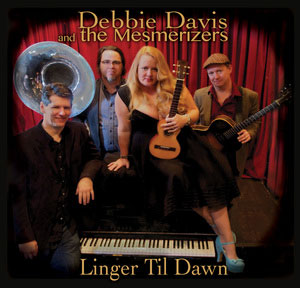
You'll want to Linger Til Dawn with Debbie Davis' latest CD
You’ll want to Linger Til Dawn with Debbie Davis’ latest CD

Debbie Davis and the MesmerizersLinger Til Dawn showcases a voice that ranges from Broadway to Bawdy.. Her second CD offers a satisfying selection of songs backed up by accomplished musicians- Joshua Paxton on piano, Alex McMurray on guitar and Bonerama member Matt Perrine on sousaphone. Their interpretation of The Kink’s “Sunny Afternoon” is inspired.

Tommy Malone – His third solo album since the Subdudes, Poor Boy, delivers 11 more smooth tunes with Malone’s unique blend of blues and folk. A talented guitarist and songwriter (he does only one cover), Malone has a voice that’s easy to make friends with.

Nicholas Payton  – Numbers is what you make of it. You could call it chill music, but it’s far too engaging to allow your mind wander. I’ll get out of the way and repeat Payton’s description: “It’s a bed of sex wrapped in 500-thread count sonic sheets.”  Get that?

Fo ‘Reel Heavy Water bounced between our blues and soul shelf this year on the strength of Johnny Neel’s funky organ and C.P. Love’s vocals. The CD really takes off for me when bandleader Mark Domizio cuts loose with his guitar, particularly on Shake N Bake.

Dr. John – The Night Tripper left nothing to chance with this tribute to the immortal one, Ske-Dat-De-Dat: The Spirit of Satch Terence Blanchard, James Andrews, Nicholas Payton (see above), and Wendell Brunious supply the chops with some welcome guest vocalists contributing a diverse array of interpretations of Louis Armstrong standards. You might not like every track but you won’t ask for your money back either.

The Roamin’ Jasmine – Another talented swing jazz band forged from the busking scene of New Orleans.  In its self-titled album, this merry band of six musicians at times conjure up an exotic polyphonic sound, while staying true to the NOLA tradition of strong solos and swaggering vocals.

Davis Rogan puts its all out there in his latest. His love, frustrations and of course his view of the world.

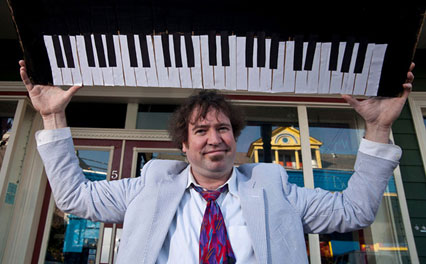
Davis Rogan –  Davis Ex Machina is distinctly a New Orleans album–and not just because its performed with journeyman NOLA musicians. Mr. Rogan is no longer a school teacher struggling from performing at night and no longer the inspiration for a character of an HBO show.  But he does continue to write songs that take you deeply into his hometown, while still connecting to timely broader messages. Case in point, “Big Treezy” appears to be a rant on the dilution of  the”New Orleans” he loves yet ends as an allegory for immigration. Or maybe that’s just me reading too much between the lines. You tell me.

The Soul Rebels – No new CD this year BUT this kick-ass funk, R&B, hip-hop brass band has been offering a weekly track online for free throughout the fall, including three recorded this year–a cover of Michael Jackson’s “Off the Wall” (Week 5) , a mash up of its “Nothin But A Party”and Outkast’s “Spottieottiedopaliscious” (Week 6), and a never played again arrangement of Talib Kweli’s “I Try” (Week 7). Another reason not to want winter to begin.

Gal Holiday & The Honky Tonk Revue – Gal Holiday, the alter ego of singer Vanessa Niemann, fronts a genuine country dance hall band — part honky tonk, part redneck soul and solidly swing. They’re on my list to see live next time I’m in New Orleans, meanwhile I’ll keep enjoying Last to Leave, the band’s third CD.

Kelcy Mae – What do you call an album that wraps pop, country, and blues with solid arrangements, soulful lyrics and strong vocals? Before I started my New Orleans show, I was playing Half Light frequently on my open format morning show, without knowing she was a Louisiana native. crafting music from her home in New Orleans with the able assistance of Alex McMurray and Sam Cordts.

Benny Tuner delivers a solid blues and soul collection with his latest release, Journey.

Benny Turner  –  Benny’s the real thing. He’s played guitar with his brother’s band, Freddy King and he was the band leader for Marva Wright for 20 years. With his third release, Journey, Turner plays and sings quintessential blues guaranteed to satisfy the music fan on your list.

Tuba Skinny – Owl Call Blues is a testament to this street band’s ability to find archival gems and make them fresh while also producing original music that sounds old-timey.  They’ve toured the world but you can still catch them busking in the Quarter.

Gregory GoodSavage Lands offers original and traditional songs in a Woody Guthrie wanderlust style that places you at the campfire with Good singing and playing guitar as if he were still a roustabout in his home state North Dakota. Now in New Orleans, his new album joins Milo Records’ growing stable of Americana and traditional folk recordings.

The Best of Eric Lindell” will only be available digitally starting December 16. “Live in Space.”

Even with this sequel, I’m far from covering everyone. For a more complete list, here’s Offbeat Magazine listing of 2014 releases by Louisiana artists.

I’ll be playing from this list and last week’s list on the next Sweeney’s Gumbo YaYa, Monday, December 15. Also, I’d appreciate if you subscribed to this blog (see upper right column).

Morgus the Magnificent Inspires Friends of Music

Like most communities, New Orleans loves Halloween. Voodoo Music Fest, for instance, is always timed for around October 31. But this story is about Morgus the Magnificent and the music he inspired.

morgus

If you ever watched horror movies on television during the last century, chances are you’re familiar with the occupation of “Horror Host” — the sometimes creepy, usually campy personality who introduced the late Friday or Saturday night movie with tongue firmly in cheek.

Pioneered by Vampira, who dressed like Morticia Addams and hosted KABC-TV late night movies in Los Angeles in the 50’s, Shock Hosts proliferated across the country after Screen Gems saw a nifty way to cash in on its aging library of horror films. Classic monster movies like Frankenstein, Dracula and The Mummy were packaged with lesser movies and sent to local stations with the suggestion they air the movies using a costumed host.

One of the stations that took up the idea was WWL-TV in New Orleans and the city hasn’t been the same since.

On a Saturday night in January 1959, Morgus the Magnificent, along with his sidekick Chopsley and a talking skull named Eric, hit the local airwaves. He immediately captured the attention of TV viewers and, six decades later, continues to be a favorite in the hearts, minds and T-shirts of NOLA residents.

three ghouls

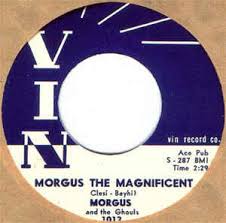
Within four months of his show’s premiere, Morgus would be memorialized in song. Frankie Ford, Jerry Byrne and Mac Rebennak (the future Dr. John) recorded Morgus and the Three Ghouls at Cosimo Matassa’s studio on Governor Nicholls Street. While never a hit, it plays locally on occasion and showed up on Dr. John’s anthology Mos’ Scocious. In 1962, Morgus became the first Horror Host to have his own movie, The Wacky World of Dr. Morgus.

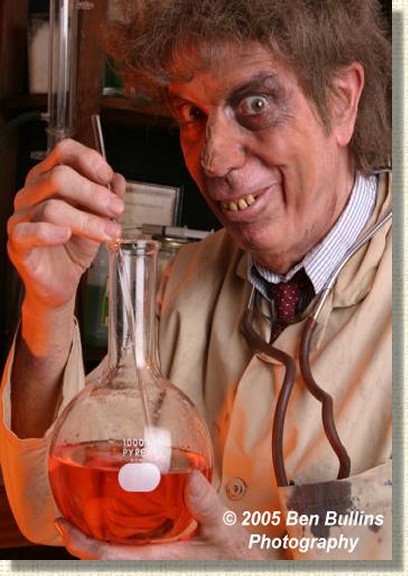
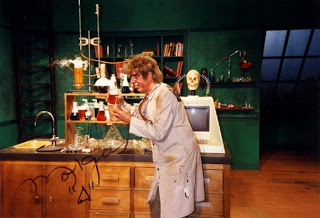
Morgus wasn’t your typical monster or vampire show host. He was a benevolent, though somewhat high strung, mad scientist working out of his laboratory above the Old City Ice House in the French Quarter. Filled with superhuman self confidence in his genius, he would devise ill-conceived schemes and experiments that usually had good intentions but would fail miserably.

Morgus in his laboratory over the Old City Ice House in the French Quarter.

I recollect one show I watched as kid in the 60’s where he created his own weight reduction clinic and during the commercial breaks he demonstrated weight-loss technologies straight out of a Vincent Price movie, including a swinging pendulum (lose weight or else). Needless to say, by the end of the show his clients had lost more than pounds.

Morgus was the creation of Sid Noel Rideau, a native New Orleanian with a wacky imagination. He did a brief stint of Morgus in Detroit where he apparently recorded a surf rock tune called Werewolf under the name of Morgus and the Darringers. Mr. Rideau died August 2020 and his life was celebrated on my show later that month.

But my favorite song representation of him was done by the band Galactic on their 2010 release Ya-Ka-May. The CD’s first track, Friends of Science, samples a typical opening of one of Morgus’ shows. “Good evening my dear students, and of course friends of science and those of the higher order.” You’ll find over a dozen New Orleans artists credited in the CD’s liner notes,  including Allen Toussaint, Irma Thomas, Big Freedia and Trombone Shorty. But there’s no mention of Morgus or Rideau.

Apparently, Galactic had a hard time getting permission from Rideau but finally did with the condition that it would be uncredited.  In promoting the album to Offbeat magazine, Galactic’s bass player Robert Mercurio pondered “how many people are going to get that one. I think maybe you’d have to be from New Orleans to really get that voice.”

Not necessarily. Not if you catch the distinctive voice of Morgus when he’s played on Sweeney’s Gumbo YaYa, this Monday (show now airs on Thursdays), starting at 10 a.m. Also, if you’ve read this far, perhaps you would like to subscribe with the link in the right column.

Postscript: Since this post, this documentary was posted online, focusing on the original run of Morgus.