Hurricane Katrina scattered New Orleans music across the U.S.

An upside to Hurricane Katrina and the subsequent flood was the infusion of New Orleans culture throughout our country.  With the city almost completely evacuated, its people, music, cooking, way of talk and style scattered across the U.S. like seeds from a dandelion blowball.

Texas received the largest number of evacuees. Austin, which like New Orleans is a regional music mecca, swelled from the addition of Cyril Neville, the Iguanas, the Radiators and other musicians — some who came to call themselves “Texiles” while playing music and waiting to return to their hometown. The resultant mix was described by Cyril Neville as having the “gumbo spill into the chili.”

Here’s more on how some of New Orleans finest musicians fared:

  • Fats Domino, the city’s greatest rocker, is a lifelong resident of the Lower Ninth
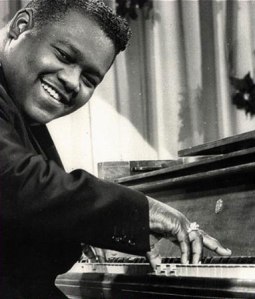
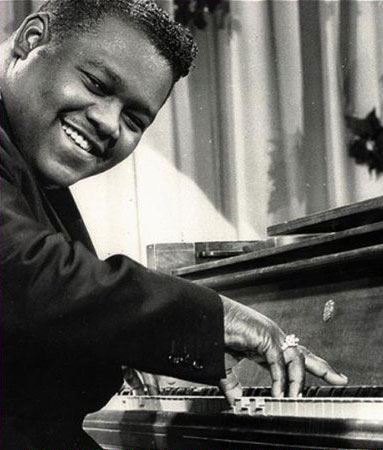
    Fats Domino was not only a major force in Rock n' Roll, he help inspire sk.
    Fats Domino and his family were rescued by Coast Guard from his lower Ninth Ward home.

    Ward. He stayed in his home through the hurricane and was rescued by a Coast Guard helicopter. But he lost all his gold records and memorabilia.

  • Irma Thomas – The Soul Queen of New Orleans weathered the storm and the aftermath in Austin Texas. She rebuilt her East New Orleans home and she won a grammy for her post Katrina recorded album.
  • Dave BartholomewThe home and studio of the man behind many of New Orleans R&B hits of the 1950’s suffered considerable flood damage but he and his family (His son Don B. is a successful hip-hop producer) have bounced back with now three generations of Bartholomew’s making music.
  • The Radiators – Once described as New Orleans’ longest running and most successful rock band are no longer an act officially–though you can occasionally catch them on special events and Jazzfest. Hurricane Katrina landed on guitarist Dave Malone’s birthday. He and his wife struggled to rebuild their home and ended up living outside of New Orleans.
  • Al Johnson – The man who made it possible to be  “Carnival Time” any time of the year, lost his  long-time house on Tennessee Street in the Lower Ninth Ward  He now lives in the Musicians Village  where he penned Lower Ninth Ward Blues
  • The Iguanas – The members of this latin-tinged roots rock band were on tour at the
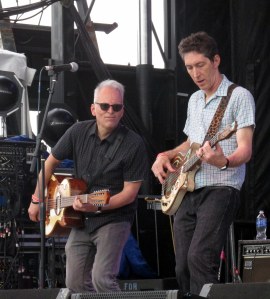
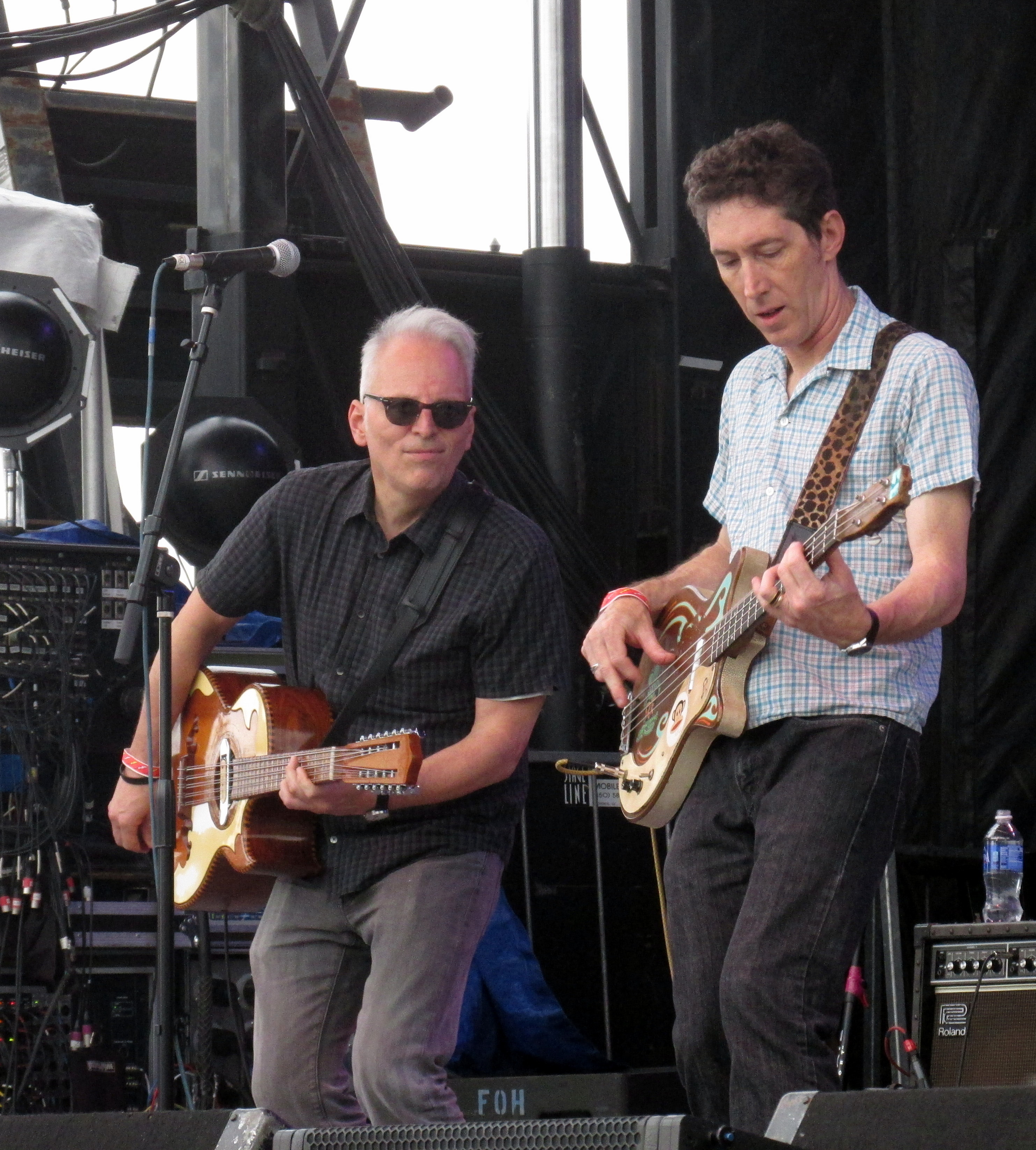
    The Iguanas made a temporary home in Austin while waiting to return to New Orleans. Joe Cabral (left) and Rene' Coman performing at French Quarter Festival this year.
    The Iguanas made a temporary home in Austin while waiting to return to New Orleans. Joe Cabral (left) and Rene’ Coman performing at French Quarter Festival this year.

    time and separated to find evacuated family members. They regathered in Austin and became part of the flexible ensemble of New Orleans musicians known as Texiles. The band has had three CD releases since Katrina.

  • The Hot 8 Brass Band – This innovative group could be called the Adversity Brass Band.  Before Katrina, three of its band members had died — two from shootings.  After Katrina, a fourth member was shot to death while driving in his car with his family. Another member lost the use of his legs in an accident. The band scattered across the country after Katrina and could easily have disbanded permanently. But it regrouped, recorded a grammy-nominated album and still perform today.
  • Dr. Michael G. White – The University professor and clarinetist lost his home in Gentilly, including many valuable jazz documents. But he’s back in town and working as hard as ever.
  • Henry Butler – Fortunately the talented piano virtuoso was convinced to evacuate his Gentilly home, which was devastated by flood waters. Blind since birth, he can’t tell you what the damage looked like but he can describe the feel of his piano keys as they fell apart in his hands. Last year, he and Steve Bernstein released “Viper Drag” to rave reviews and he regularly performs. 
  • Kermit Ruffins – “What good is a million dollars if you’re not in New Orleans.” The widely recognized ambassador to New Orleans evacuated to Houston with a large extended family and pets. He returned to New Orleans after the storm and continued his routine up until last year. Ironically, his wife got a job in Houston and he now splits his time between New Orleans and Houston.
  • Donald Harrison Jr.- This lifelong New Orleans resident, Big Chief and heralded jazz saxophonist has a fear of hurricanes borne from his youthful experience escaping from Hurricane Betsy’s flood. But he stuck it out in the city cause his mother-in-law wouldn’t leave. They slept on the ballroom floor of the Hyatt Regency during the storm and aftermath, escaping to Baton Route four days later. 
  • John Boutte' nervously watched events unfold from Brazil, finally talking one of his sisters and mother to evacuate before Katrina hit.
    John Boutte’ nervously watched events unfold from Brazil, finally talking one of his sisters and mother to evacuate before Katrina hit.

    Shamar Allen – This young trumpet player’s home was right next to a levee that broke. He now owns a home in the Musician’s Village. He contributed some key songs to the musical Nine Lives that focuses on New Orleanians who survived Hurricane Betsy and Katrina.

  • John Boutte was in Brazil at the time and watched almost helplessly the hurricane reports from afar. Fortunately, he finally convinced one of his sisters and mother to evacuate but his other two sisters were stranded on an interstate highway bridge for five days.
  • Terence Blanchard – Much of this jazz trumpeter’s story was told in the Spike Lee movie “When the Levees Broke.” In the documentary, you can see him and his mother enter her flood-wrecked near Lake Ponchatrain. Blanchard wrote the score for the documentary and won a grammy for subsequent album he released.
Last week and this week, I’m honoring the survivors of Hurricane Katrina who dealt with intense horror, long hot days, and many months and in some cases years of uncertainty about their future. And yet, they returned to New Orleans, their home and rebuilt.

Here’s this week’s show:
Last week’s Katrina show here 

Toussaint infused New Orleans sound into pop music

New Orleans
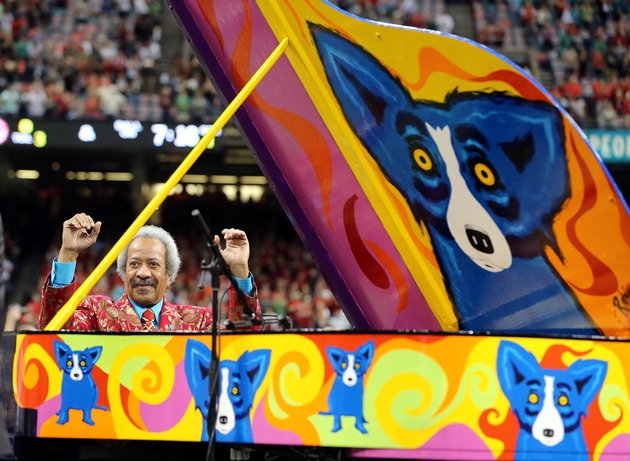
Allen Toussaint plays the National Anthem at the Superdome. Credit: Chuck Cook-USA TODAY Sports

The French Quarter Festival, which showcases local music, could not have scored a better opening headliner this year than with the hometown artist whose creativity has nurtured the New Orleans sound for over a half century. (Listen to the show that complements this post.)

Allen Toussaint was a teenager when he first sat in on Earl King’s band and regularly scored gigs at the legendary Dew Drop Inn.

It wasn’t long before he found his way to the center of the known Rock n’ Roll universe at the time, Cosimo Matassa’s studio, where he laid down piano tracks on recordings by Fats Domino, Huey “Piano” Smith, and Aaron Neville. But it was when he joined Minit Records that his creativity became apparent to the world. Using his parent’s living room as rehearsal space and testing ground for new material, he assembled a parade of hit singles by Jessie Hill, Irma Thomas, Lee Dorsey and this blog’s patron saint, Ernie K-Doe.

Ernie K-Doe best recordings were aided by the songwriting, arranging and producing of Allen Toussaint.

As a keyboard savant, Toussaint could accurately reproduce and synthesize the city’s revered legacy of piano professors, especially the style of Professor Longhair. But as a songwriter and arranger, he was able to weave the full panoply of New Orleans rhythms, vocal traditions and spirit into a clean appealing style for the pop market. In fact, he, along with K-Doe, were responsible for the sole number 1 pop chart hit recorded in New Orleans,  “Mother-in-Law.” (A song written before Toussaint was married and had one.)

Later, he started his own record labels providing a platform for local and national musicians to access the New Orleans sound. With The Meters as his studio house band, Toussaint was a key force behind the New Orleans funk sound that developed in the 70’s. A prolific songwriter, his music has been performed by The Rolling Stones (“Ruler of My Heart”), The Who (“Fortune Teller”), Bonnie Raitt (“What Do You Want the Boy To Do”), Devo (“Working in the Coal Mine”),  Al Hirt (“Java”), The Doors (“Get Out of My Life Woman”),  Jerry Garcia (“I’ll Take a Melody”), Glen Campbell (“Southern Nights”), Robert Palmer (“Sneaky Sally through the Alley”), The Pointer Sisters (“Yes, We Can Can”) and many more.

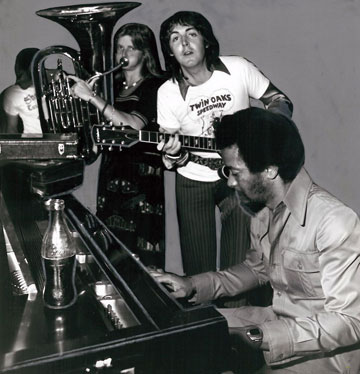
Linda and Paul McCartney performing with Allen Toussaint in his New Orleans studio in 1975.

In 1973, Toussaint had a big hand in producing and performing on Dr. John’s album “In The Right Place.” Two years later, Linda and Paul McCartney moved their entourage to New Orleans to collaborate with Toussaint in his New Orleans studio on their album “Venus and Mars.”

He was inducted into the Rock and Roll Hall of Fame in 1998, the Louisiana Music Hall of Fame in 2009, and the Blues Hall of Fame in 2011. If there’s any question of whether being a senior statesman of New Orleans music has diminished his chops, you need only look as far as his grammy-nominated, post-Katrina collaboration with Elvis Costello, “The River in Reverse,” for evidence that at 77, he still has it.

In addition to being a producer, bandleader, arranger and songwriter, Toussaint is an accomplished pianist and stands with the great New Orleans piano “professors.” Toussaint will take the stage at the French Quarter Festival on April 9 at 3:45 p.m. but you will be able to catch his music on my next show this Monday. (Here’s the recorded show)

Holiday videos set the festive mood

This is the first “festive” season for Sweeney’s Gumbo YaYa so our collection of holiday music from New Orleans that I can play on the show is a bit limited. But the Internet is a vast resource of holiday cheer. So for this post, I’m sharing some of my favorite New Orleans holiday videos.

I can’t think of a better way to start then the dulcet tone of Aaron Neville doing “The Christmas Song.” 

Luke Winslow King, who released a new CD in 2014, sings in a video posted on the Times Picayune site, “Chanukah, Oh Chanukah” with his wife, Ester Rose King. 

Okay, time to crank it up, here’s Bonerama doing “Merry Christmas Baby.” 

What do you want from Santa? If you’re Kermit, you’d like your hometown football team, despite their 6-8 record, in the Superbowl in a “Saints Christmas.” 

A quarter century ago, Benny Grunch and the Bunch did the “12 Yats of Christmas,” a humorous reference to a unique New Jersey-style accent in New Orleans made famous by the novel Confederacy of Dunces (also see my take on New Orleans speak). Some of the New Orleans locales are no longer, but the visuals and song are still very funny. 

Regardless of the season, its not New Orleans unless you can do a little buck jumping in a second line. Take it away TBC Brass Band: 

Paul Sanchez captures a snoutful of holiday spirit with “I Got Drunk this Christmas.” https://www.youtube.com/watch?v=v6yoxvCtgz0

I love the way New Orleans music can swing and soothe at the same time. Here’s Funky Butt Brass Band doing “Christmas Time in New Orleans.” 

I’ll close this post out with Troy Andrews, aka Trombone Shorty, doing “O Holy Night.”  May your holiday season be bright and happy.  Thank you for reading and listening.  Cheers. 

Morgus the Magnificent Inspires Friends of Music

Like most communities, New Orleans loves Halloween. Voodoo Music Fest, for instance, is always timed for around October 31. But this story is about Morgus the Magnificent and the music he inspired.

morgus

If you ever watched horror movies on television during the last century, chances are you’re familiar with the occupation of “Horror Host” — the sometimes creepy, usually campy personality who introduced the late Friday or Saturday night movie with tongue firmly in cheek.

Pioneered by Vampira, who dressed like Morticia Addams and hosted KABC-TV late night movies in Los Angeles in the 50’s, Shock Hosts proliferated across the country after Screen Gems saw a nifty way to cash in on its aging library of horror films. Classic monster movies like Frankenstein, Dracula and The Mummy were packaged with lesser movies and sent to local stations with the suggestion they air the movies using a costumed host.

One of the stations that took up the idea was WWL-TV in New Orleans and the city hasn’t been the same since.

On a Saturday night in January 1959, Morgus the Magnificent, along with his sidekick Chopsley and a talking skull named Eric, hit the local airwaves. He immediately captured the attention of TV viewers and, six decades later, continues to be a favorite in the hearts, minds and T-shirts of NOLA residents.

three ghouls

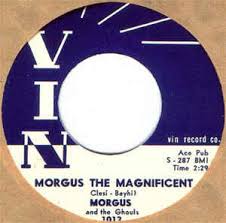
Within four months of his show’s premiere, Morgus would be memorialized in song. Frankie Ford, Jerry Byrne and Mac Rebennak (the future Dr. John) recorded Morgus and the Three Ghouls at Cosimo Matassa’s studio on Governor Nicholls Street. While never a hit, it plays locally on occasion and showed up on Dr. John’s anthology Mos’ Scocious. In 1962, Morgus became the first Horror Host to have his own movie, The Wacky World of Dr. Morgus.

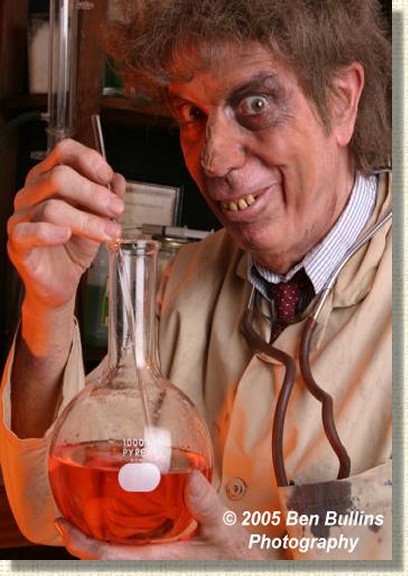
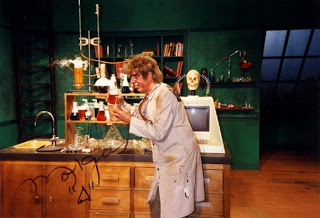
Morgus wasn’t your typical monster or vampire show host. He was a benevolent, though somewhat high strung, mad scientist working out of his laboratory above the Old City Ice House in the French Quarter. Filled with superhuman self confidence in his genius, he would devise ill-conceived schemes and experiments that usually had good intentions but would fail miserably.

Morgus in his laboratory over the Old City Ice House in the French Quarter.

I recollect one show I watched as kid in the 60’s where he created his own weight reduction clinic and during the commercial breaks he demonstrated weight-loss technologies straight out of a Vincent Price movie, including a swinging pendulum (lose weight or else). Needless to say, by the end of the show his clients had lost more than pounds.

Morgus was the creation of Sid Noel Rideau, a native New Orleanian with a wacky imagination. He did a brief stint of Morgus in Detroit where he apparently recorded a surf rock tune called Werewolf under the name of Morgus and the Darringers. Mr. Rideau died August 2020 and his life was celebrated on my show later that month.

But my favorite song representation of him was done by the band Galactic on their 2010 release Ya-Ka-May. The CD’s first track, Friends of Science, samples a typical opening of one of Morgus’ shows. “Good evening my dear students, and of course friends of science and those of the higher order.” You’ll find over a dozen New Orleans artists credited in the CD’s liner notes,  including Allen Toussaint, Irma Thomas, Big Freedia and Trombone Shorty. But there’s no mention of Morgus or Rideau.

Apparently, Galactic had a hard time getting permission from Rideau but finally did with the condition that it would be uncredited.  In promoting the album to Offbeat magazine, Galactic’s bass player Robert Mercurio pondered “how many people are going to get that one. I think maybe you’d have to be from New Orleans to really get that voice.”

Not necessarily. Not if you catch the distinctive voice of Morgus when he’s played on Sweeney’s Gumbo YaYa, this Monday (show now airs on Thursdays), starting at 10 a.m. Also, if you’ve read this far, perhaps you would like to subscribe with the link in the right column.

Postscript: Since this post, this documentary was posted online, focusing on the original run of Morgus.