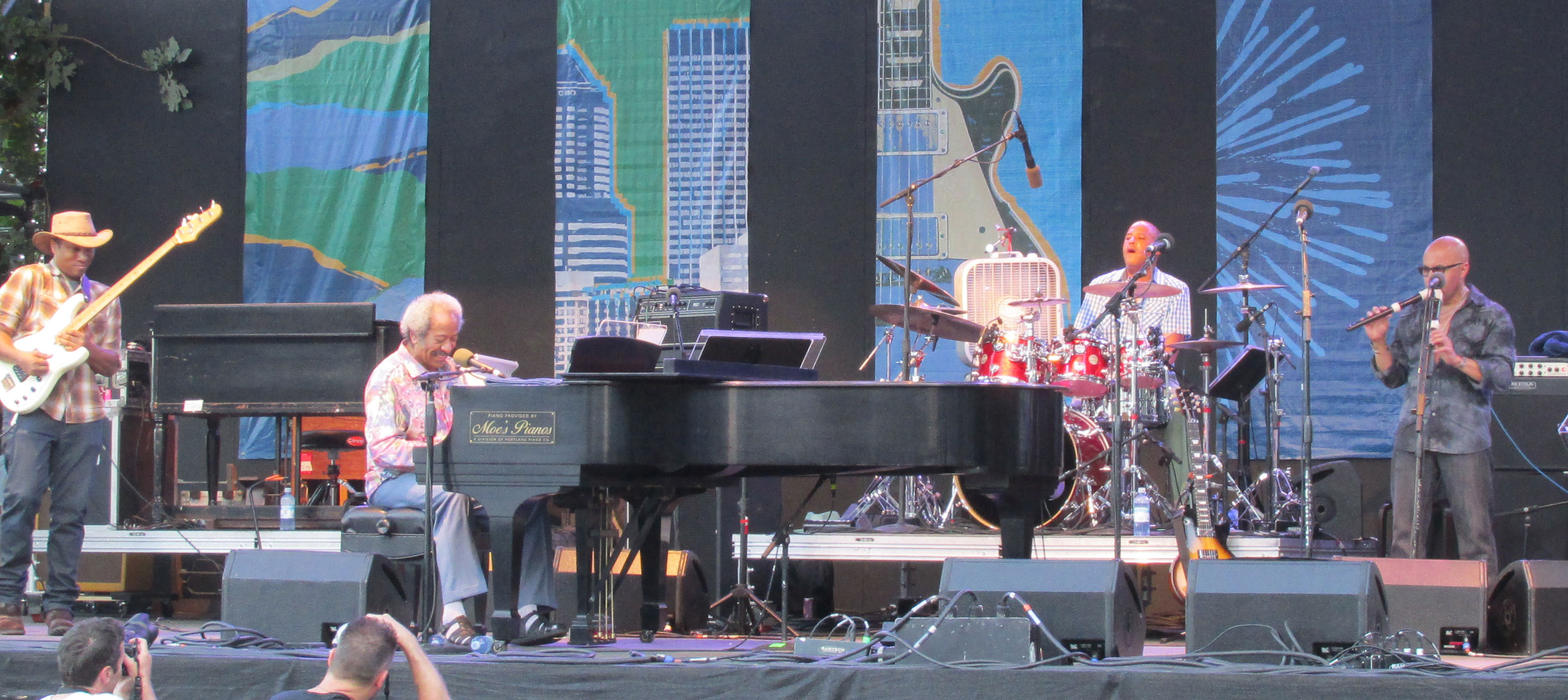
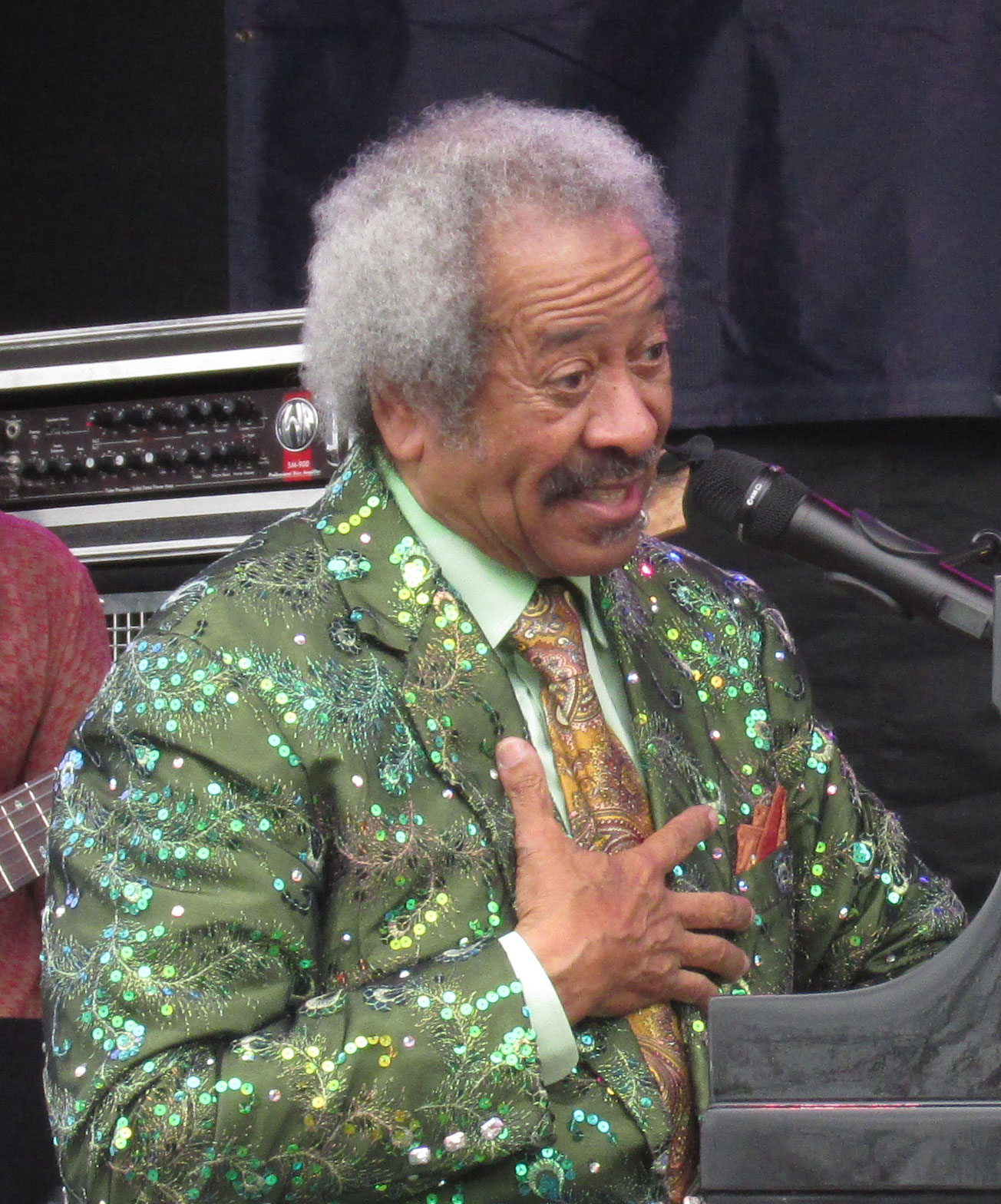
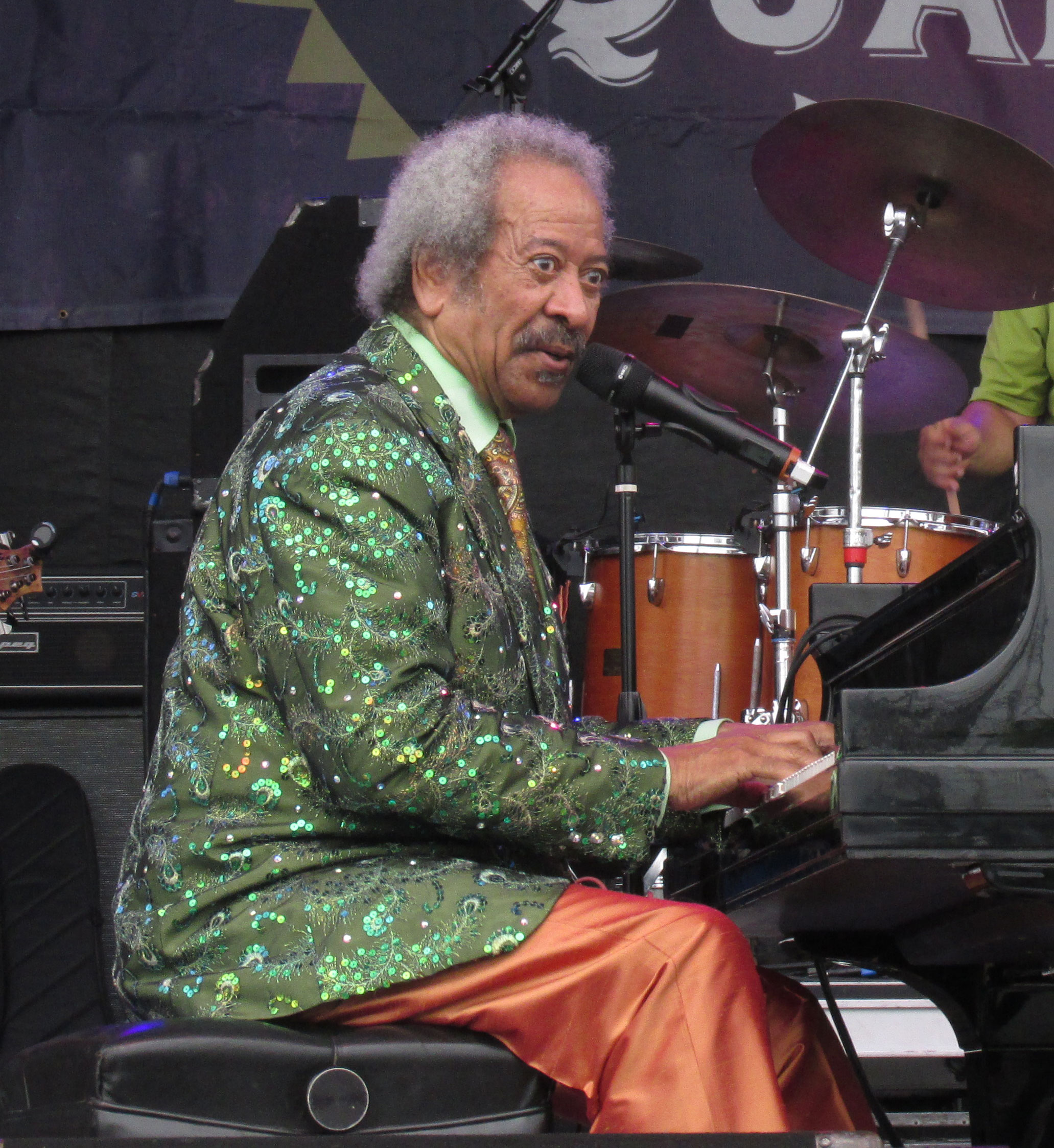
Allen Toussaint at piano with his band at the Portland Blues Festival this summer.
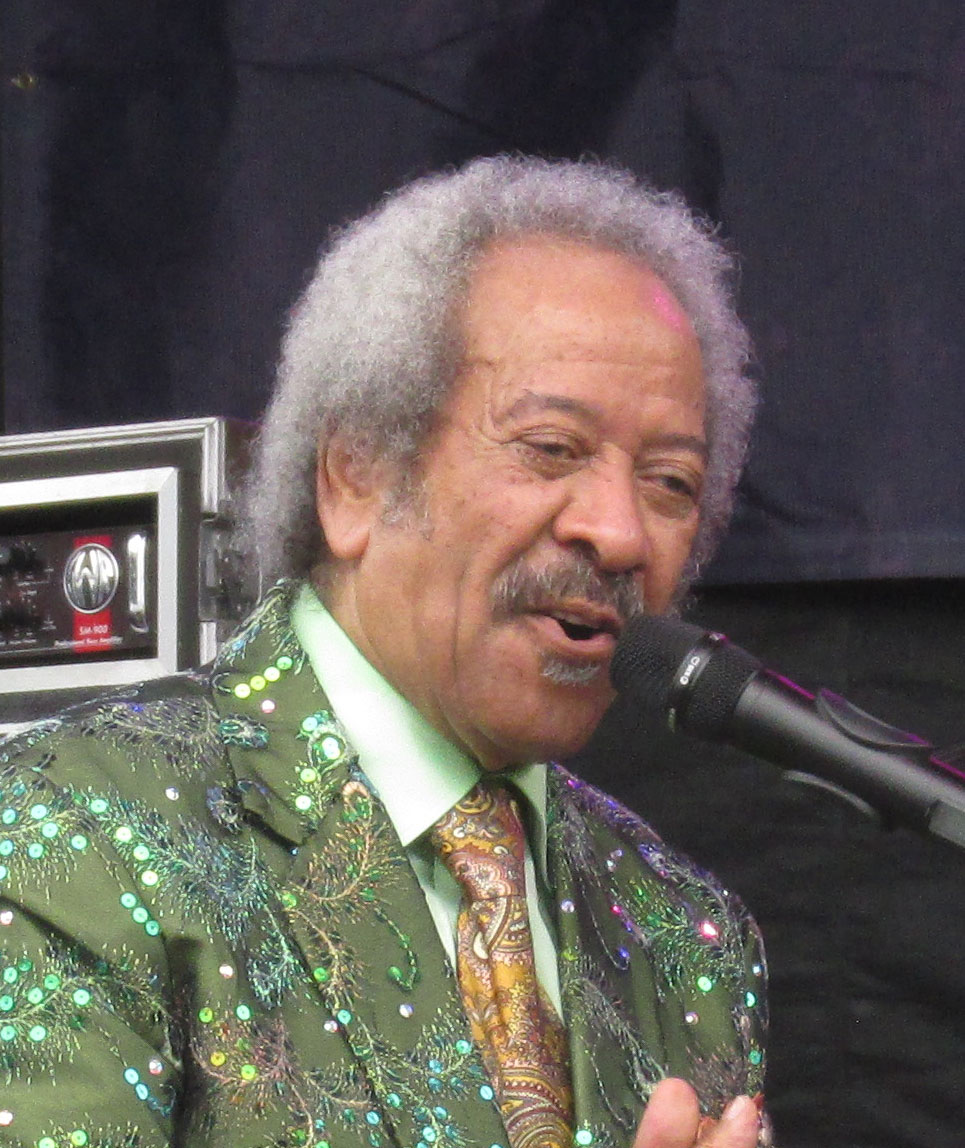
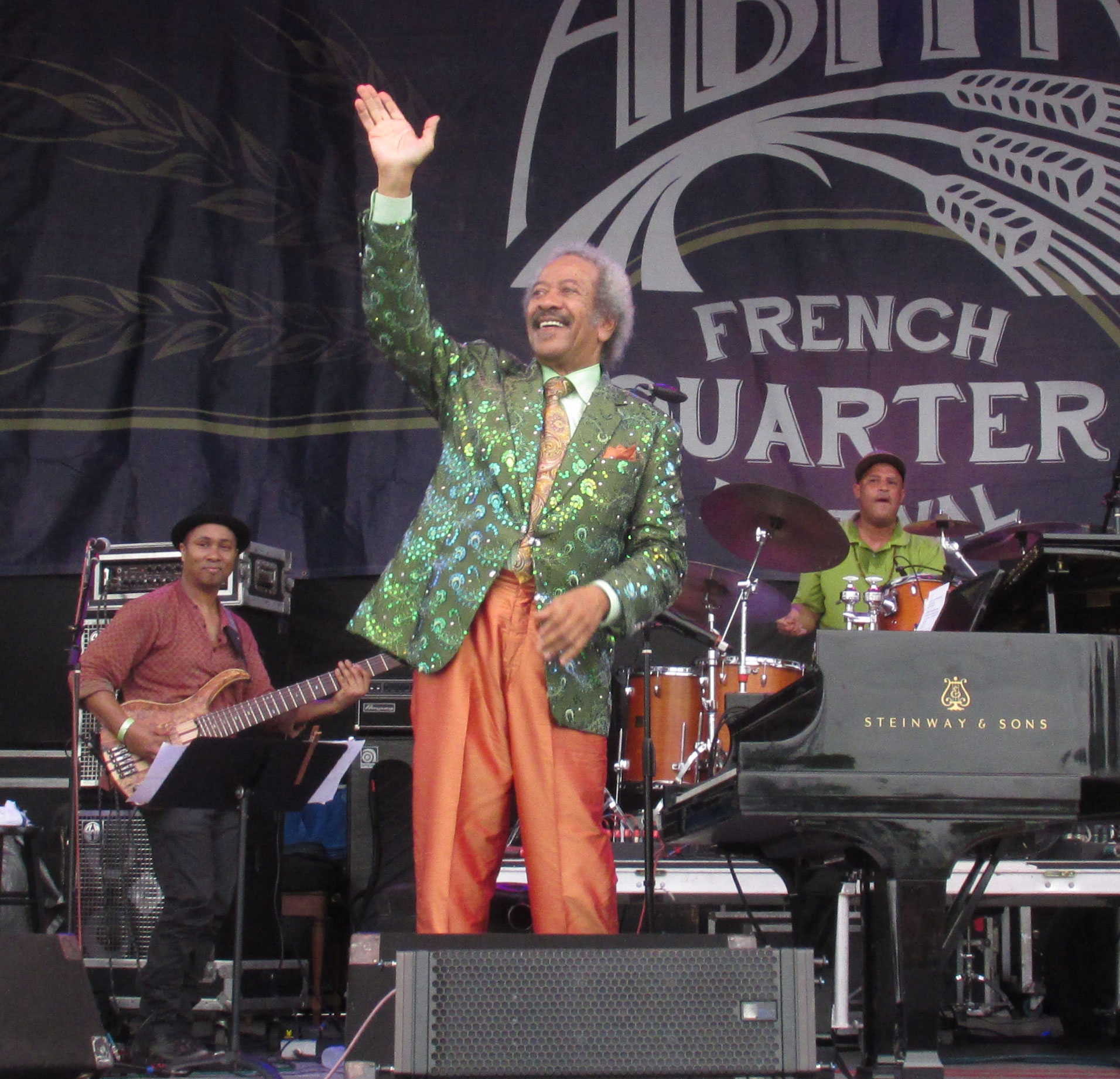
Allen Toussaint died last night (November 9, 2015) while on tour in Spain. There are many fine testimonials to his life and career. I can only say that when I met him this spring at the French Quarter Festival, he seemed so kind and gentle, hardly the megastar that he is (was). Here are some shots I took of him during his French Quarter Festival 2015 performance.
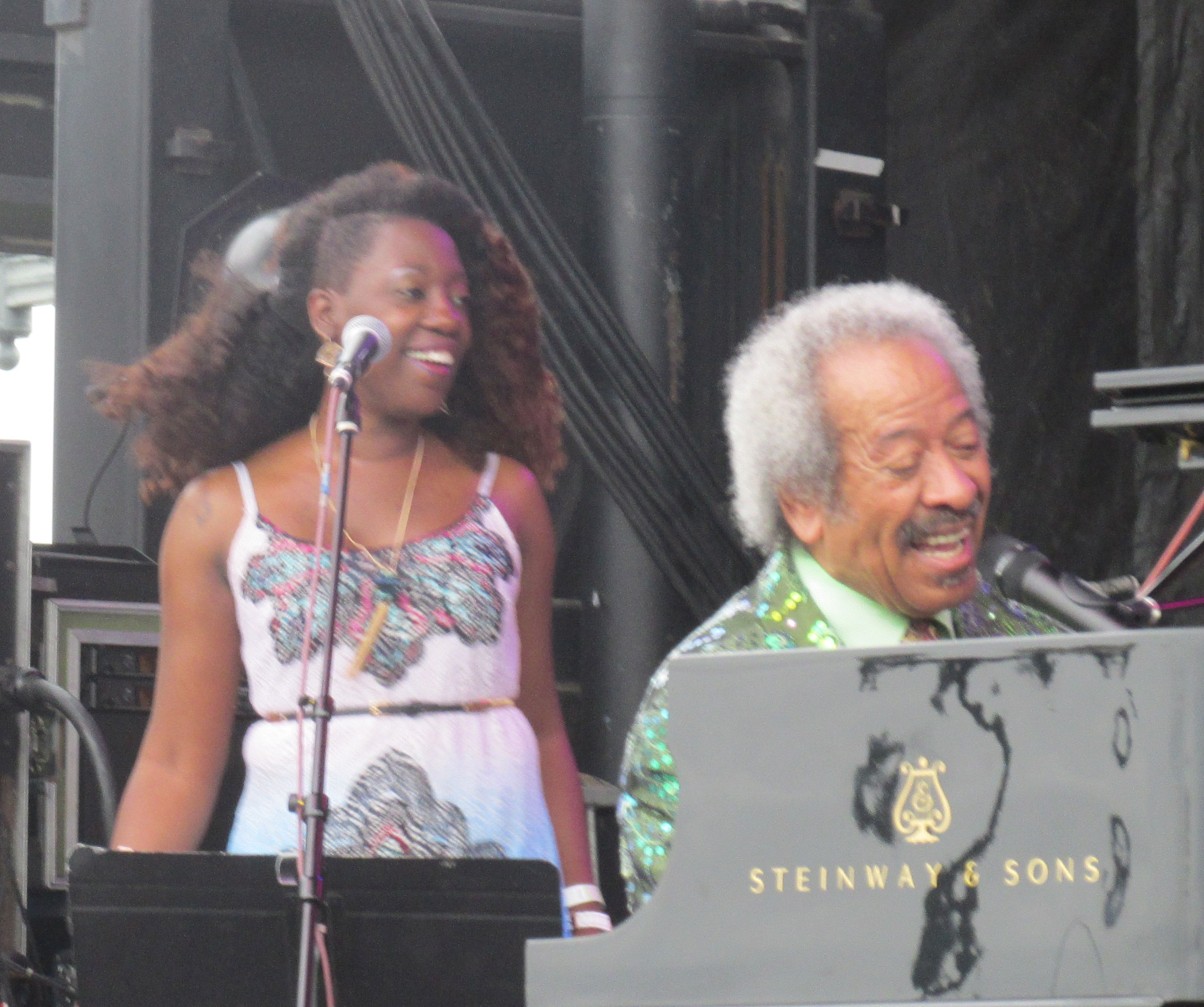
Toussaint with Erica Falls singing back up behind him.
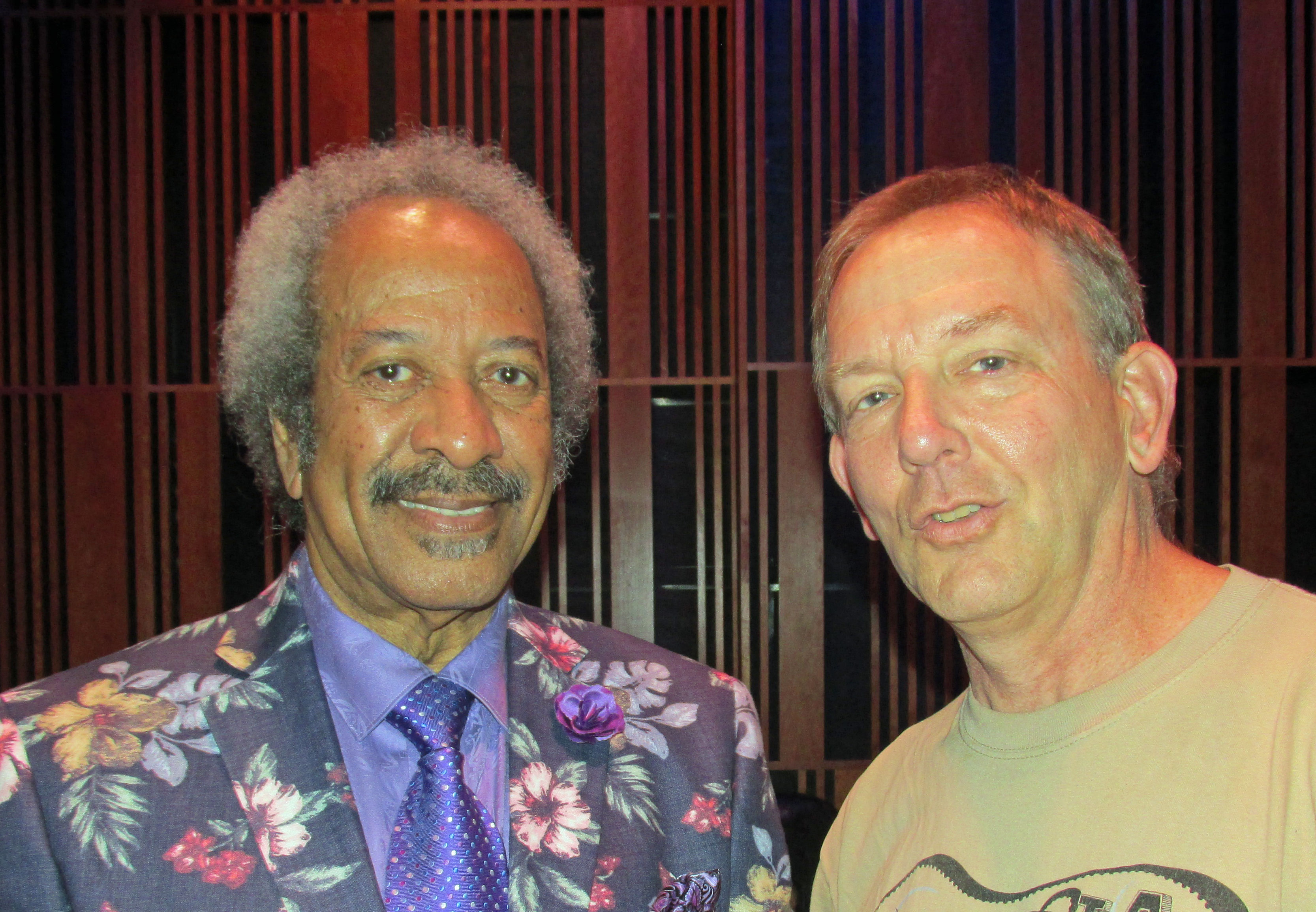
Toussaint generously posed for a photo with me before he took the interview stage at the Old Mint during the French Quarter Festival
The New Orleans jazz funeral embodies a rich heritage that serves as another reminder of the significance of brass band music and its ability to draw people together in a collective experience. (Podcast of the show that goes with post.)
As I prepare for my All Souls Day show this Monday, I’m naturally drawn to thinking about this tradition. While I’ve never had the occasion to witness a jazz funeral, my sense is my life is richer by its very existence.
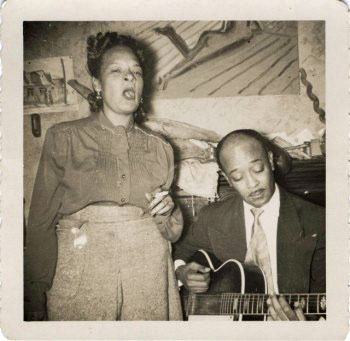
Danny Barker on guitar performing with his wife Lu.
I’ve told the story about Danny Barker and how he taught the brass band tradition to a new generation of musicians who would later found and inspire a renaissance in New Orleans music with brass bands like the Dirty Dozen, Rebirth, Soul Rebels and Hot 8. A deeper story is how Danny Barker’s death created a resolve to preserve jazz traditions, ensuring a creative tension between the old and new that lives on today.
By the end of his life, Barker had become unhappy with the conduct of some of the younger brass bands. With a musical career that dated back to playing on the streets of New Orleans in the 1920s, Barker felt the jazz funeral in particular had strayed from its origins with improperly dressed musicians, inappropriately timed songs and undignified behavior. He had made it clear to his wife that he did not want a jazz funeral.
Gregg Stafford understood his former mentor’s concerns and as an experienced trumpeter and band leader, he believed he could ensure that Barker’s jazz funeral could be done right. With the help of Fred Johnson, who had been a spy boy with the Yellow Pocahontas Mardi Gras Indian tribe, and the blessing of Barker’s family, he set out to do it.
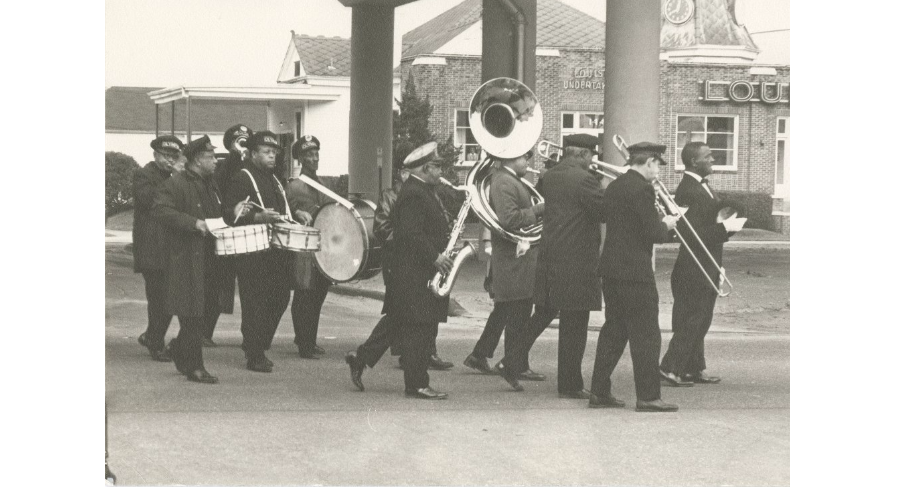
Olympia Brass Band with Grand Marshall performing at Adolphe Alexander Jr. funeral – Photo from Hogan Jazz Archive.
On March 17, 1993, the members of the band assembled three blocks from St. Raymond’s Catholic Church on Paris Avenue. Every band member was dressed in black shoes, an ironed white shirt, black tie, black coat and matching cap. As they approached the church playing “Just a Little While to Stay Here,” Stafford knew that the minister and congregation in the church could hear them approach.
The band lined up outside the church waiting for Barker to be taken out with a Grand Marshall in the lead, stepping proudly and precisely to the beat. The band played “In the Sweet Bye and Bye.” As called for by tradition, the band played dirges all the way to St. Louis Cemetery No. 2. Fred Johnson and other members of the Tambourine and Fan marching club walked deliberately behind the hearse, creating the right tone and atmosphere. No buck jumping was seen at this stage in the funeral
Once the body was interred, the band left the cemetery with the drummer switching from the somber tom tom to the snappier snare drum. And then the livelier part of the parade began.
Matt Skakeeny, author of Roll with It – Brass Bands in the Streets of New Orleans describes the relevance of brass bands and funerals in this way:
The music organizes the collective suffering of those at the funeral and the collective pleasure that they anticipate in the shift to up-tempo music. . . The instruments of the brass band do not only communicate with the dead; they mediate the relationship between the living and the dead. (Page 167)
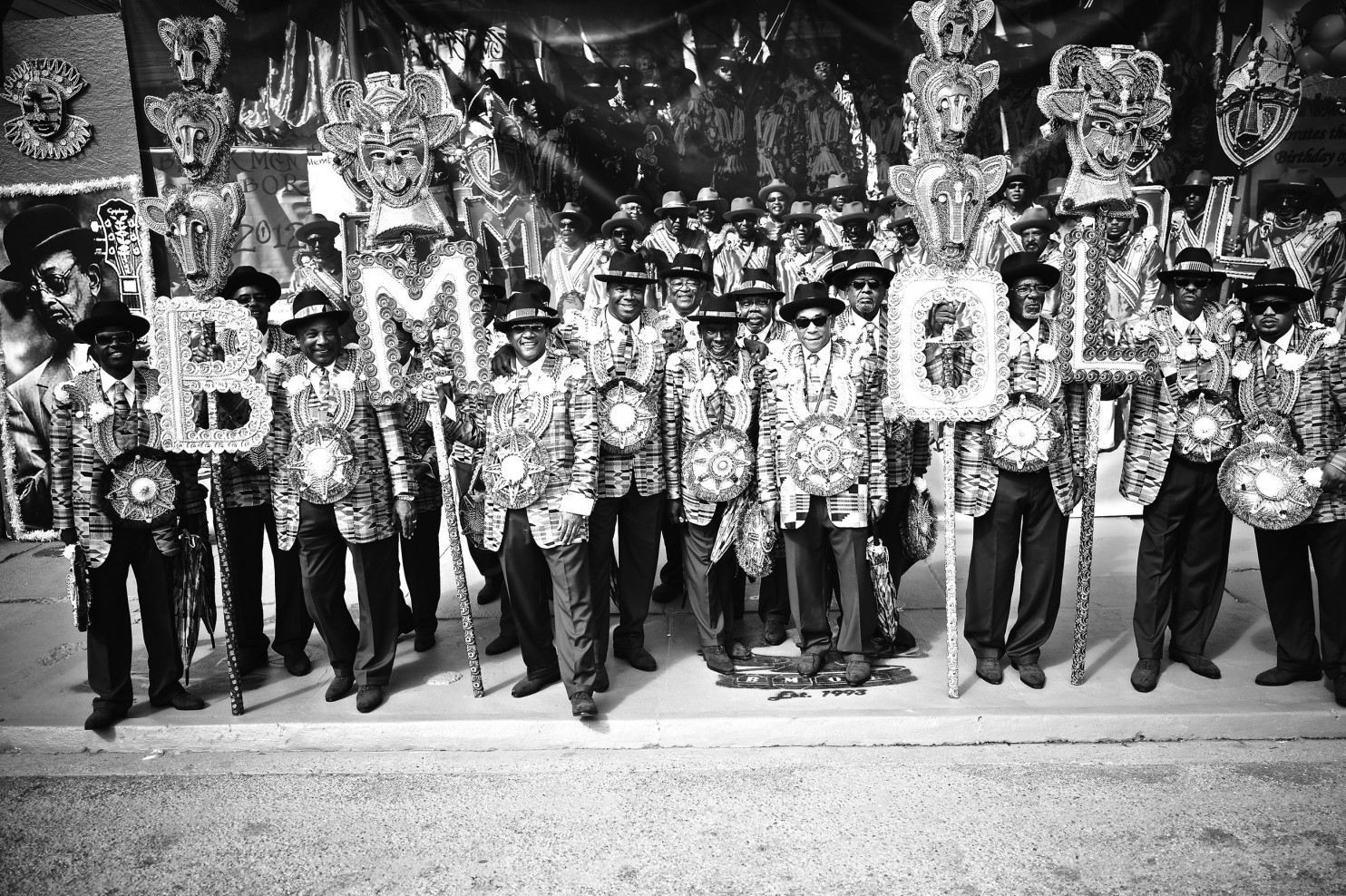
The response to this return to tradition was felt so strongly by Gregg Stafford and Fred Johnson that they formed the social and activist club Black Men of Labor to “pay tribute to the contributions of African American men in the work place while promoting and preserving Traditional Jazz Music.”
Please join me Monday (the recording is here) where I’ll feature traditional music from jazz funerals on Sweeney’s Gumbo YaYa.
I pulled the description of the Barker funeral from an interview of Gregg Stafford and Fred Johnson contained in the book Talk that Music Talk- Passing on Brass Band Music in New Orleans the Traditional Way. Thank you Becky for the loan of this amazing book.
I often explain my radio show’s place in the KAOS world music line up as offering music from the most international cities in our country: New Orleans. And this week’s show provides lots of examples.
I’m not alone in my assessment of the city’s international flair. New Orleans is routinely described as the northernmost Caribbean city. I’ve also heard it described as the most African city in the U.S.
New Orleans affinity to the Caribbean dates back to the Haitian revolution in the early 1800’s which generated an influx of French-speaking whites and free people of color into the city along with their slaves.
As a southern port, New Orleans experienced daily inbound traffic from all over the world, but particularly the Caribbean and Central America. The New Orleans Cuban connection was fueled twice daily by ferry departures and arrivals from Havana.
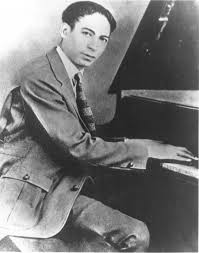
JFerdinand Joseph LaMothe, Jelly Roll Morton, first coined the term “Spanish Tinge” which he described as an essential ingredient in jazz.
Tresillo and habanero rhythms are apparent in the jazz and brass band music of New Orleans, notably second line parade songs. Jelly Roll Morton referred to this as the “Spanish tinge” which can be heard in his “New Orleans Blues.” However, I think he would have been more accurate to have called it the Afro-Cuban Tinge.
In Professor Longhair’s “Mardi Gras in New Orleans,” you can hear the Cuban Clave rhythm in his piano playing. Henry Byrd (Longhair) described his style as incorporating rumba, mambo and Calypso.
And while its relatively easy to find Caribbean influences in New Orleans rhythm and blues, its not as well known that the cultural exchange went both ways. Fats Domino, Smiley Lewis and other New Orleans R&B artists were routinely played in Jamaican street parties influencing the development of Ska.
And the free trade of rhythm continues in the post-Katrina era with an active Brazilian community contributing Samba, Forro’ and other beats to the ever evolving gumbo that is New Orleans music.
In this show. you’ll be hearing those rhythms, including Brazilian-New Orleans music. I also will be honoring the anniversary of Jelly Roll Morton’s birthday. (Show originally broadcast live on October 19. 2015.) Listen to the latest show.
“You’re treating me wrong, you’re breaking my heart,” sang country singer Claude King.
The song was likely about his Louisiana love but it could also apply to various radio stations I’ve known.
Over the years, I have formed some serious attachments to stations and their programming. But I learned at an early age, that they can break your heart and not say goodbye.
Leilani McCoy was a DJ with KZAM in Seattle in the 70’s and 80’s. I loved her voice.
It first happened with progressive rock station KZAM in Seattle. From 1975 to 1983, the FM station introduced me to new artists, diverse selections, and female DJs. For a while KZAM had an AM sister station that was more cutting edge and which I could listen to in my car.
But then one day in 1981 without warning, the AM station abruptly switched to a smooth jazz format and, yes, I was heartbroken. Two years later, the FM station suddenly folded as well. Again without notice. I felt used.
Fortunately, there was KJET, another AM station. KJET introduced to me The Clash, R.E.M, The Police, Soft Cell, Devo, The Go Gos and so much more. And apparently I wasn’t the only fan. Allegedly members of Soundgarden, Mudhoney and Pearl Jam were listeners.
But one day, I got in my car, turned on the radio and heard classic oldies. Arggh! It happened again. Not even a farewell.
More recently, I listened to the “Mountain” (KMTT) decline from a KZAM-like progressive station to a shell of its past till it eventually folded. I remember thinking there must be something wrong with my radio until I realized that once again, I’d been dumped without even a “Dear Tim” letter.
What’s my point? Your ears (and heart) matter. And while change is inevitable, how that change happens matters. It should be done right.
At KAOS, your community radio station in the South Puget Sound for over 40 years, we let you know before programming changes. We have show hosts who have been offering a diverse range of music and information for years and they have built a relationship with listeners. When they eventually take their leave, they say “goodbye” on the air. And if you really like the programming, you can let us know so we can find a replacement. Or YOU could be that replacement, because the show hosts are people who live in the community and volunteer on the air.
It’s pledge drive time. This type of loyalty doesn’t happen without your support. Show your love to KAOS, I promise we won’t break your heart.
The obvious struggle by Republican candidates in their most recent debate to think of an American woman deserving to be on the $10 bill once again illustrated the dearth of awareness of women’s role in our history.
This issue is brought home to me almost every time I map out music for my New Orleans show. Perhaps because my knowledge and music library is not as extensive as I would like, I struggle to bring gender balance to my shows, particularly when I play early jazz, R&B, funk and brass bands. But I also sense that New Orleans is no different than the broader music world where female musicians have struggled to get into the spotlight.
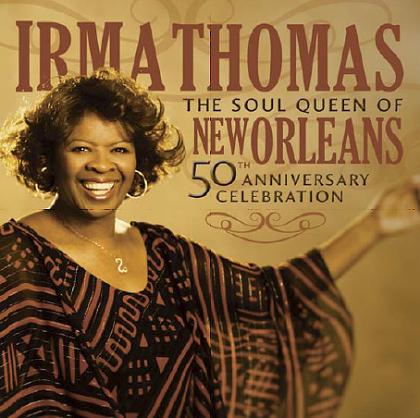
Irma Thomas, the Soul Queen of New Orleans, was a pioneer in a male-dominated New Orleans R&B scene.
Finding music I can play that feature early New Orleans jazz women is pretty much impossible. I only have a little more luck when I move into the New Orleans R&B era. Lots of great music recorded out of J&M Recording Studio heyday, but with the huge exception of Irma Thomas, and also Shirley Goodman, its mostly guys.
With the help of Jeff Hannusch’s book “The Soul of New Orleans – A Legacy of Rhythm and Blues,” I have learned about Jean Knight (Mr. Big Stuff), Martha Carter, Mathilda Jones, and Barbara George. And, of course, the Dixie Cups.
If you don’t recognize some of those names, you’re not alone. Finding their music to play on the radio takes work.
Similarly you might recognize Marva Wright and Charmaine Neville but what about Leigh Harris (Little Queenie) or jazz singer Germaine Bazzle? Many excellent female musicians worked in New Orleans during the 20th Century but their recordings are sparse and scarce.
Fortunately, change is happening. While it still doesn’t feel balanced, there is an increasing number of New Orleans-based women musicians who are getting recognized in our new century. Helen Gillet, Aurora Nealand, Kelcy Mae, and Ingrid Lucia are carving a living out of the NOLA music landscape. Perhaps the most well-known in recent years is Alynda Lee Segarra who is the driving force behind Hurray for the Riff Raff.
And there’s growing recognition. New Orleans Women In Music, founded in 2007, promotes the careers of women musicians through information, network and other support.
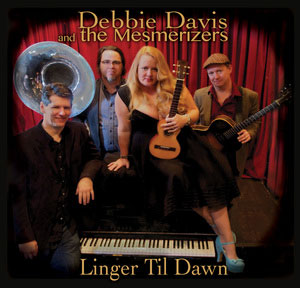
Debbie Davis is a member of the New Orleans Nightingale collective which has help put a spotlight on New Orleans female musicians.
The New Orleans Nightingales is a marketing collective with whom Ingrid Lucia has produced a compilation featuring 19 female musicians. Here’s the website description: “Steeped in the musical traditions of early American music, the ladies of the New Orleans Nightingales bring new life to this hundred year art form through new compositions, vibrant live performances and a commitment to the idea that traditional jazz and folk music is still evolving.”
I’m going to tip the gender balance scale of my next radio show, leaning heavily on the double X chromosome for my tunes. Here’s the edited version of the show on Mixcloud.
My radio station, KAOS, was going bananas last week when Scott Stevens, host of Spin the Globe, devoted a full hour to songs about this beloved fruit. My time-slot colleague (his Friday show anchors the KAOS world programming slot that I kick off on Mondays [Now moved to Thursdays] with Gumbo YaYa starting at 10 a.m.) played 18 banana songs from around the world.
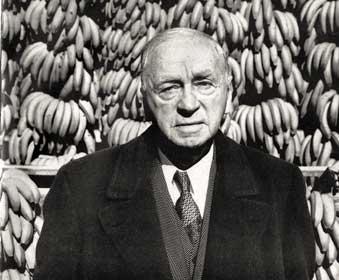
Sam the banana man. Sam Zemurray lived and died in New Orleans after building a banana distribution dynasty.
As I was listening to King Sunny Ade wax on about “Sweet Banana,” I was thinking I could do a show like that, right? Scott may have the whole world to draw from, but New Orleans is the home of the banana gangster Sam Zemurray, the man who parlayed the resale of overripe bananas dumped at the New Orleans port into a banana dynasty (and screwed Honduras and Guatemala in the process). Surely, I can find enough music from New Orleans to do my own banana show.
So I checked my catalog of New Orleans music and found nothing. Okay, there was the Fathead Newman tune “Montana Banana” recorded with Dr. John in 1991 — an instrumental.
If I did more research, I might find some songs but if my log was showing nothing, I knew I wouldn’t have much to work with. So what other fruit or vegetable might I use for a show? I grabbed a banana, peeled it and gave it deeper thought with each bite. (uh oh, sudden flash of the “Brothers McMullen” banana scene.)
Last year, I did a show on food where I didn’t even break a sweat. New Orleans musicians have no trouble singing the praises of red beans, jambalaya, gumbo, chicken, shrimp and barbecue–though if you read my post from that show, Louis Armstrong’s “barbecue” is not something you find on the grill.
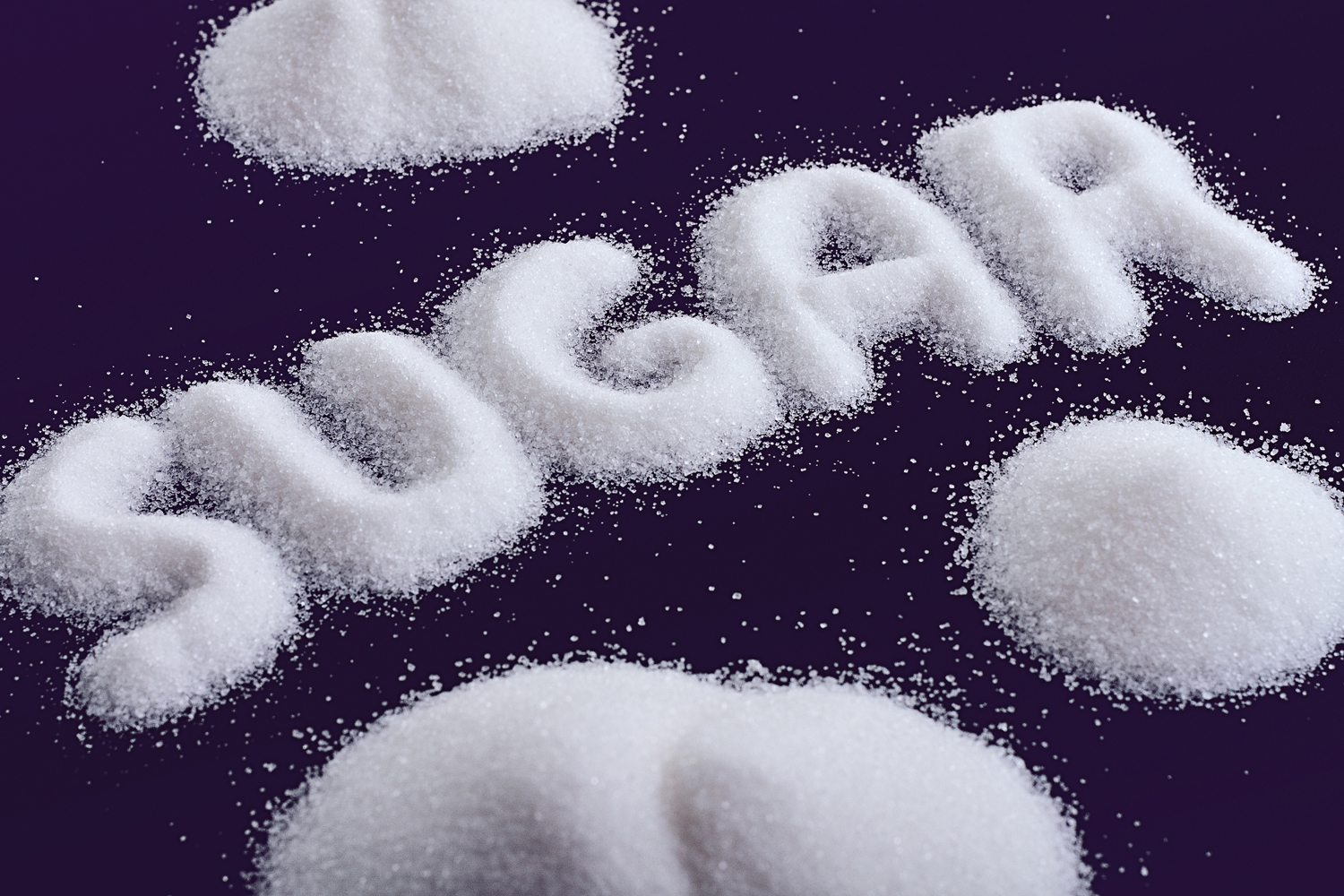
Holy Sucrose, Batman! New Orleans is also known for sugar. The Jesuit missionaries in the mid-1700s grew the stuff in downtown New Orleans (before they built the Superdome and those other buildings).
Louisiana produces about 20 percents of the U.S. cane sugar market
The Chalmette Domino Sugar refinery is one of the successes of post-Hurricane Katrina, returning to operation relatively quickly after the deep flood waters receded from its St. Bernard parish home. The state produces roughly two billion pounds of white death a year. And let’s not forget, the city has hosted the “Sugar Bowl” every year since 1935.
It’s kind of cheating, though. I mean, not all the “sugar” songs are about real sugar. Songwriters love metaphors and sugar lends itself well to that. Not to mention, that in New Orleans, the word “sugar” is a popular term of endearment used by almost everyone, including grocery clerks and bus drivers to complete strangers.
So not surprisingly, I have several New Orleans style versions of the 1927 jazz standard “Sugar” with the phrase “I’d make a million trips to his lips, if I was a bee. Because they are sweeter than any candy to me.”
But there’s also Sugar Foot Strut (Armstrong), Sugar Foot Stomp (Oliver), Sugar Blues (Preservation Hall Jazz Band) and Sugar Shack (Flavor Kings). There’s also Corey Harris’ Sugar Daddy and Percy Mayfield’s Sugar Mama.
It’s close enough. I’ll be sprinkling sugar throughout Monday’s sweet show.
An upside to Hurricane Katrina and the subsequent flood was the infusion of New Orleans culture throughout our country. With the city almost completely evacuated, its people, music, cooking, way of talk and style scattered across the U.S. like seeds from a dandelion blowball.
Texas received the largest number of evacuees. Austin, which like New Orleans is a regional music mecca, swelled from the addition of Cyril Neville, the Iguanas, the Radiators and other musicians — some who came to call themselves “Texiles” while playing music and waiting to return to their hometown. The resultant mix was described by Cyril Neville as having the “gumbo spill into the chili.”
Here’s more on how some of New Orleans finest musicians fared:
Fats Domino, the city’s greatest rocker, is a lifelong resident of the Lower NinthFats Domino and his family were rescued by Coast Guard from his lower Ninth Ward home.
Ward. He stayed in his home through the hurricane and was rescued by a Coast Guard helicopter. But he lost all his gold records and memorabilia.
Irma Thomas – The Soul Queen of New Orleans weathered the storm and the aftermath in Austin Texas. She rebuilt her East New Orleans home and she won a grammy for her post Katrina recorded album.
Dave Bartholomew – The home and studio of the man behind many of New Orleans R&B hits of the 1950’s suffered considerable flood damage but he and his family (His son Don B. is a successful hip-hop producer) have bounced back with now three generations of Bartholomew’s making music.
The Radiators – Once described as New Orleans’ longest running and most successful rock band are no longer an act officially–though you can occasionally catch them on special events and Jazzfest. Hurricane Katrina landed on guitarist Dave Malone’s birthday. He and his wife struggled to rebuild their home and ended up living outside of New Orleans.
Al Johnson – The man who made it possible to be “Carnival Time” any time of the year, lost his long-time house on Tennessee Street in the Lower Ninth Ward He now lives in the Musicians Village where he penned Lower Ninth Ward Blues
The Iguanas – The members of this latin-tinged roots rock band were on tour at theThe Iguanas made a temporary home in Austin while waiting to return to New Orleans. Joe Cabral (left) and Rene’ Coman performing at French Quarter Festival this year.
time and separated to find evacuated family members. They regathered in Austin and became part of the flexible ensemble of New Orleans musicians known as Texiles. The band has had three CD releases since Katrina.
The Hot 8 Brass Band – This innovative group could be called the Adversity Brass Band. Before Katrina, three of its band members had died — two from shootings. After Katrina, a fourth member was shot to death while driving in his car with his family. Another member lost the use of his legs in an accident. The band scattered across the country after Katrina and could easily have disbanded permanently. But it regrouped, recorded a grammy-nominated album and still perform today.
Dr. Michael G. White – The University professor and clarinetist lost his home in Gentilly, including many valuable jazz documents. But he’s back in town and working as hard as ever.
Henry Butler – Fortunately the talented piano virtuoso was convinced to evacuate his Gentilly home, which was devastated by flood waters. Blind since birth, he can’t tell you what the damage looked like but he can describe the feel of his piano keys as they fell apart in his hands. Last year, he and Steve Bernstein released “Viper Drag” to rave reviews and he regularly performs.
Kermit Ruffins – “What good is a million dollars if you’re not in New Orleans.” The widely recognized ambassador to New Orleans evacuated to Houston with a large extended family and pets. He returned to New Orleans after the storm and continued his routine up until last year. Ironically, his wife got a job in Houston and he now splits his time between New Orleans and Houston.
Donald Harrison Jr.- This lifelong New Orleans resident, Big Chief and heralded jazz saxophonist has a fear of hurricanes borne from his youthful experience escaping from Hurricane Betsy’s flood. But he stuck it out in the city cause his mother-in-law wouldn’t leave. They slept on the ballroom floor of the Hyatt Regency during the storm and aftermath, escaping to Baton Route four days later.
John Boutte’ nervously watched events unfold from Brazil, finally talking one of his sisters and mother to evacuate before Katrina hit.
Shamar Allen – This young trumpet player’s home was right next to a levee that broke. He now owns a home in the Musician’s Village. He contributed some key songs to the musical Nine Lives that focuses on New Orleanians who survived Hurricane Betsy and Katrina.
John Boutte was in Brazil at the time and watched almost helplessly the hurricane reports from afar. Fortunately, he finally convinced one of his sisters and mother to evacuate but his other two sisters were stranded on an interstate highway bridge for five days.
Terence Blanchard – Much of this jazz trumpeter’s story was told in the Spike Lee movie “When the Levees Broke.” In the documentary, you can see him and his mother enter her flood-wrecked near Lake Ponchatrain. Blanchard wrote the score for the documentary and won a grammy for subsequent album he released.
Last week and this week, I’m honoring the survivors of Hurricane Katrina who dealt with intense horror, long hot days, and many months and in some cases years of uncertainty about their future. And yet, they returned to New Orleans, their home and rebuilt.
The 10-year anniversary of Hurricane Katrina affords us the opportunity to remember and reflect on how devastating nature can be when compounded by human failure.
I’m dedicating these two radio shows to the survivors of Hurricane Katrina.
Eighty percent of New Orleans was underwater after the levees failed during and after Hurricane Katrina struck.
As often happens, the poor, elderly and vulnerable populations suffered disproportionately because of their inability to get out of harms way and the paucity of their personal resources to recover afterwards.
Sadly, that seems to be a worldwide characteristic. But what Katrina revealed was that a country that could deliver troops anywhere in the world within two days could not come to the rescue of one of its most culturally rich cities and its residents. And the residents that suffered the most were poor.
I love my country and as a 30-year state employee, I believe in the positive power of government. But local, state and federal governments failed in Hurricane Katrina, from insufficient evacuation efforts, to the negligence in building and maintaining the levee system, to the limp rescue and recovery efforts and insufficient relief and restoration programs that followed.
Like most folks who witnessed from afar, I was alarmed and shamed by the failure to evacuate the city’s low-income, elderly and vulnerable population. Roughly 100,000 people were left behind, stranded in a flooded city, fleeing like rats to the Superdome, Convention Center, bridges and rooftops, stuck there for days in insufferable heat with little food and water. Roughly 1,800 residents died.
A destroyed home New Orleans lower Ninth Ward. The writing on the outside was from rescue workers.
I had planned to visit my sister that fall. She had moved back to New Orleans from the Northwest the year before. I already had my plane ticket when on that Sunday morning in late August I watched Mayor Ray Nagin on national television urge the city’s evacuation with the words: “We’re facing the storm most of us have feared.”
I was out of town, watching the TV at a hotel. When I got home later that day, a phone message from my sister said she was going to hunker down and stay in the city. I wouldn’t hear her voice again for over a month.
Her message had been left on Saturday night. Nagin’s announcement was made Sunday morning. The hurricane made landfall near New Orleans on Monday morning, August 29, and by Tuesday 80 percent of the city was underwater.
The power of the water when the levees broke pushed houses off foundations and cars down several blocks.
My sister did eventually evacuate. Unlike many of the residents who were left behind, Katie had a car and the financial means to buy gas and survive the many months of uncertainty that followed. She was lucky yet she suffered so much personal anguish and loss that I doubt she will ever live again near the hurricane zone.
I rebooked my flight for Jazz Fest that April which did occur and reignited my love for New Orleans culture. My sister gave me the devastation tour of St. Bernard Parish and the Lower Ninth ward, both areas completely submerged by what is now recognized as one of the worst civil engineering failures in U.S. history.
There are a great many things the city and its residents can take pride in achieving over the decade. The city took a death blow and got up off the mat and survived–perhaps even thrived. New Orleans is a wonderful place to visit and live in. But it has changed.
Maybe some of the changes are good, maybe not. But Katrina, like the 1927 flood and Hurricane Betsy, has left its mark.
In my next post, I’ll tell brief stories of how some of the New Orleans musicians I play on my show weathered the storm.
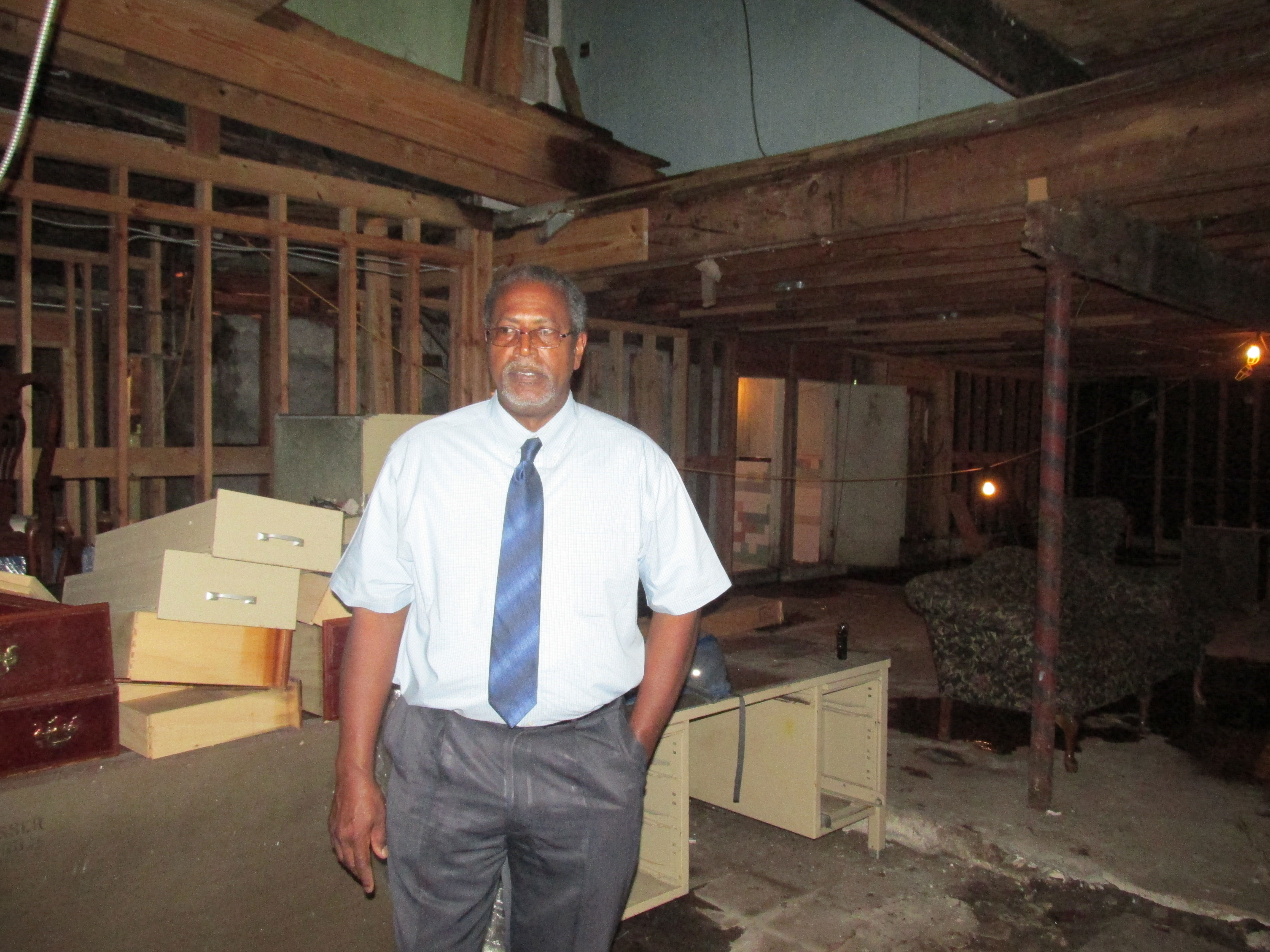
Kenneth Jackson wasn’t quite old enough when it mattered, and I could tell how much he wish he had been. (You can play the show with his interview including music from the Dew Drop era while finishing this short article.)
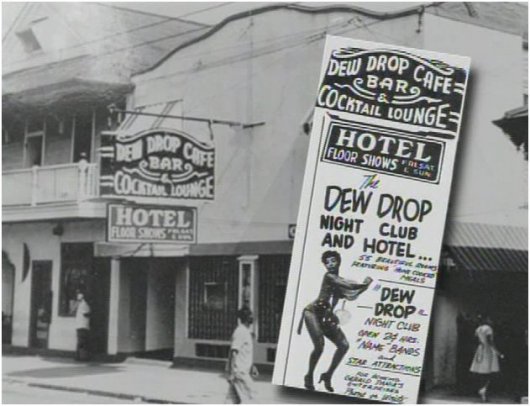
During the mid-20th Century, the Dew Drop Inn rocked New Orleans, making musical history and forging a special place in the hearts of all the musicians and fans that were lucky enough (and had IDs) to have been there.
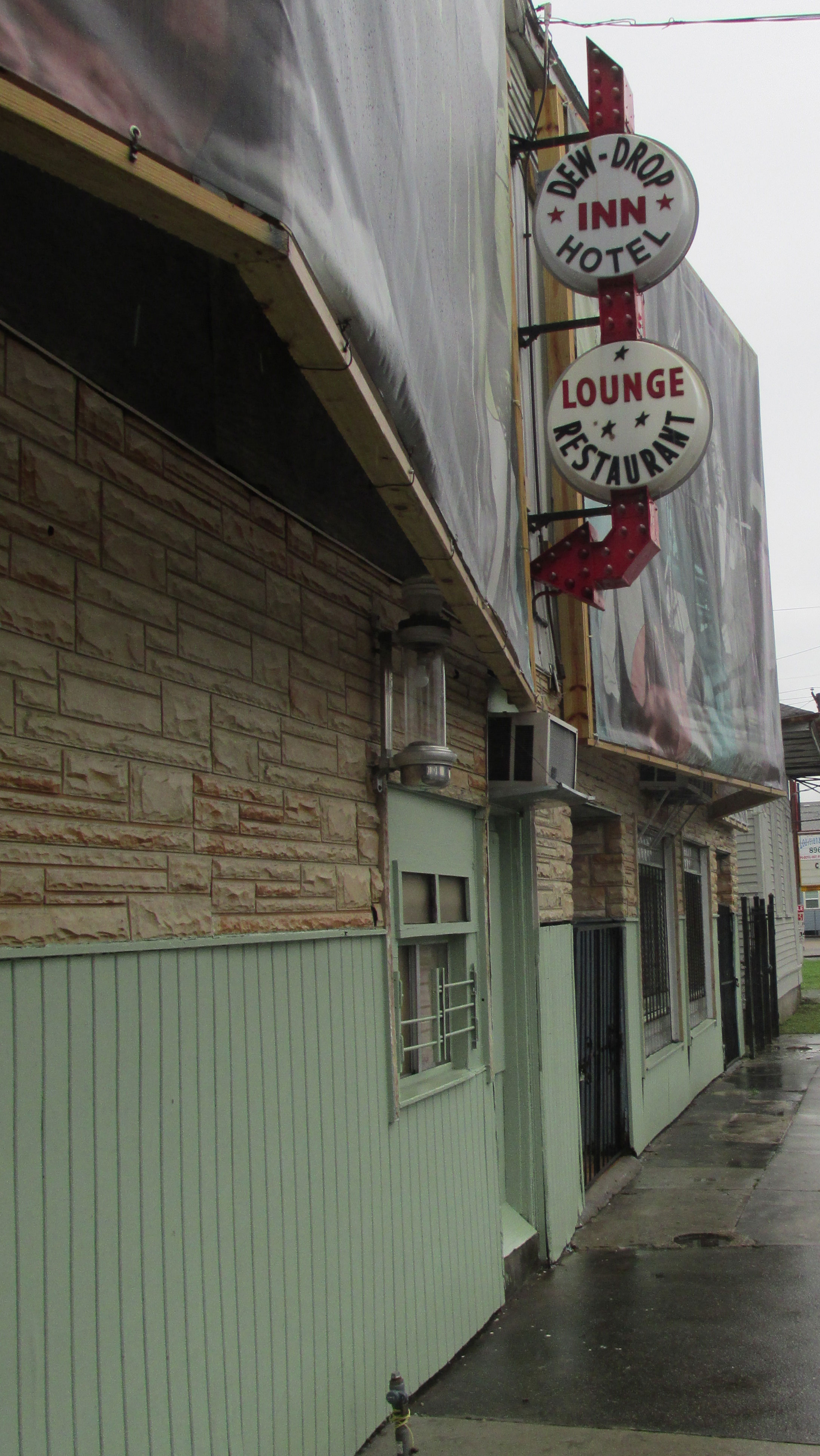
You can find the Dew Drop on LaSalle Street but its not yet open to the public.
“I never was really old enough to enjoy the shows and everything. You know I would kind of sneak in whenever I was down here late and had to bring somebody something but they would run me from out of there,” said Jackson as we toured the fabled nightclub, hotel, and restaurant.
If love could rebuild the Dew Drop Inn, Jackson would have enough to build it twice over. His affection for the shuttered double-storefront on LaSalle Street is almost as obvious as his love for the man who started it all, his grandfather, Frank Painia.
As detailed in my previous post, Painia built a key piece of music industry infrastructure during the New Orleans R&B golden age. But when Painia died in 1972, the music at the Dew Drop Inn stopped as well. The family retained and operated the business, primarily as a hotel, until Hurricane Katrina.
The flood mess has been cleaned out. Artifacts have been saved. Some framing and some new wiring has been done. Also, the building has a temporary facade that highlights the history contained with in. But its not yet ready to be open to the public.
Kenneth Jackson, grandson of the Frank Painia who started the Dew Drop Inn in 1939, keeps the flame alive for bringing the establishment back to its former glory.
Jackson envisions a day when folks can come back to the Dew Drop and get a meal, catch a show, even spend the night or host a party. He thinks the time is right. Nearby streets like Freret and O.C. Haley are undergoing a renaissance of new business and renovation.
Across the street from the Dew Drop, the infamous “Magnolia,” a crime-ridden housing project that also was home to hip hop artists Lil Wayne, Juvenile, Jay Electronica and Magnolia Shorty, is gone. In its place is a lower density, stylish new development called Harmony Oaks that provides a mix of market rate rentals and public housing.
One of the groups to spearhead the community’s revitalization, Harmony Neighborhood Development, is working with Jackson and his family to secure the funding necessary to get renovations started. But all the pieces have yet to come together.
Frank Painia had a practice of painting bull’s eye targets behind the stage at the Dew Drop Inn.
Tulane University’s School of Architecture has weighed in with plans and archival assistance. And there’s a wealth of love and affection for restoring the business by New Orleans musicians, young and old.
There may be a day soon when Kenneth Jackson will be able to enjoy a club performance at the Dew Drop Inn. After all, while its possible to be too young to party at the Dew Drop Inn, you’re never too old.
Perhaps its a stretch to compare the Dew Drop Inn to Congo Square. But I see similarities between the two. (You can listen to the show while reading this post)
Just as Congo Square served as a gathering place for African American commerce and cultural exchange up through the mid-19th Century, the Dew Drop Inn in New Orleans provided a safe and comfortable place for New Orleans musicians of the mid-20th Century to gather, support each other and play music.
Located in New Orleans Central City neighborhood, the Dew Drop became a second home for musicians.
One served as the genesis for Jazz and the other was an incubator for New Orleans R&B and early rock and roll. The Dew Drop Inn was not just a nightclub and bar, it was a vital regional center for African Americans, particularly musicians, at a time when the South and New Orleans enforced apartheid.
I’m not sure if those thoughts initially entered Frank Painia’s head when he decided to expand his barbershop on LaSalle Street to include a restaurant and bar. Most likely, he just saw a business opportunity across the street from where one of the largest housing projects in New Orleans was being built (the Magnolia Projects). By expanding his business, he provided employment for his brothers and eventually other relatives. He christened it the Dew Drop Inn in 1939.
With America mobilizing for the war effort, Painia added a hotel next door so African Americans on the move would have a place to stay when visiting or passing through New Orleans. The combination of barbershop, restaurant, lounge and hotel made the Dew Drop Inn a convenient stop for travelers.
But it was Painia’s venture into booking performers that would put the Dew Drop solidly into music history. He started by producing shows at a nearby boxing arena and high school auditorium. Since he had the Dew Drop, he could house and feed the touring musicians, who in turn would jam in the lounge after the official performance. It wasn’t long though before he started booking local acts to perform at the Dew Drop.
Then in 1945, just in time to entertain returning soldiers and their dates, Painia built the “Groove Room.” Located behind the Dew Drop, this two-story music and dance hall with a balcony and elevated band stage established an upscale ambiance with top-flight performers of the day, including Billie Holiday, Big Joe Turner, Clarence “Gatemouth” Brown, and Amos Milburn. Later Ray Charles, James Brown, Solomon Burke, and Bobby “Blue” Bland would grace the stage. Many homegrown performers including Earl King, Huey “Piano” Smith, and Allen Toussaint launched their careers from the Dew Drop.
The Dew Drop was home for many musicians, whether passing through or getting their act together. It was a 24-hour operation where musicians could eat, meet, clean up with a haircut, shoeshine and shower, and plan their next step. They would play for white audiences downtown then head back to the Dew Drop and jam with the house band or whoever was performing until daylight.
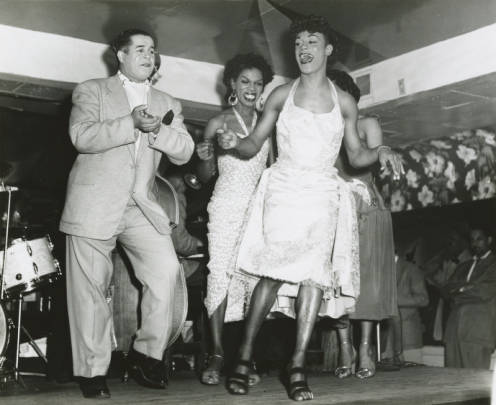
A dance contest for female impersonators at the Dew Drop Inn with Bobby Marchan on stage. Ralston Crawford Collection,William Ransom Hogan Jazz Archive, Howard-Tilton Memorial Library, Tulane University
The nightclub show included an emcee, comedians, magicians, dancers and, of course, the bands. It was not uncommon for the emcee or some of the dancers to be female impersonators (to use the term of that day). Bobby Marchan, who would sing with Huey Smith and the Clowns, got his start in New Orleans as part of a drag show called the Powder Box Revue.
Most New Orleans musicians of that period have stories about the Dew Drop. Grandpa Elliot Small of Playing for Change remembers watching his uncle play the harmonica there. Deacon John tells of how he broke into the recording business when he was approached by Allen Toussaint while playing guitar at the Dew Drop. “My head just popped open at the opportunity . . .the very next day we were in Cosimo’s studio recording with the great Ernie K-Doe. “
But my favorite story is how Richard Penniman got his mojo at the Dew Drop Inn. Things weren’t popping in J&M studio that September day in 1955. Producer Robert “Bumps” Blackwell, a native of Seattle, called for a break and took his young protege for a drink. It was a slow day at the Dew Drop until Richard discovered the upright piano in the corner and banged out a tune so bawdy that Blackwell had to hire a writer to clean up the lyrics. Little Richard’s Tutti Frutti was a crossover hit that propelled him to national fame.
While the Dew Drop Inn was established, owned and frequented by African Americans, white patrons were allowed in. But this meant that Painia was arrested at times when police raided his business and charged him with “racial mixing.” Eventually, he successfully sued the city, establishing the right for businesses to serve any customer they wanted.
The Dew Drop today is shuttered today but there’s hope it can once again entertain people.
By the end of the 60’s, changing musical trends, desegregation and Painia’s declining health brought an end to Dew Drop Inn’s musical performances. The business carried on mostly as a hotel until Hurricane Katrina caused so much damage, it could not reopen.
I’ll have that story in next week’s post (available now). Here’s the podcast of the show featuring musicians who played at the Dew Drop Inn and we’ll hear in Mr. Jackson’s own words about the Dew Drop’s glory days.






 Sweeney's Gumbo YaYa