His hometown and the world mourn his passing on October 25, 2017. Click on my show in honor of his 87th Birthday and read the blog post I wrote in 2015.
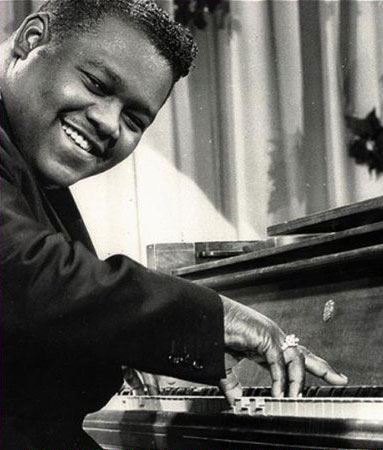
Fats Domino turns 87 today. While perhaps debatable everywhere else, in my mind he’s the real King of Rock n’ Roll. And, he also has his professional DNA in ska and reggae.
“Be My Guest” hit 8 in the popular music charts in 1959–one of four Domino songs that got into the Top 40 that year. Not bad, considering he only recorded six songs.
Fats Domino was not only a major force in Rock n’ Roll, he helped inspire ska.
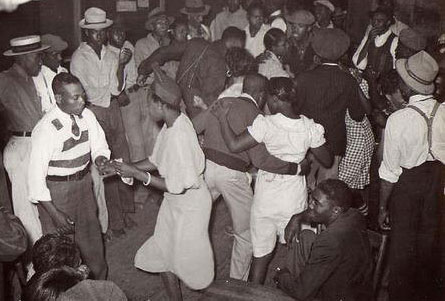
“Be My Guest” marked a decade of Domino getting young people of all backgrounds to dance together. And with lyrics like “Come on baby and be my guest/Come join the party and meet the rest,” Domino made it a world dance party.
That dancing was particularly important in Jamaica where disk jockeys held dance parties in the street. As the unofficial northern capital of the Caribbean, New Orleans has had a long history with Jamaica. Island workers would arrive in New Orleans to work in canefields and return home with armloads of R&B records. Many argue that ska developed its rhythm from the shuffle and boogie beats that were emanating from Cosimo Matassa’s studio in New Orleans at the time.
New Orleans early Rock n’ Roll inspired the Ska rhythm that evolved on the streets of Jamaica.
“Be My Guest” was a huge hit in Jamaica and its 4/4 time with the drummer hitting hard on the offbeat apparently became the foundation of ska. Its not that Fats was the only inspiration. Professor Longhair, Smiley Louis and other R&B stars of that period were essential. But Domino was top dog, often covered (e.g. Super Cat’s My Girl Josephine) and paid homage in songs like Derrick Morgan’s “Fat Man.”
Bob Marley said reggae started with Fats Domino, according Rick Coleman, author of “Blue Monday: Fats Domino and the Lost Dawn of Rock ‘n’ Roll.” Whether it did or not, there are lot of people on this planet dancing because of Antoine “Fats” Domino. That alone is worth honoring the day of his birth.
Galactic, an ever evolving New Orleans band that tours nationally, will be on the wet side of the Cascades this coming week.
On Thursday February 26, Galactic will take the stage at Bellingham’s Wild Buffalo before rolling down to Seattle’s Showbox on Friday and finishing its tour of Interstate-5 at the Crystal Ballroom in Portland on Saturday.
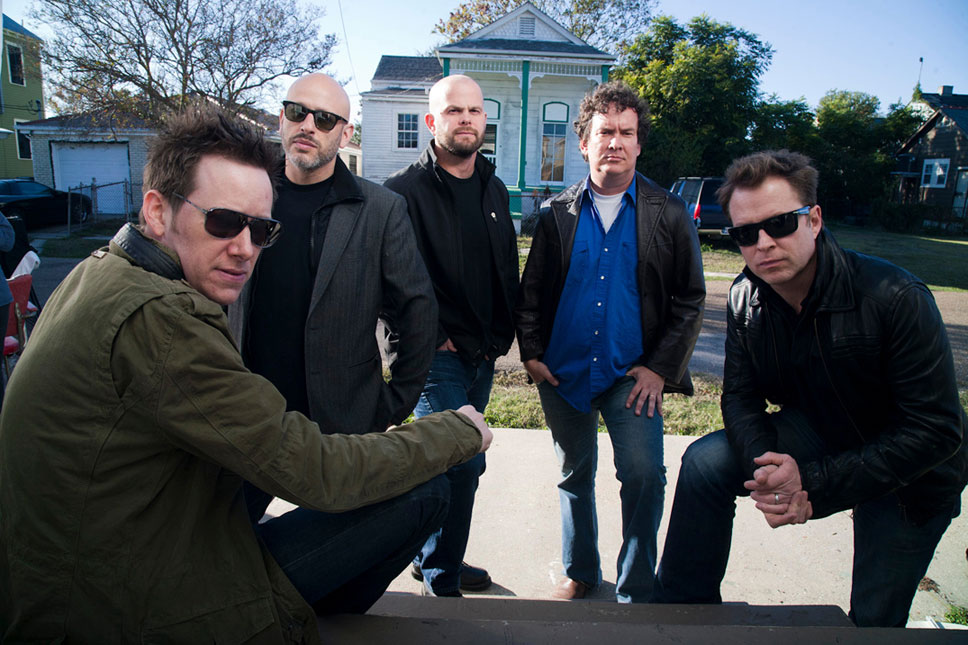
(From Left) Robert Mercurio, Ben Ellman, Rich Vogel, Jeff Raines and Stanton Moore.
The band formed in 1994 and was inspired by The Meters and other funk bands playing in Benny’s Bar, a long-gone uptown establishment located not more than a football field from where the Nevilles used to live. The band’s original name Galactic Prophylactic was quickly shortened while it led a second wave of New Orleans funk bands.
The first decade, Galactic was powered by the vocals of journeyman R&B and soul singer Theryl “Houseman” DeClouet. With its jam band tendencies, the group developed a loyal following for its live shows.
While the band has gone through a number of personnel changes over the years, the core of the group includes founding members Jeff Raines (guitar), Robert Mercurio (bass), Stanton Moore (drums) and Rich Vogel (keyboards). Also, saxophonist Ben Ellman, who produced Trombone Shorty’s first two albums, has been a long-time mainstay of the band.
After the departure of DeClouet in 2004, the band got into producing its own music using loops and samples and invited a wide range of mostly New Orleans talent into the studio with them. Ya-ka-may, probably my favorite Galactic album, includes Irma Thomas, Trombone Shorty, John Boutte, Katey Red, Big Freedia, and Big Chief Bo Dollis. The first song also includes a sample from the fright night show Morgus the Magnificent.
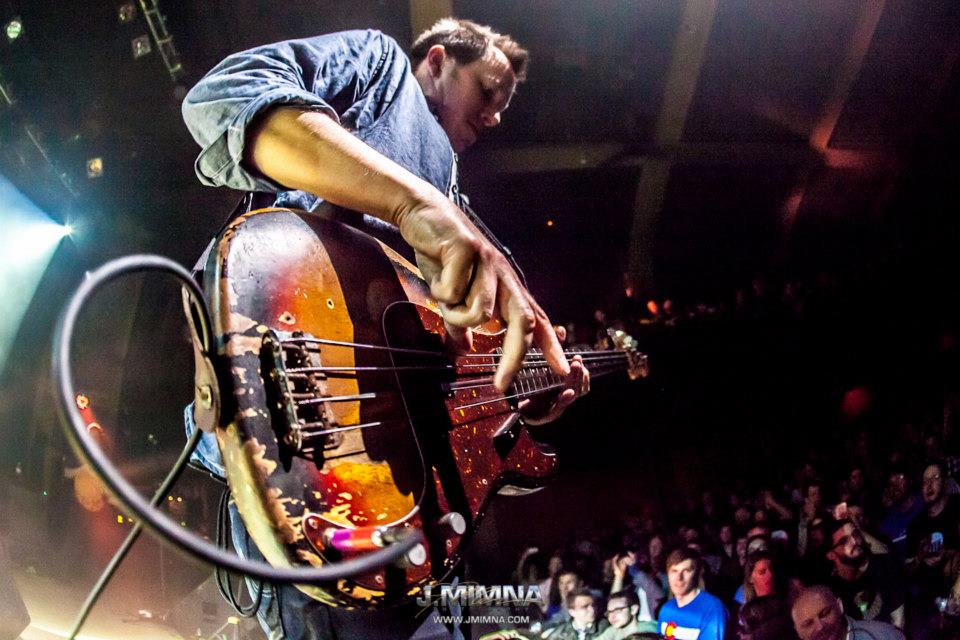
Robert Mercurio on bass for Galactic
According to reviews of this tour, the band is reaching back to its roots, while still keeping it contemporary. Check out recent releases “Higher and Higher” featuring JJ Grey and “Dolla Diva” with a duet by Maggie Koerner and David Shaw of The Revivalists. For this tour, Erica Falls is handling the vocals — an excellent choice of a New Orleans singer whose talent far exceeds her current public recognition. But perhaps not for long. Here’s an article that got her on the cover of Offbeat.
Erica Falls, a talented New Orleans singer who has performed with Irma Thomas, John Fogerty and Sting, is the lead singer for Galactic on its current tour.
Individually, Galactic band members are highly active musicians and music producers involved in a wide range of other projects, including some with Seattle saxophonist Skerik (who will be in Portland Maine on Saturday). This week’s I-5 tour is an excellent chance to catch them live. But if you can’t do that, I’ll be playing my favorite Galactic numbers on Sweeney’s Gumbo YaYa on Monday. (Sneak tip: I will have tickets to the Portland show to give away.)
Also, consider subscribing (upper right hand column). I write regularly about New Orleans music, particularly as it relates to the Northwest.
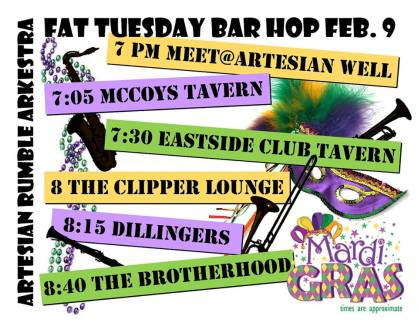
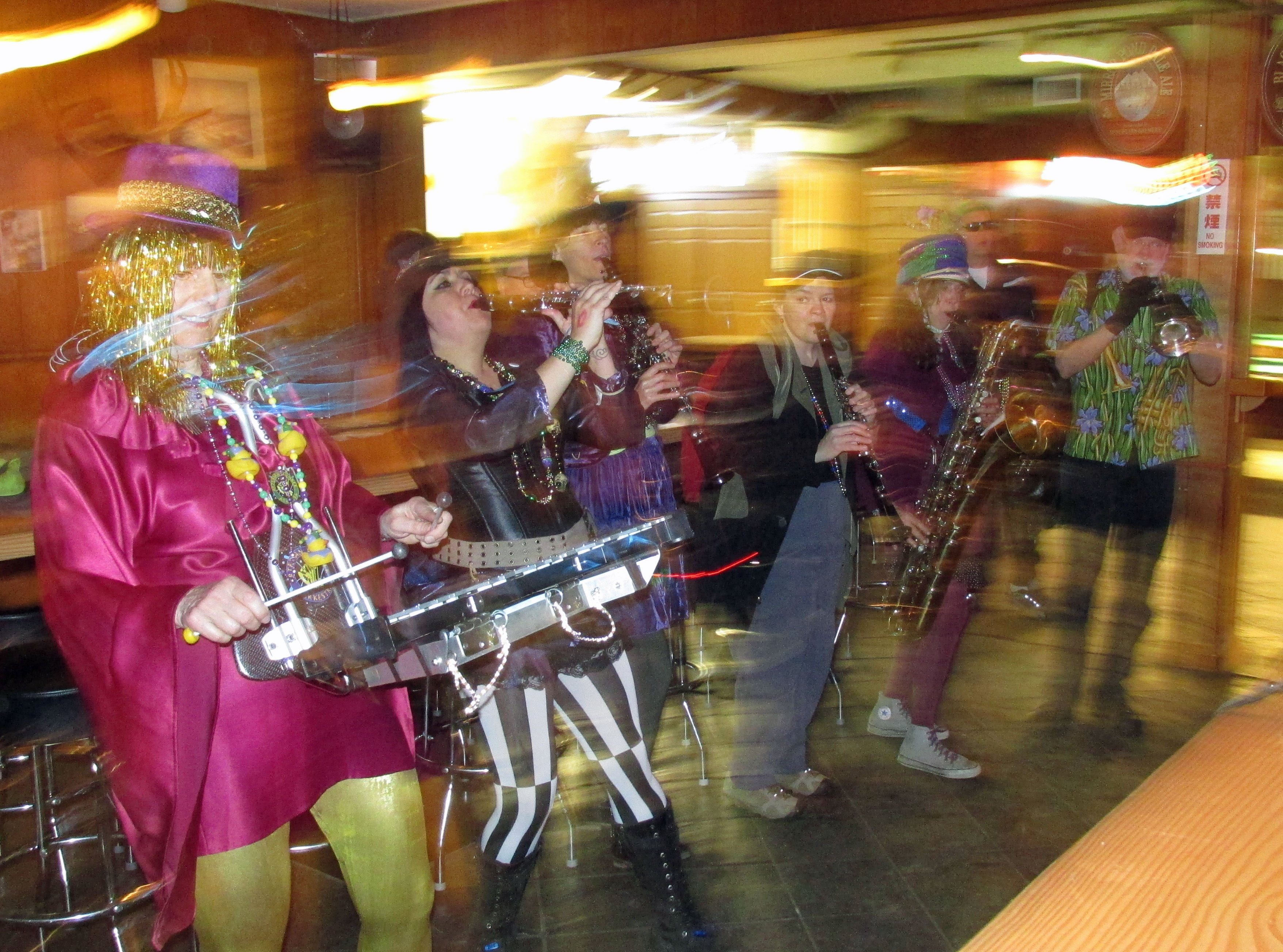
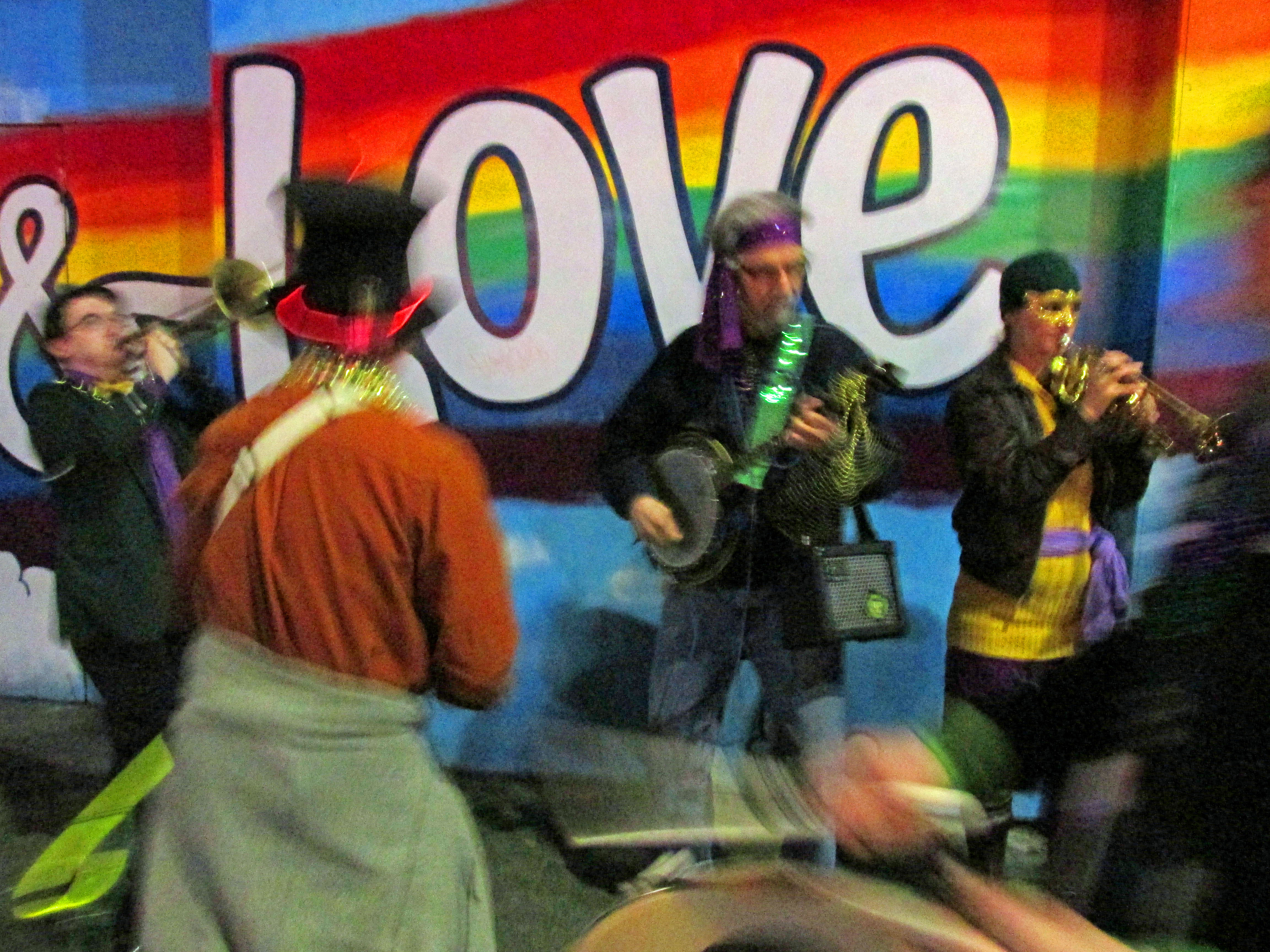
The Artesian Rumble Arkestra brought the spirit of Carnival to Olympia last night when it processed through 11 downtown bars for its second annual pub crawl.
Here’s the 2016 Pub Crawl Schedule for Tuesday
News Flash- The band is going to rumble for Fat Tuesday 2016 on February 9
We caught up with the band at McCoys and in a scene sort of reminiscent from the first episode of Treme when Rebirth Brass Band gathered at a bar prior to a parade, we watched the band regroup and prepare for its assault on Fourth Avenue. But first, they played Iko, Iko.
Artesian Rumble Arkestra marched through downtown and 11 pubs last night, carrying the spirit of carnival with them.
Over the next two hours, they worked their way through Obsidian, Eastside Tavern, Le Voyeur, The Clipper, 4th Ave Tavern, and Dillinger’s. Then they turned right toward Budd Bay on Capitol and stopped at the Brotherhood before finishing up at Rhythm and Rye. Prior to us hooking up with them, the band had serenaded drinkers at the Fish Tale Brew Pub and Cryptatropa.
The music was fun and so was the notion of mixing it up. I enjoyed watching the different reactions of patrons as a full blown brass and percussion band entered their space. Not to mention the colorful dancing of Steve Passero. The pool players at 4th Ave whose games were temporarily interrupted took it in stride and danced while the computer-engrossed patrons of Obsidian took a couple of songs to get into the mood. The folks at Clipper didn’t want the band to leave. Too bad we don’t allow “go cups” in Olympia like New Orleans does.
The spirit was infectious, with folks joining the parade as the journey down Fourth Avenue continued.
It was a prime opportunity to once again experience the liberating effect of music, which affords us the opportunity to lift ourselves out of the moment. The history of New Orleans is very much entwined with music and its ability to nudge us out of our ruts. When Jazz and Rock n’ Roll emerged, traditional power structures were unnerved, partly because the music brought together people of all colors to dance and sing but also because the music’s message was empowering to those who were not expected to have that power.
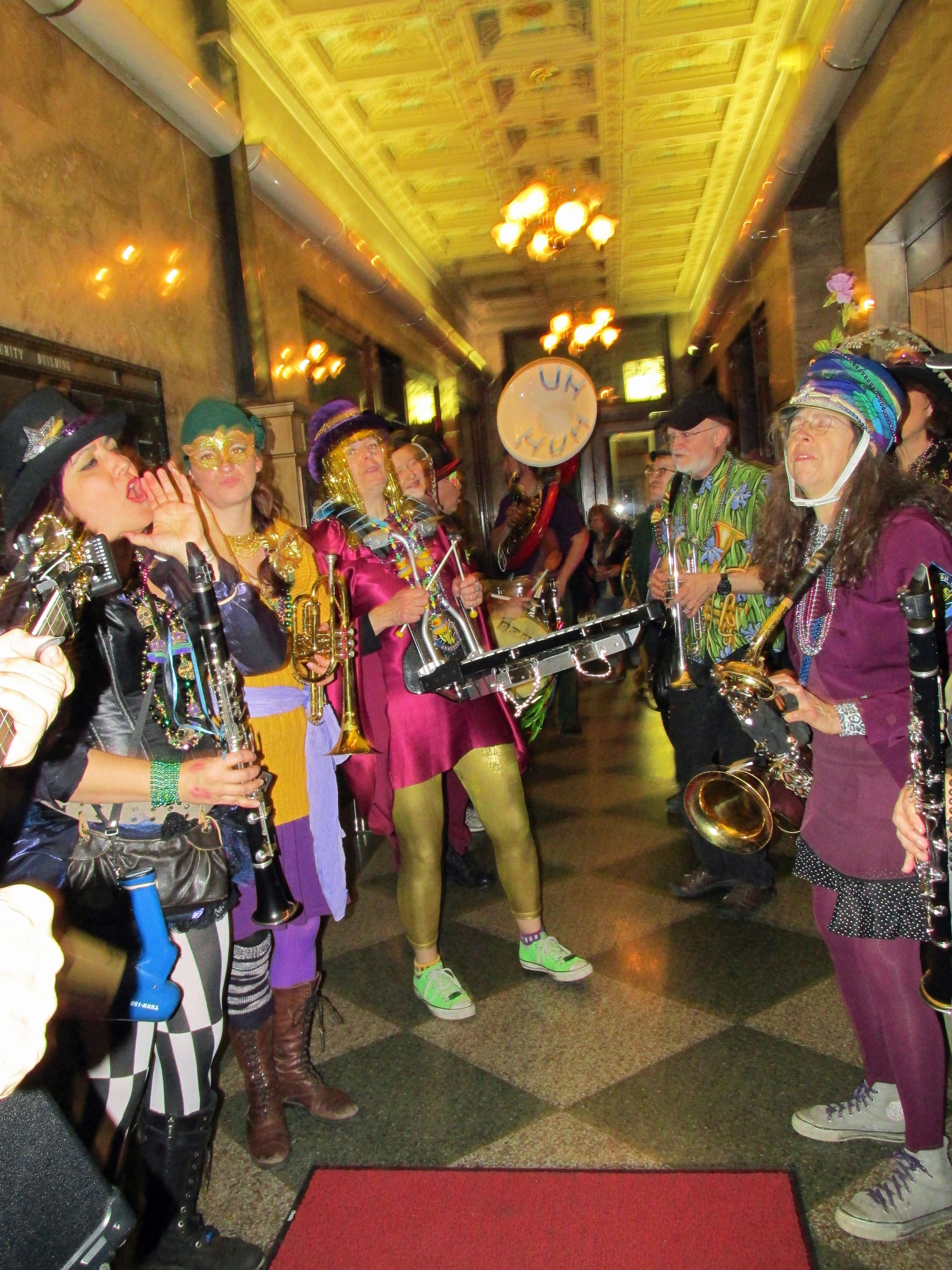
My favorite venue was the hallway of the Securities building, allowing the band to serenade patrons at Dillingers and Rumors Wine Bar.
I look at the wonderful folks who comprise the Artesian Rumble Arkestra and I see people who are liberated by their music and the instruments they play. How cool for them (and those in their path last night) to use Fat Tuesday as an excuse to share that love with others.
I know this blog and my show is about New Orleans music but I also live in Olympia where I’m lucky enough to get in the path of Artesian Rumble Arkestra.
I’m on a journey to learn about New Orleans music, consider subscribing using the button on the top right column. Tune in on Monday if you can.
If you’ve been catching my show, you know that carnival season started on January 6. And it ends on Mardi Gras Day (Fat Tuesday), February 17. One last blowout before Lent begins. In the last week alone, over 20 parades have rolled through the streets of New Orleans. There are so many activities and traditions encompassed by the New Orleans carnival season, that its best if you go to the source. To get a feel for a street parade, check out the site’s live cameras.
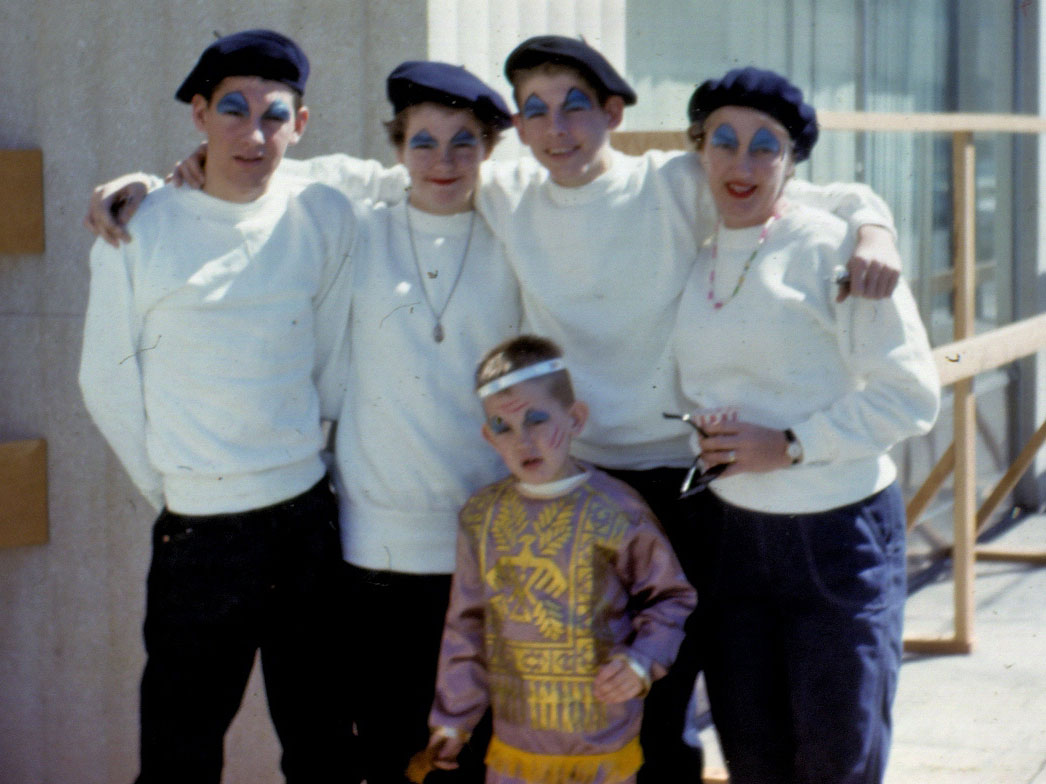
My family (my Dad’s taking the picture) as we head to Canal Street for the Mardi Gras parades in the early 60s. I didn’t get to wear a beret.
It’s been a long time since my last Mardi Gras in New Orleans. I was 10 years old. Our family tradition was to camp out at my Dad’s office just off Canal Street and watch the major parades pass.
It was quite a party at the office with a potluck table loaded with fried chicken, gumbo, King Cake and a wide variety of liquor bottles. At that time, in the 60’s, the big parade on Mardi Gras Day was, and perhaps still is, the venerable Rex.However, the parade was referred to as “formaldehyde on wheels” by a character in the HBO series Treme.
The unique Zulu parade was almost mystical to me at the time, an elusive parade with no printed parade route that tossed coconuts and had ass-kicking music. The Times Picayune and MardiGras.com have done a great job of posting photos and videos of parades during the carnival season and I’m impressed by the intimacy of some of the parades. They remind me of of my favorite parades that used to roll down Freret Street and Carrollton Avenue. Parade routes are more limited now but even still some of the parades offer that neighborhood feeling–quite a contrast from the Bourbon street image of Mardi Gras often portrayed to the rest of the world.
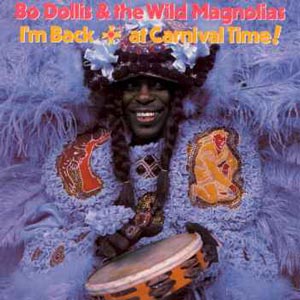
Big Chief Bo Dollis brought the music and rhythms of Mardi Gras Indians to music lovers everywhere. He died January 20 after a long illness.
One tradition that continues to grow in awareness is the Black Indians of Mardi Gras. Even with the growth in popularity, its still a lucky person who can catch sight of a Mardi Gras Indian gang doing their thing on the streets on Fat Tuesday. I’ll be doing Mardi Gras and party music in general on my show on Monday. If you miss the show, you can catch it later and other episodes, on MixCloud.
“Oh love, oh careless love, you’ve fly to my head like wine.”
Words of caution during this season of Valentine? Perhaps. But it’s also the opening to another enigmatic traditional song with uncertain origins that has become a New Orleans standard.
Like St. James Infirmary, Careless Love took its form from the 19th Century folk tradition. The song didn’t get locked down until it was recorded in the 1920’s, most notably Bessie Smith’s recording with Louis Armstrong on cornet. Even since then, the song’s lyrics have been malleable, adapted to jazz, blues and even bluegrass.
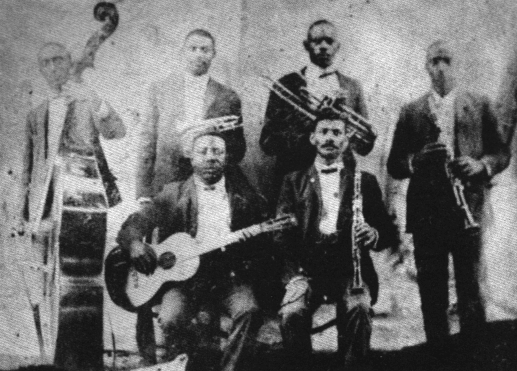
Buddy Bolden, holding the cornet standing in back, was never recorded but he is likely the reason why Careless Love is a New Orleans standard today.
The song’s strong association to New Orleans is most likely the result of Buddy Bolden who performed the song regularly at the turn of the 20th Century. Buddy Bolden and his band performed a more bluesier and improvised form of ragtime and inspired jazz pioneers such as Kid Ory, King Oliver and Bunk Johnson who followed.
While there are no recordings of Bolden and his band, there are literally hundreds of other recorded versions of Careless Love, including those by Pete Seeger, Janis Joplin, Lead Belly, Madeleine Peyroux, Big Joe Turner, Nat King Cole, and Ray Charles.
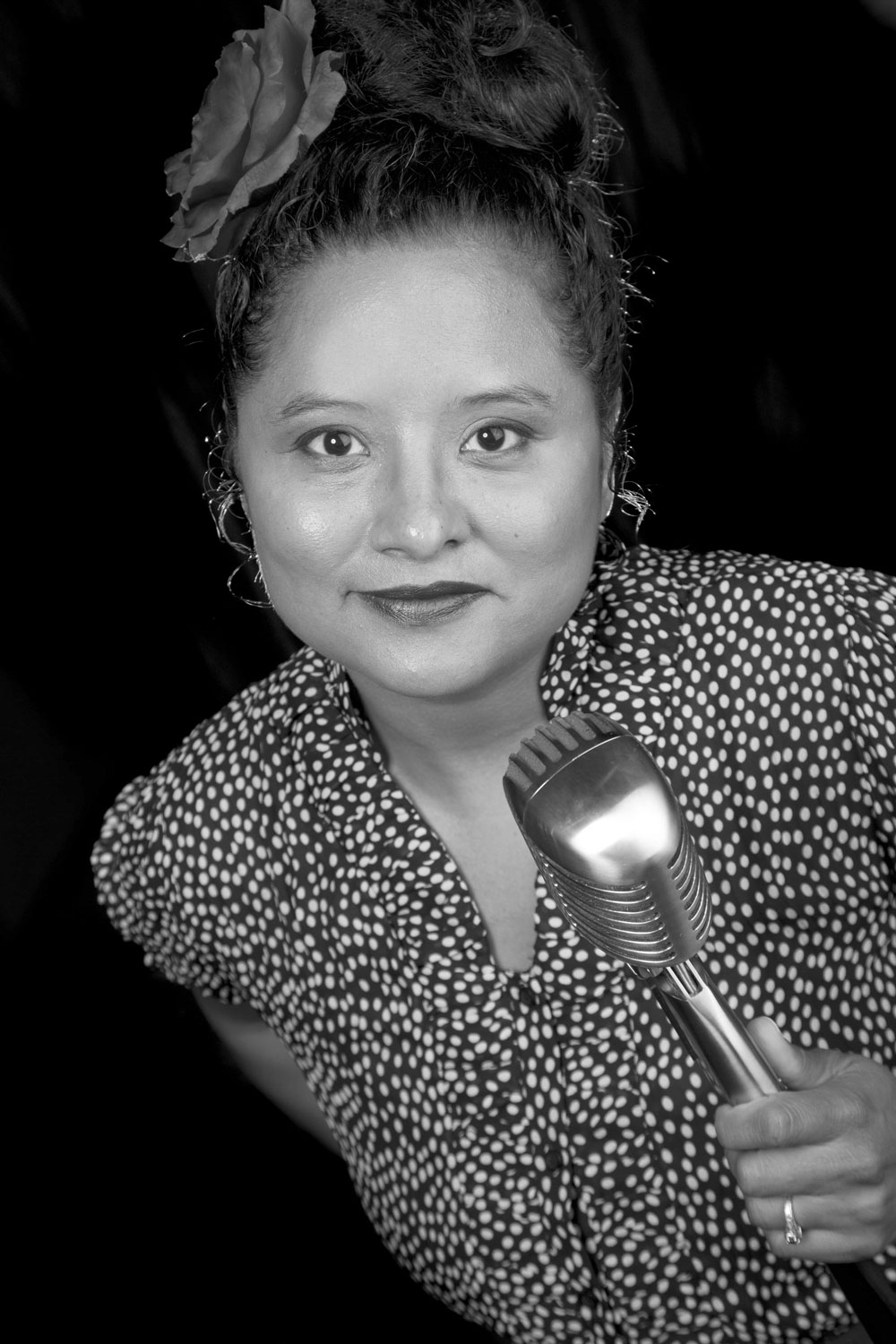
Contemporary New Orleans artists, such as Miss Sophie Lee, carry on the New Orleans tradition of performing Careless Love.
With the onset of African American History Month, I thought it worthwhile to address the role of New Orleans in launching Rock n’ Roll. Cause the very fact that the city’s contribution is relatively unknown is a reflection in part of the broader subjugation of the African-American credit for creating the music in the first place.
Whether you date the beginning of Rock n’ Roll to Louis Jordan’s Saturday Night Fish Fry, Roy Brown’s Good Rockin’ Tonight, Fats Domino’s The Fat Man, or even the non-New Orleans recording of Rocket 88 by Jackie Brenston, what’s abundantly clear is that this music originated from African Americans–not white boys like Elvis Presley and Bill Haley.
Alan Freed, the white deejay credited for popularizing the term Rock n’ Roll, essentially used the term to rebrand Rhythm and Blues which was associated with black music. For that matter, the term Rhythm and Blues was created by a Billboard Magazine writer in 1949 to replace the previously used term “Race Music.”
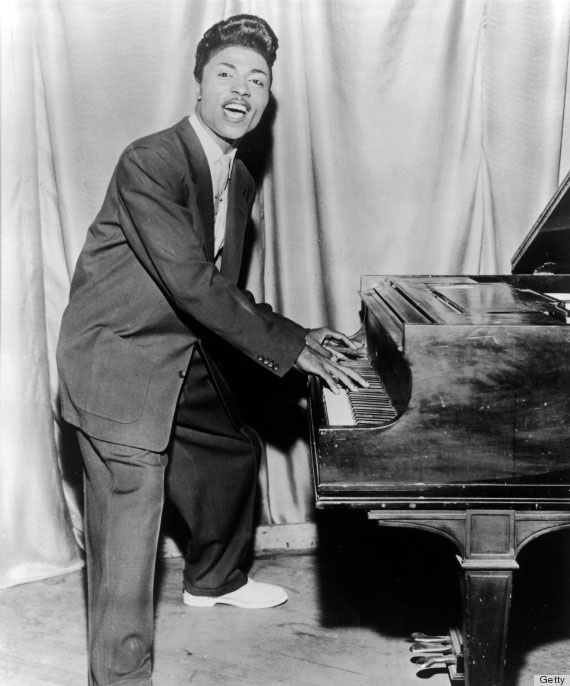
Little Richard recorded almost all of his big hits in New Orleans.
Back to New Orleans, many of these early Rock hits were recorded in the J&M Studio on Rampart Street on New Orleans — located within a Russell Wilson touchdown pass of Congo Square where people of color (free and enslaved) gathered on Sundays and practiced the drum beats and rhythms that fueled jazz, swing, jump blues and Rock n’ Roll. The studio also recorded a great many other early Rock hits, including almost all of Little Richard’s hits.
Through radio, white youth were exposed to black artists–a wonderful testament of the integrating power of the air waves. In a bizarre twist, some white deejays hosted “Rhythm and Blues” shows and pretended to be black when introducing the songs. To sound authentic, a New Orleans deejay hired an African American to write his script.
While Fats Domino is unlikely to be included in the pantheon of civil rights leaders, his music and performances went a long way toward breaking down the walls of segregation. First, his records sold more than any artists other than Elvis during the 50s. (One million copies of The Fat Man were sold within the first three years of its release)
But it was in Domino’s performances where push came to shove. After all, can you really stand still to his music? (Go ahead, try!) Even though performance halls attempted to segregate white and black audiences, dancing ensued and elbows rubbed, flummoxing police and other security who often caused riots by trying to break up the mingling.
Antoine “Fats” Domino was on the vanguard of Rock n’ Roll, performing to white and black audiences and selling more records than any other Rock musician, except for Elvis.
That mingling particularly scared Southern segregationist who contributed to the public venom poured on Rock n’ Roll, providing more than the usual incentive for music promoters to put a white face on this popular music.
Yet Domino continued to perform throughout the country, at a time when black musicians often had to sleep in their cars or buses because hotels would not accept them.
When he appeared on television, his band, all African American musicians, were often hidden from sight.
If you’re interested in learning more about Fats Domino during his period, I recommend “Blue Monday: Fats Domino and the Lost Dawn of Rock n’ Roll” by Rick Coleman. It was Coleman’s book who tipped me off to the Pat Boone shadow. Boone recorded a number of African American rock numbers, illustrating just how easy it is to sap the soul from a number.
You cannot truly understand New Orleans music without having some awareness of the Black Indians of Mardi Gras, or what is more commonly referred to as “Mardi Gras Indians.”
This more than century-old tradition of certain African Americans in New Orleans wearing elaborately designed, handmade suits in honor of Native Americans on Mardi Gras Day belies any easy explanation.
I like the Folklife in Louisiana tribute to Allison “Tootie” Montana as a good starting point on this unique folk tradition. (I also highly recommend again the book “Nine Lives” which features Tootie’s story from the perspective of his wife, Joyce Montana).
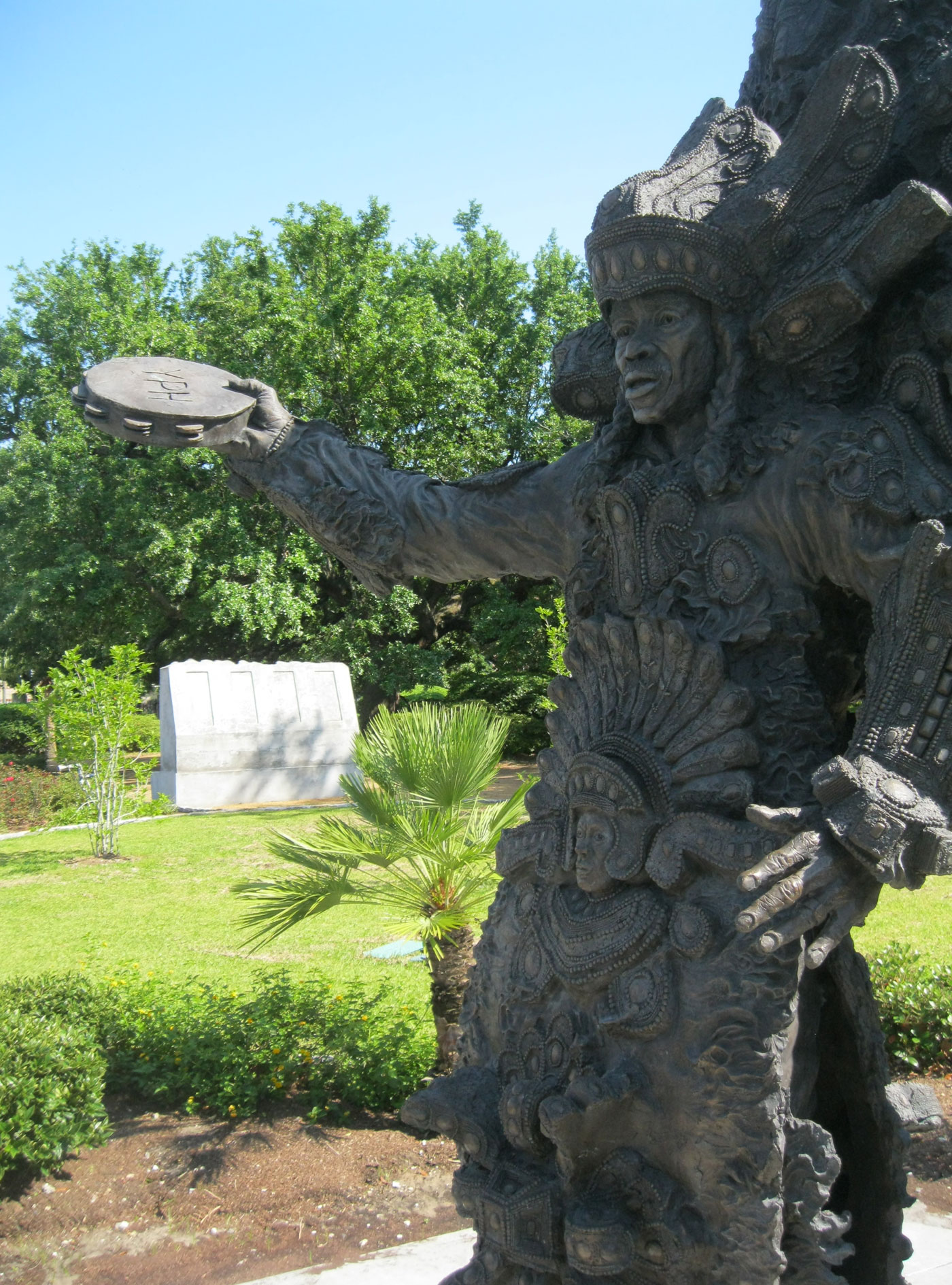
Big Chief Allison “Tootie” Montana is remembered with this statue in Louis Armstrong Park on Rampart Street.
Tootie Montana was known as the Chief of Chiefs for his role in elevating the practice of “masking” and “suiting” up to a high art. In an effort to diminish the violent history of Mardi Gras Indian gangs, Montana incorporated sequins, beads and large garish feathers into his suit, using egg cartons for an undercarriage that provided a three-dimensional look. His stunning suit changed the game by swapping the battlefield weapons of guns and knives with needle and thread.
While you should feel lucky and relatively safe if you ever have a chance to observe a Mardi Gras tribe in full display, the violent tradition still colors their music and rituals. Make no mistake about it, there is still rivalry. But instead of who is the toughest, the goal is who is the prettiest.
A percussion-driven music is an essential part of this tradition with the tambourine being the most common instrument. The songs speak to the traditions and history of the Mardi Gras Indians, using words with origins that reside deep in the linguistic stew of New Orleans and is more simply stated as “creole.”
Author Jay Mazza who was lucky as an outsider to observe a Mardi Gras Indian practice, describes the music this way in his book Up Front and Center:
“The lyrics of Mardi Gras Indian music are based on boasting and improvised vocal rhymes. Each Indian took a turn until he ran out of words, began repeating himself or was pushed out of the spotlight by another Indian.”
Not surprisingly, the words, rhythms and vibe of the Mardi Gras Indian have worked into New Orleans music in countless ways.
Songs like Jock-O-Mo by Sugar Boy Crawford and Iko Iko by The Dixie Cups draw their origins from Mardi Gras Indian chants. Earl King’s historic “Big Chief” which was recorded with Professor Longhair has references to the Chief’s “Spy Boy and Flag Boy” both important roles in the tribe. These were musicians who borrowed from the tradition.
Big Chief Bo Dollis brought the music and rhythms of Mardi Gras Indians to music lovers everywhere. He died January 20 after a long illness.
It wasn’t until the early 70s, that the world heard the real thing outside of New Orleans. Bo Dollis, Big Chief of the Wild Magnolias, and Monk Boudreaux of the Golden Eagles collaborated on recordings, starting with the single Handa Wanda and later two albums in 1974 and 1975 respectively. Both continued to record and perform with their own gang and other musicians over the years. Last Tuesday, January 20, Bo Dollis died and the city is mourning. Monk continues to perform and will be at this year’s New Orleans Jazz & Heritage Festival.
The Wild Magnolias recordings were followed closely by an album release of Wild Tchoupitoulas. George Landry, otherwise known as Big Chief Jolly of the Wild Tchoupitoulas, fronted a powerful group of musicians, including his nephews Cyril, Art, Charles and Aaron Neville, in a seminal album of Mardi Gras Indian songs. On the back and inside cover of the Neville Brothers’ release Fiyo on the Bayou where they reprise some of the songs, you’ll find a tribute to Chief Jolly.
If you are a Treme fan, then you’ve witnessed the fictional story of Albert Lambreaux, the Big Chief of the Guardians of the Flame. The model for this character is the real chief of the Guardians of the Flame, Donald Harrison Sr. whose son, Donald Harrison Jr. has applied his highly regarded jazz musicianship to fusing jazz and Mardi Gras Indian rhythms in some of his recordings, including Spirits of Congo Square.
To get more detail on the music of Mardi Gras Indians, I recommend this article by former WWOZ Show Host Thomas Morgan. To hear more of this music as well as other great New Orleans music, be sure to tune in on Monday for Sweeney’s Gumbo Ya Ya.
I’m stealing an idea from my son, Riley, who uses Fridays to write about various loose ends for his progressive political blog.
So below are three items: Jazzfest lineup, great new music at KAOS and a heads up on my Monday interview.
New Orleans Jazz and Heritage Festival has announced its 2015 line up. As usual, the music is far from limited to jazz and offers some unique shows and musician pairings. I’ll provide more depth in a later post. Right now, you need to know the festival is seven days stretched over 10, starting Friday April 24 and ending Sunday, May 3. Be sure to check the line up by day if you’re planning a trip.
While there’s some interesting headliners (e.g. Elton John and The Who), I recommend some of the harder to see local acts like: a reunion of the Radiators; Henry Butler recreating his 2014 album with Steve Bernstein and the Hot 9; a hip hop pairing of Juvenile and Mannie Fresh; Ivan Neville and Dumpstaphunk playing with his uncle, Art Neville; The Dirty Dozen Band; George Porter Jr. & the Runnin’ Pardners, and, best of all, The Meters with all four founding members–worth the price of admission right there.
New Music in the KAOS Studio – I’m loving the music we’re getting in the studio from
There is lot to love about Lynn Drury’s new album, Come to My House.
New Orleans artists. Since writing about the 2014 releases (Part 1 and Part 2), we’ve received two CDs from Lynn Drury, including her latest one “Come To My House.” I’m afraid I have a serious music crush on this earthy singer, guitarist, and songwriter. Check out “I Know You Want Me, Baby” and you’ll know what I mean.
If you’re worried traditional New Orleans jazz is dying out, look no further than the Shotgun Jazz Band. It’s fourth album Yearning, carries you to Frenchmen Street with a solid mix of standards and less heard wonders.
Josh Wilson (green pants) will be on air with me on Monday talking about his Tubaluba’s upcoming performance at Rhythm & Rye.
Tubaluba – Seattle’s answer to New Orleans brass bands – Josh Wilson, who plays the bass drum and keyboards for Seattle’s Tubaluba, will be on the phone with me during Sweeney’s Gumbo YaYa this Monday (just after 11 a.m.). I caught Tubaluba at the 2013 Seattle Honkfest. The band members are clearly fans of New Orleans brass band music. Wilson even has a WWOZ sticker on his bass drum. The interview will highlight the band’s upcoming performance in Olympia at Rhythm & Rye on January 24.
That’s your heads up and preview for my next show. Join me, won’t you?
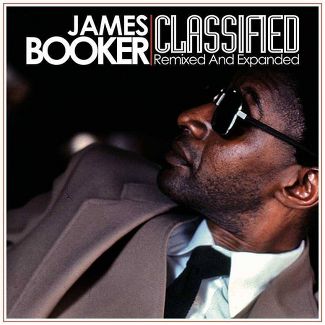
If there is justice in the music world, James Booker would be better known for the genius and artistry of his piano playing. The fact that his music is still played 30 years after his untimely death in New Orleans offers some hope that justice may ultimately be served.
Classically trained but also taught by Tuts Washington and influenced by Professor Longhair, Booker came of age in the heyday of New Orleans R&B era when Fats Domino, Dave Bartholomew and Huey Smith were rocking the jukebox with singles recorded at Cosimo Matassa’s studio.
Booker got in on the act as a studio musician as well as fronting his own songs with “Doin’ the Hambone” and “Thinkin’ About my Baby.” His song “Gonzo” charted nationally and his playing style, sometimes described as a nest of spiders on the keyboards, was admired by many, including music lovers in Europe where he spent some time and built a following.
But while Booker was a versatile musician, capable of playing a wide range of styles, including working with Freddie King, Aretha Franklin, Ringo Starr, the Doobie Brothers, Maria Muldaur, and Jerry Garcia, his star never quite rose to the level of his talent and genius. (Check out this sound recording of a rehearsal session with Booker and Garcia.)
It’s a sad but familiar story; he had his issues. Some, in retrospect, have pondered whether he suffered from a mental malady that in our current day might have been more successfully treated by means other than with heroin and alcohol.
He died way too young in the emergency room of Charity Hospital in 1983 at the age of 43.
Booker was able to bring elements of many musical genres together and his interpretations of familiar songs are unique and probably difficult to duplicate given his skill.
Booker’s “absolutely unique style is a polyglot mix of gospel, boogie-woogie, blues, R&B and jazz, all executed with a thrilling virtuosity,” wrote Tom McDermott who is himself an amazing pianist from New Orleans.
When I listen to Booker’s music, I hear shades of the “Spanish Tinge” made famous by Jelly Roll Morton. His hyperactive right hand razmatazz and left hand syncopation are reminiscent of Professor Longhair. And yet, his style builds on those masters rather than replicates. And he passed the tradition on by tutoring Dr. John and Harry Connick Jr.
As always, its best if you hear for yourself. I’ll be playing from a few of his solo recordings on Monday but if you have time, consider checking out his last recorded performance at the Maple Leaf. He had a regular gig at the Uptown New Orleans bar, often playing to sparse and disinterested audiences. The Booker you see in this video contrasts sharply with the more flamboyant Booker of earlier years. His teeth are fixed, he’s wearing a suit and not wearing his trademark patch with a star on it over his left eye. Here’s a video of that period in his life.
Helping to bring the world’s eye to Booker’s talent is a documentary called the Bayou Marahaja by New Orleans filmmaker Lily Keber.
“Bayou Maharajah explores the life and music of New Orleans piano legend James Booker, the man Dr. John described as “the best black, gay, one-eyed junkie piano genius New Orleans has ever produced.” A brilliant pianist, his eccentricities and showmanship belied a life of struggle, prejudice, and isolation. Illustrated with never-before-seen concert footage, rare personal photos and exclusive interviews, the film paints a portrait of this overlooked genius.”
I have none seen this film; no distributor yet. I’m hoping it can be shown at the Olympia Film Society’s Capitol Theater. But you can check out the trailer and join me in honoring and enjoying his talent. I’ll be spinning some Booker tunes along with my usual mix of New Orleans music this Monday on Sweeney’s Gumbo YaYa.
As part of my ongoing education on New Orleans music, I’ve been reading about the use of the piano in New Orleans music. (Please note: I’m not a real musician but I operate a CD player at home)
While the piano wasn’t invented in New Orleans, several styles of piano playing are derived from the city’s musicians. So much so that “one can easily claim the piano as the prime choice of innovators in New Orleans music,” according to an article by Tom McDermott who innovates on the piano on a daily basis in New Orleans.
This versatile instrument combines melody and rhythm and makes it possible for every parlor or living room to become a concert hall.
As Jon Cleary, another fine keyboard purveyor of New Orleans music, said, the piano is “a hip little tool because it allows you to reproduce all the elements of what a band would do.”
It was on a piano in the Dew Drop Inn in New Orleans during a recording break that Little Richard connected with his mojo, banging out Tutti Frutti.
What Jelly Roll Morton and others that followed did was translate the sounds of the New Orleans street bands to a piano, delivering their own interpretation to the customers of night clubs and sporting clubs and ultimately to a global audience.
The piano is so important to New Orleans music that a premiere annual event is Piano Night held around the time of the New Orleans Jazz and Heritage Festival. The host of this event, WWOZ, has created a compendium of videos that explore that New Orleans piano tradition.
Here’s Jon Cleary providing a quick run down of the various piano playing styles.





 Sweeney's Gumbo YaYa