Hurricane Katrina 10-year anniversary is a time to reflect

The 10-year anniversary of Hurricane Katrina affords us the opportunity to remember and reflect on how devastating nature can be when compounded by human failure.

I’m dedicating these two radio shows to the survivors of Hurricane Katrina.
katrina3
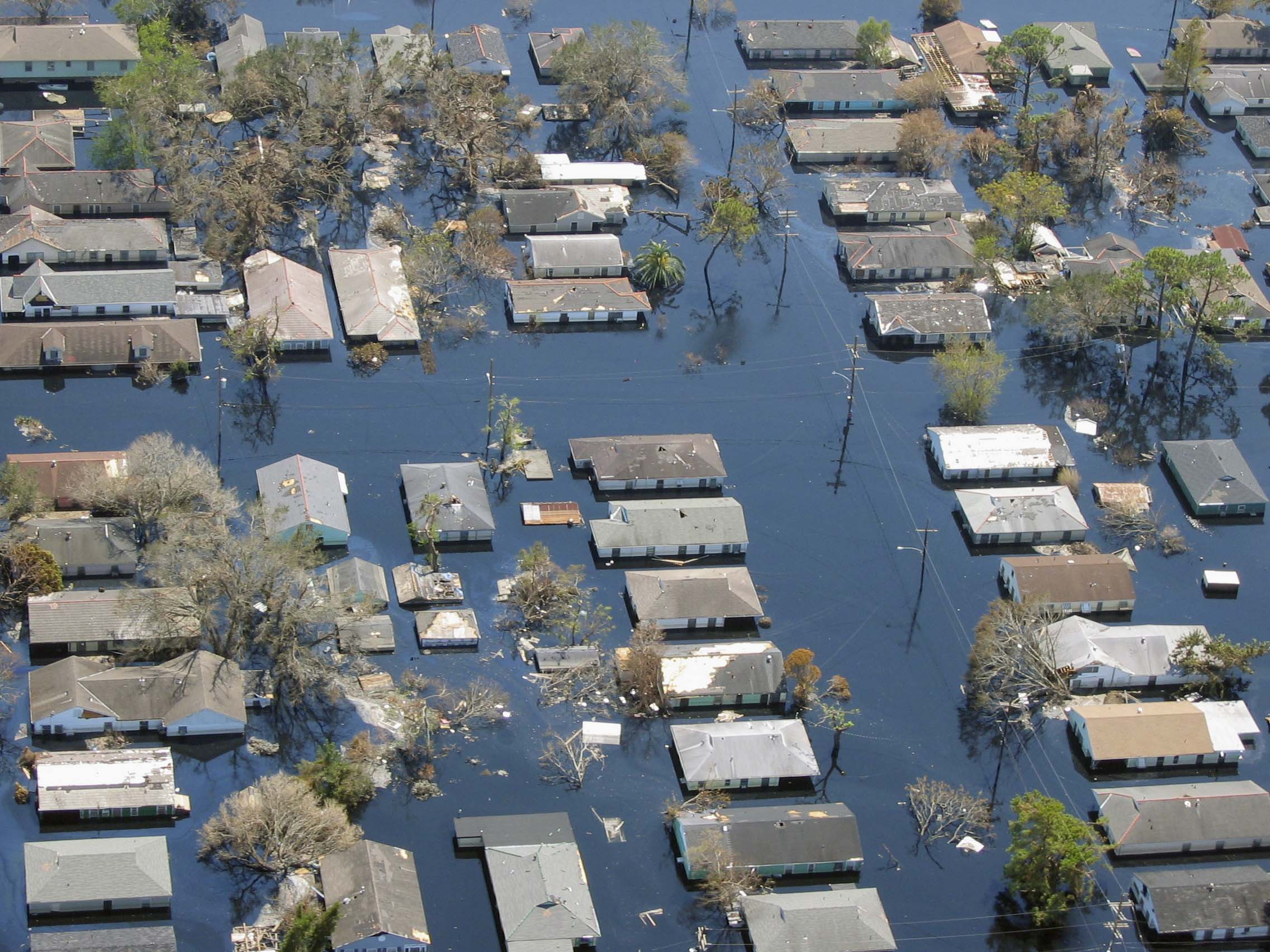
Eighty percent of New Orleans was underwater after the levees failed during and after Hurricane Katrina struck.

As often happens, the poor, elderly and vulnerable populations suffered disproportionately because of their inability to get out of harms way and the paucity of their personal resources to recover afterwards.

Sadly, that seems to be a worldwide characteristic. But what Katrina revealed was that a country that could deliver troops anywhere in the world within two days could not come to the rescue of one of its most culturally rich cities and its residents. And the residents that suffered the most were poor.

I love my country and as a 30-year state employee, I believe in the positive power of government. But local, state and federal governments failed in Hurricane Katrina, from insufficient evacuation efforts, to the negligence in building and maintaining the levee system, to the limp rescue and recovery efforts and insufficient relief and restoration programs that followed.

Like most folks who witnessed from afar, I was alarmed and shamed by the failure to evacuate the city’s low-income, elderly and vulnerable population. Roughly 100,000 people were left behind, stranded in a flooded city, fleeing like rats to the Superdome, Convention Center, bridges and rooftops, stuck there for days in insufferable heat with little food and water.  Roughly 1,800 residents died.

A destroyed home New Orleans lower Ninth Ward. The writing on the outside was from rescue workers.

I had planned to visit my sister that fall. She had moved back to New Orleans from the Northwest the year before. I already had my plane ticket when on that Sunday morning in late August I watched Mayor Ray Nagin on national television urge the city’s evacuation with the words: “We’re facing the storm most of us have feared.”

I was out of town, watching the TV at a hotel. When I got home later that day, a phone message from my sister said she was going to hunker down and stay in the city.  I wouldn’t hear her voice again for over a month.

Her message had been left on Saturday night.  Nagin’s announcement was made Sunday morning. The hurricane made landfall near New Orleans on Monday morning, August 29, and by Tuesday 80 percent of the city was underwater.

The power of the water when the levees broke pushed houses off foundations and cars down several blocks.

My sister did eventually evacuate. Unlike many of the residents who were left behind, Katie had a car and the financial means to buy gas and survive the many months of uncertainty that followed. She was lucky yet she suffered so much personal anguish and loss that I doubt she will ever live again near the hurricane zone.

I rebooked my flight for Jazz Fest that April which did occur and reignited my love for New Orleans culture. My sister gave me the devastation tour of St. Bernard Parish and the Lower Ninth ward, both areas completely submerged by what is now recognized as one of the worst civil engineering failures in U.S. history

There are a great many things the city and its residents can take pride in achieving over the decade. The city took a death blow and got up off the mat and survived–perhaps even thrived. New Orleans is a wonderful place to visit and live in. But it has changed.

Maybe some of the changes are good, maybe not. But Katrina, like the 1927 flood and Hurricane Betsy, has left its mark.

In my next post, I’ll tell brief stories of how some of the New Orleans musicians I play on my show weathered the storm.
My Dad’s Legacy: A strong affinity for music from New Orleans!

Just about every time I spin a Satchmo number, I think of my Dad.  I just can’t separate my thoughts of Pop from the sound of “Pops.”

dad-clarinet
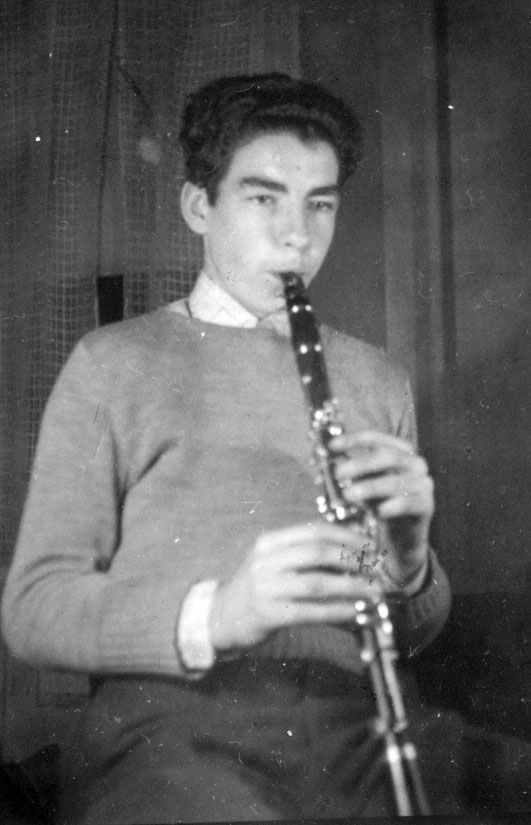
My Dad played clarinet up until he entered the Navy in 1943. He played briefly with Tommy Dorsey until the bandleader told him to go back to school. (A story that still made him sad to retell 30 years later)

Jim Sweeney was born in 1923 about a year after Louis Armstrong moved to Chicago to join King Oliver and his band. So he would have been a young pup when Armstrong released his Hot Five and Hot Seven recordings. But that didn’t keep him from digging them.

While he held a lifelong passion for Armstrong,  it was most likely Glenn Miller and his way of using reed instruments to carry the melody and Benny Goodman who inspired him as he came of age playing the saxophone and clarinet in the 30’s.

My musical foundation was solidly laid by Dad’s love of music, his stereo and his collection of swing, jazz and big band records. His taste in music became the soundtrack of my childhood.

I wouldn’t have been born in New Orleans if my Dad hadn’t taken a teaching post at Tulane in the 50’s.  As someone who once played with the Tommy Dorsey band, albeit briefly, he must have thought he hit the jackpot when he got that assignment.

My Dad at his organ, next his record player. Later, he would create a wall niche for the organ and shelves for his records and player. He also added central air conditioning.
My Dad (and me) at his organ, next to his record player. Later, he would create a wall niche for the organ and shelves for his records and player. He also added central air conditioning but he still walked around the house in his briefs.

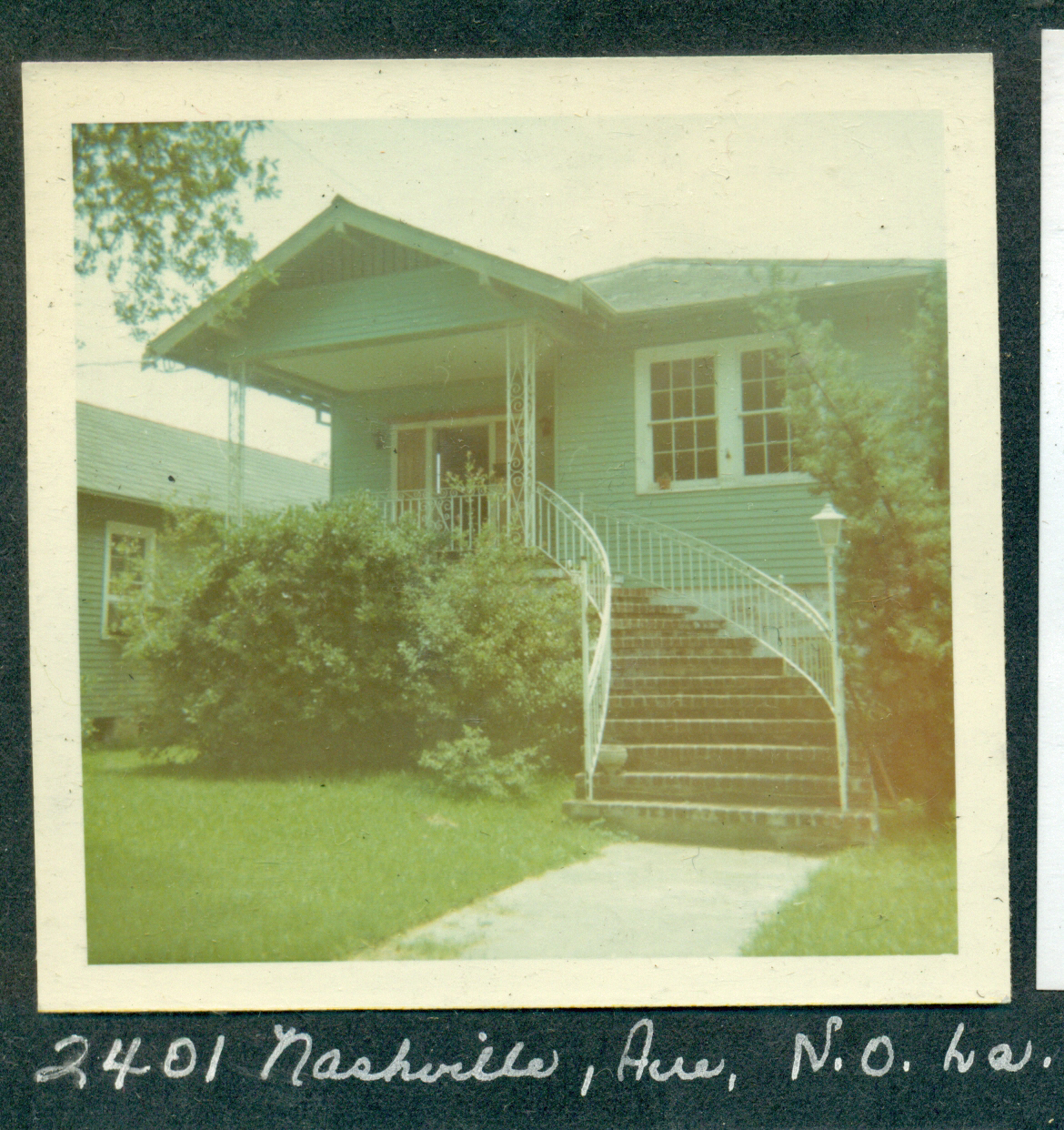
But by then his clarinet was packed away. He bought an organ instead and remodeled the downstairs of our house on Nashville Avenue, just a few blocks from Freret.  There he and my Mom would hold parties, digging deeply into his music collection and inevitably ending up playing the organ or having others play and people would sing and dance. He was a fan of local musicians like Pete Fountain and Al Hirt, and a frequent visitor to their Bourbon Street clubs as well as a new spot called Preservation Hall.

My Dad’s career blossomed in New Orleans allowing him to get to know a wide range of people, particularly those active in labor and justice issues. As a result, our downstairs parties became a safe haven for activists such as Loyola faculty Louis Twomey and Joseph Fichter, Jesuit priests and academics who played a key role in school integration. Other visitors included the poet, John Beecher (“To Live and Die in Dixie”), the journalist John Griffin (“Black Like Me”) and, so I’ve been told, the Singing Nun.

We live in Uptown New Orleans where my Dad remodeled the downstairs with a room designed for music and partying.
We lived in Uptown New Orleans where my Dad remodeled the downstairs with a big room designed for listening, playing and dancing to music.

I was too young to absorb most of this. But I did soak up the music. After we moved away from New Orleans, my Dad still loved to listen to hot jazz and swing. He almost always had music on whenever he was home. But it wasn’t quite the same.

This Monday, I’ll be spinning a lot of music my Dad played in his day and perhaps would have played (more current stuff) had he had the chance.  Please join me.

Happy Father’s Day!

Listen to the show –

KAOS is the world’s window to our community

The Internet has made it possible for community radio to be our window to the world . . . and the world’s window to us.

Reader Alert: Tim’s getting on his public media high horse.window to the world_327x216

True dat! The KAOS Spring Membership Drive begins Friday (April 17)  with a week of regular encouragement to listeners to pony up and become a KAOS member  and support community radio.

If you’re a regular listener to public radio, you know the many arguments for doing this. I’m hoping one or more of those have been persuasive enough to prompt you to support KAOS in the past and future. Here’s one you might not have heard yet.

KAOS listeners know we bring a diverse array of the world’s voices, rhythms and melodies to Olympia. But you might not know about how our station projects the culture of Olympia to the world.

That’s right!

kaosEarlier this week, I was at a community station in New Orleans, WWOZ, which boasts that about half their donating members live outside their broadcast area. That means people from all over the world tune into that station by streaming it on the Internet. That got me thinking.

KAOS streams too at www.kaosradio.org. Some shows are available as podcasts (including some of my episodes) and the station is working with a provider that will allow all our programs up to two weeks old to be replayed after their original airing.

A number of our dedicated, long-time volunteers have developed a loyal following that extends beyond the station’s broadcast boundaries. Programs like J.J. Syrja’s roots rock Retroactive, the Bollywood-focused Junglee Hour, Scott Steven’s world music Spin the Globe and Raven Redbone’s show on First Peoples  Make No Bones About It followed by G.W. Galbreath’s View from the Shore are just a few examples.

These and many other programs are carefully curated by KAOS volunteers who live in our community. During the show, they read local announcements, talk about upcoming events and generally convey who we are and what we care about in Olympia.

If the Internet really is making it possible for people worldwide to understand each other better, then radio shows with real live hosts delivered over the Internet expand on that through the power of music which throughout the ages has been a unifying element.

So when you hear Vertis on the Old Ship of Zion, Anabel on Folkin’ Around or even me bumbling through Sweeney’s Gumbo YaYa, think about how listener supported and volunteered powered KAOS is sharing with the world the things we care about, providing a window into our community.

Along with other volunteers, I’ll be answering phones this week. I hope we talk.  And, just wait till you hear some of the great music I picked up in New Orleans this last trip on my next show this Monday.

Vaudeville Etiquette to grace KAOS studio and Gumbo YaYa

Seattle-based Vaudeville Etiquette will perform live in the KAOS studio tomorrow during my radio show.  While a departure from my usual “Music of New Orleans” format, it will be worthwhile. I guarantee it.

Vaudeville Etiquette, a Seattle-based folk-rock band, will enliven KAOS studio on Monday during Sweeney’s Gumbo YaYa.

I’ve been wanting Vaudeville Etiquetee (VE) to play in Olympia for some time. They offer an energetic performance style and an awesome repertoire that includes songs from last year’s debut album. Debutantes & Dealers has received positive and broad acceptance from American Songwriter to Northwest Music Scene to USA Today.

I stumbled onto VE  about this time last year at the Old Schoolhouse Brewery  in Winthrop. There was standing room only with barely any breathing space between musician and listener. I was immediately struck by the powerful drummer, the slick pedal steel, harmonizing vocals and the aura of frivolity the five musicians projected. This band was having fun and so was everyone else in the pub.

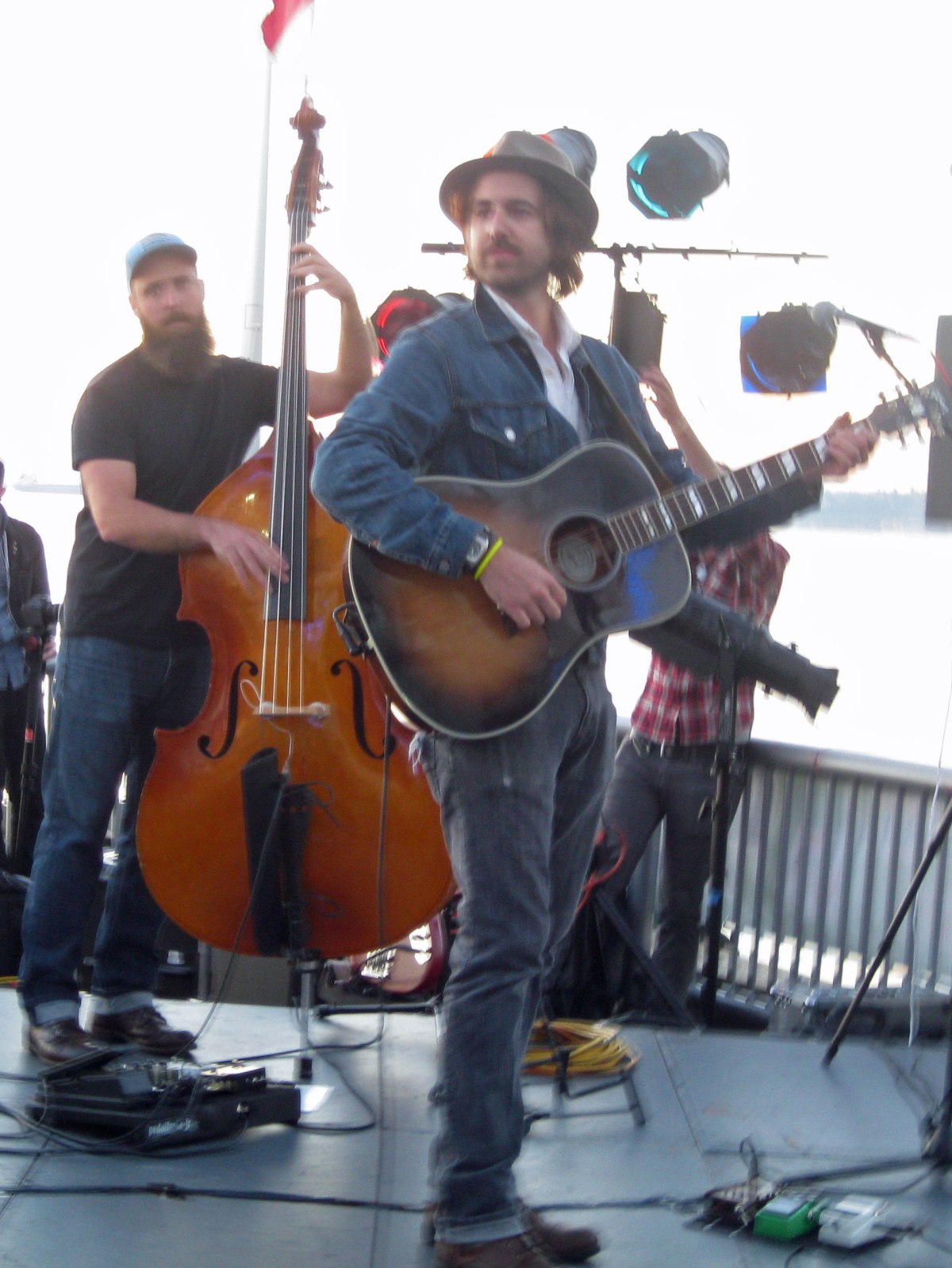
Bradley Laina, guitar, and Sander Vinberg, bass, go through a sound check prior to performing on the Seattle waterfront last summer.

We came late and the band had worked through most of its original music so for the next set, they played what seemed to be the entire Rumours album by Fleetwood Mac. I can only say you had to have been there. It was a hoot. I’ve since caught them twice live in Seattle, confirming  and exceeding my original impression of their talent.

The band is fronted by vocalists and songwriters Bradley Laina and Tayler Lynn who also play the guitar and accordion respectively. Sander Vinberg handles bass, Matt Teske adds pedal steel and mandolin and Bryce Gourley manages the beat.

I’ve heard VE described different ways: folk-rock, alternative country, neo-folk.  My favorite description is by CMJ.com writers who after noticing the frequent play of Debutantes & Dealers on KAOS, highlighted the band on its website with this: “Ragtag, boot-stompin folk and swaying ballads . . Floating harmonies sing romantic tales to the backdrop of country western, gospel and banjo-pluckin’ folk.”  Yea, what they said.

Tomorrow morning, these ragtag boot-stomping good folks will be getting up early, even for non-musicians, to drive from Astoria (where they’re playing tonight) to the KAOS studio in Olympia. I hope to get them on the air by 11 a.m.  I hope you can tune in for them.

Carnival Season ends with a bang on Fat Tuesday

Happy Carnival, y’all!  (Here’s a glimpse at Fat Tuesday in Olympia)

If you’ve been catching my show, you know that carnival season started on January 6. And it ends on Mardi Gras Day (Fat Tuesday), February 17.  One last blowout before Lent begins. In the last week alone, over 20 parades have rolled through the streets of New Orleans. There are so many activities and traditions encompassed by the New Orleans carnival season, that its best if you go to the source.  To get a feel for a street parade, check out the site’s live cameras.

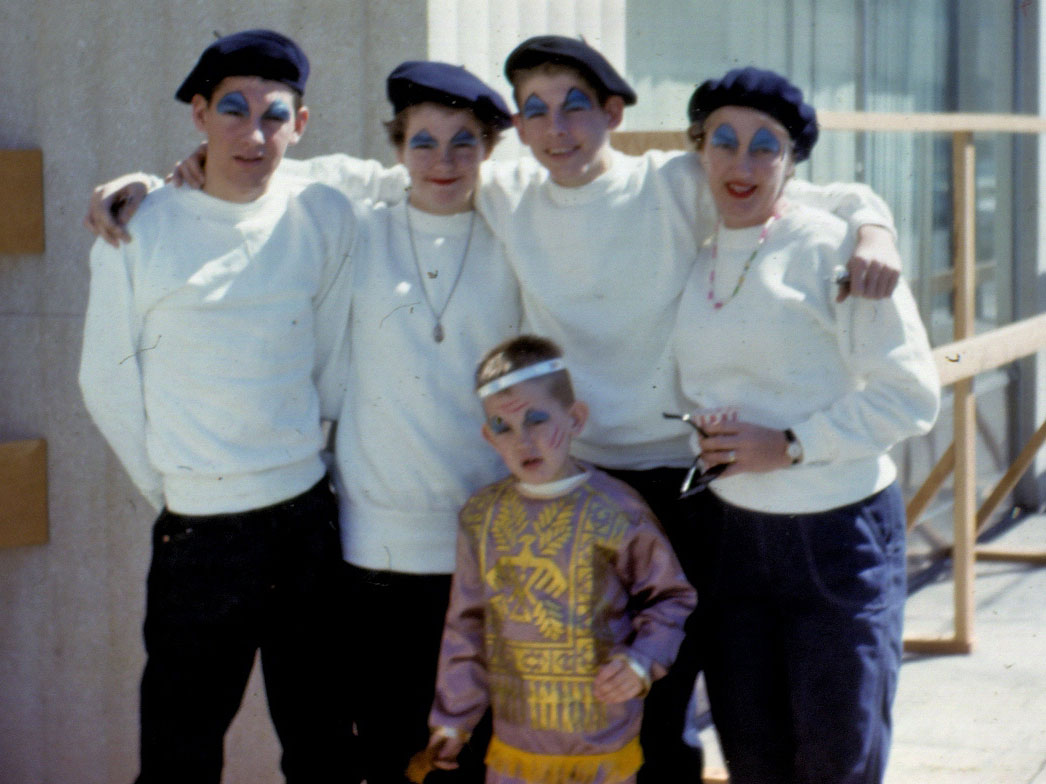
My family (my Dad's taking the picture) as we head to Canal Street for the Mardi Gras parades.  I didn't get to wear a beret.
My family (my Dad’s taking the picture) as we head to Canal Street for the Mardi Gras parades in the early 60s. I didn’t get to wear a beret.

It’s been a long time since my last Mardi Gras in New Orleans. I was 10 years old. Our family tradition was to camp out at my Dad’s office just off Canal Street and watch the major parades pass.

It was quite a party at the office with a potluck table loaded with fried chicken, gumbo, King Cake and a wide variety of liquor bottles. At that time, in the 60’s, the big  parade on Mardi Gras Day was, and perhaps still is, the venerable Rex. However, the parade was referred to as “formaldehyde on wheels” by a character in the HBO series Treme.

The unique Zulu parade was almost mystical to me at the time, an elusive parade with no printed parade route that tossed coconuts and had ass-kicking music. The Times Picayune and MardiGras.com have done a great job of posting photos and videos of parades during the carnival season and I’m impressed by the intimacy of some of the parades.  They remind me of of my favorite parades that used to roll down Freret Street and Carrollton Avenue. Parade routes are more limited now but even still some of the parades offer that neighborhood feeling–quite a contrast from the Bourbon street image of Mardi Gras often portrayed to the rest of the world.

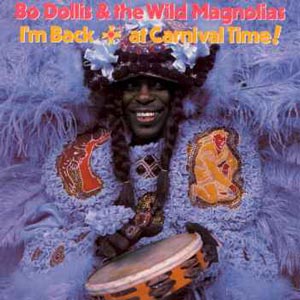
Big Chief Bo Dollis brought the music and rhythms of Mardi Gras Indians to music lovers everywhere. He died January 20 after a long illness.

One tradition that continues to grow in awareness is the Black Indians of Mardi Gras. Even with the growth in popularity, its still a lucky person who can catch sight of a Mardi Gras Indian gang doing their thing on the streets on Fat Tuesday. I’ll be doing Mardi Gras and party music in general on my show on Monday.  If you miss the show, you can catch it later and other episodes, on MixCloud.

Until then, “throw me something, mister!”

You can listen to the Mardi Gras show.

Music fans must tolerate occasional misfires

Like players preparing for the big game, Bob and I were ready to boogie to Rebirth Brass Band last night.  Even though we long ago qualified for our AARP memberships, we decided to pass on the 7 p.m. show and go for the late show at the Tractor Tavern in Seattle, even if it meant driving back to Olympia in the wee hours of the morning.

We had made a point to take naps in the afternoon and I had a taken the rare step of drinking a cup of caffeinated coffee.  What we hadn’t counted on was an early winter storm in Bend Oregon where the band had played the night before.

As we stared dumbfounded at the notice on the door saying the show was cancelled, we couldn’t help but wonder why we bothered.  Sometimes misfires happen. Some times you have to put up with long lines and waits, uncomfortable seats and too much cold or heat or other types of discomfort.  But we do it because live music is worth it.

So last night was a bit of a bust. We ended up catching a few numbers by a jazz duo with the radio unfriendly name of Suffering Fuckhead at the Sea Monster in Wallingford. They were okay but it wasn’t what we were looking for and we ended up getting home right at midnight, about two or three hours sooner than expected.

So since I’m a bit ragged from spending long hours enjoying the Olympia Film Festival and a bit bummed about last night’s letdown, I’m going to finish this week’s blog with a few photos and one video of when the effort was worth it.  And Monday’s Gumbo YaYa show will include an hour of danceable brass band music. . .because I deserve it.

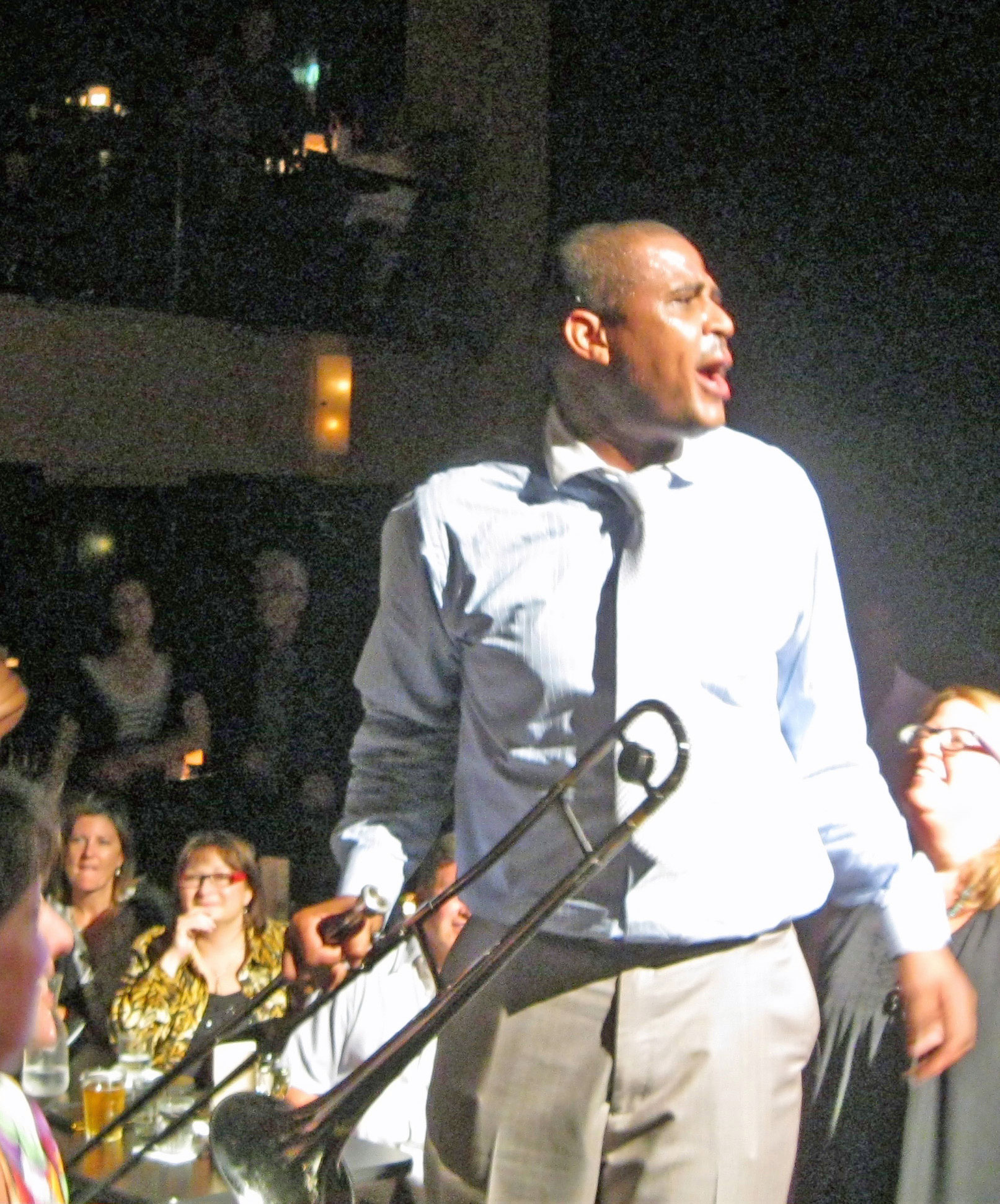
Glen David Andrews singing at Dimitriou's Jazz Alley as part of the "Treme Tour" a couple years back.
Glen David Andrews singing at Dimitriou’s Jazz Alley as part of the “Treme Tour” a couple years back.

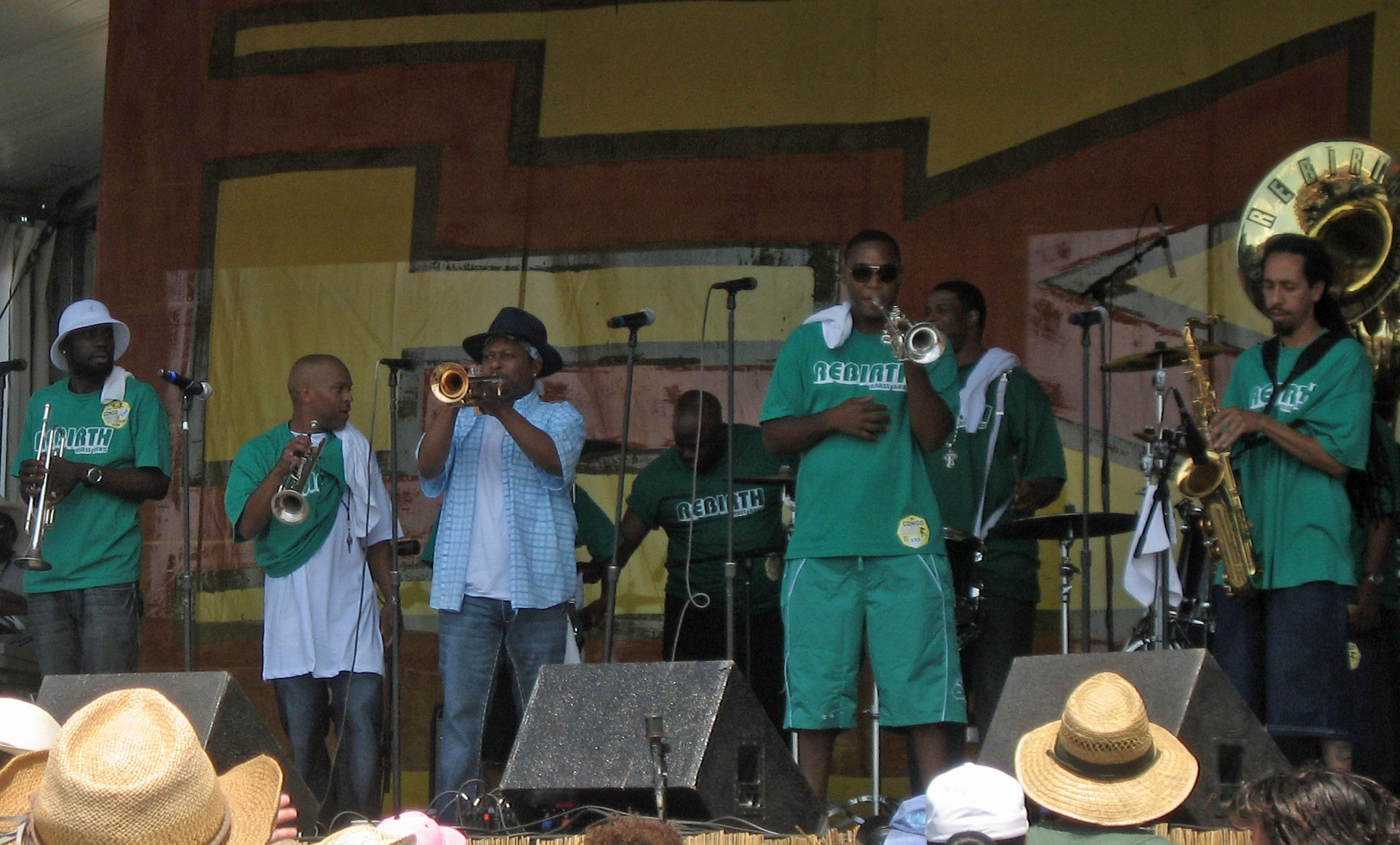
Original Rebirth Brass Band member Kermit Ruffins joined Rebirth at the Jazz Fest a few years back.

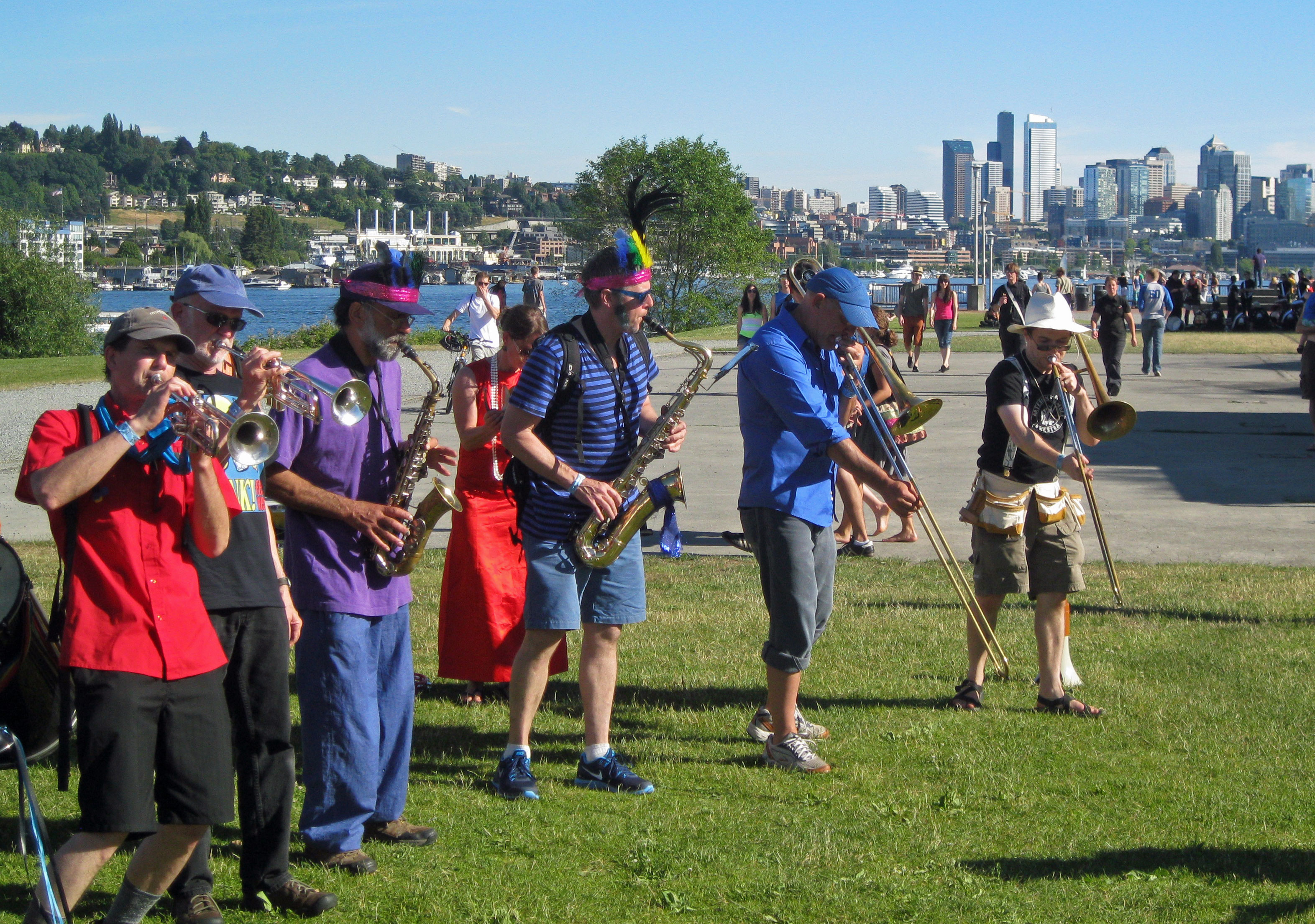
Olympia brass band, Artesian Rumble Arkestra, regularly plays Honkfest which is now timed with the Fremont Festival.

This concert was easy to enjoy cause it was held in Olympia at the historic Capitol Theater. More shows there would be great.
This Mudhoney concert was easy to enjoy cause it was held in Olympia at the historic Capitol Theater. More shows there would be great.

The video below is a short excerpt of Rebirth playing at their home base, Maple Leaf Bar, a couple years back. Sorry for the poor video and sound quality but you get the idea.

Community Stations like KAOS; WWOZ make a difference

Picture yourself at Tipitina’s in the early 80’s preparing to catch some funk by Zigaboo Modeliste and George Porter, Jr., and just as the band is about to begin, a microphone descends from the ceiling.

In the early years of WWOZ, Tipitina’s was the home of the station.

You would have been witnessing an early, glorious moment in community radio. Located in the beer storage room above the uptown New Orleans night club was the nascent community radio station, WWOZ. With that simple, low-tech approach, the station was able to broadcast a live performance–launching a 30-year tradition of supporting local music.

WWOZ has come a long way from that beer closet and now is readily recognized as the “Guardian of the Groove” in New Orleans.

While serving a smaller market, KAOS has a similar reputation for supporting the often overshadowed music scene in Olympia.

With the KAOS Fall Member Drive and the WWOZ Fall Member Drive, I thought it timely to talk about my two favorite radio stations and why financial support is essential to both.

Like many, I listen to more than one station. But I only pledge to KAOS and WWOZ.  I pledge to KAOS because its my default station that I listen to the most, providing a wide range of music and programming. I pledge to WWOZ because I love New Orleans and its music. Listening to the station connects me, albeit remotely, to the city I was born in. Without WWOZ, I would not have had the confidence to launch Sweeney’s Gumbo YaYa – a show that wouldn’t exist without KAOS.

Here are the features I like about these stations.  They both are non-commercial, community radio stations. They both invite and train members of the community to volunteer as on-air hosts (deejays). While being “volunteer powered” means they’re not as slick as some commercial radio stations, the hosts convey an authentic, honest voice, portraying Olympia and New Orleans in a way that gives me a deeper understanding. These deejays work in the same community, walk the same sidewalks,  drink at the same bars (you get the idea.).

Both stations are cheerleaders for local music, regularly announcing live music events, hosting studio performances and interviewing musicians and other performers. This boosterism can matter.  In 1987, KAOS hosted the the first radio broadcast of Nirvana and this summer, Seattle’s Vaudeville Etiquette was written up by the music tracker CMJ because of airplay it received on KAOS.

Just last week, local musician Greg Black stopped by the KAOS table at Arts Walk and offered the station his new CD, recorded two blocks away at Dub Narcotic Studio. You’ll hear it, along with other local music, on KAOS.

rampb-emperor-biography-hails-ernie-k-doe-291g96r6-x-large
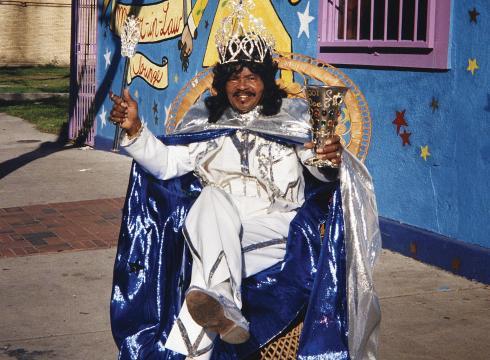
Ernie K-Doe, New Orleans singer and lounge owner, was a deejay with New Orleans community radio station WWOZ.

And like WWOZ whose shows have been hosted by musicians like James Booker, David Torkanowsky and Ernie K-Doe (this blog’s patron saint), many of the KAOS on-air hosts are musicians themselves.

Both stations offer more than music. WWOZ , owned by the same folks who bring us Jazz Fest, focuses on programs that delve into the music and culture of New Orleans. KAOS has a broader mission, providing alternative perspectives such as National Native News, Counter Spin and Workers Independent News. as well as locally produced public affairs programs like Parallel University, Speaking of Wellness and the one I contribute to, Community Connections Report.

Strong listener support for these stations are crucial. The additional funding helps enrich the quality of the programming. But it also demonstrates to underwriters and funders that the station is a valued resource worthy of their support. Please take the time to pledge to KAOS and pledge to WWOZ this week or whenever you read this.

There’s more to NOLA than Bourbon Street

Even if you only know a little about New Orleans, you probably know about Bourbon Street.  And if that street is your only knowledge of the city, please keep reading.

19699918-mmmain
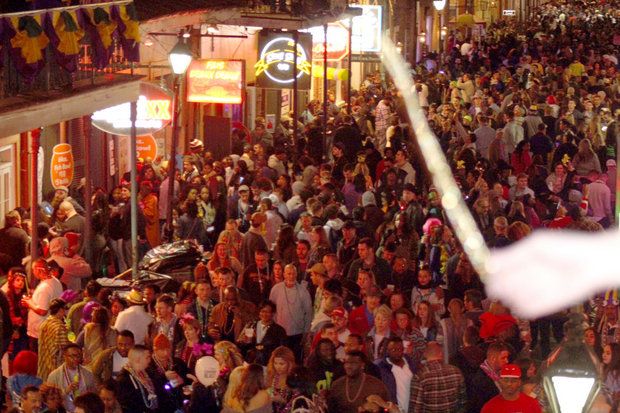
Bourbon Street on Mardi Gras Day – NOLA.Com

Nowadays, Bourbon Street is almost a caricature of people’s perceptions of the city.  A noisy, flashy street loaded with T-shirt and souvenir shops, bars that sell drinks called “Hand Grenades” and strip clubs. The street seems designed to allow visitors to sin without fear of discovery or retribution by their neighbors back home.

My own experience with the street dates back to the early 60’s when my parents’ idea of a fun family night was to pack us all up in our Rambler station wagon and drive slowly down the street (now restricted to pedestrians at night). My dad would stop the car when the doormen to the “dance clubs” would open the doors providing us a scandalous peak at the activities inside.  Yes, we all have undergone therapy since.

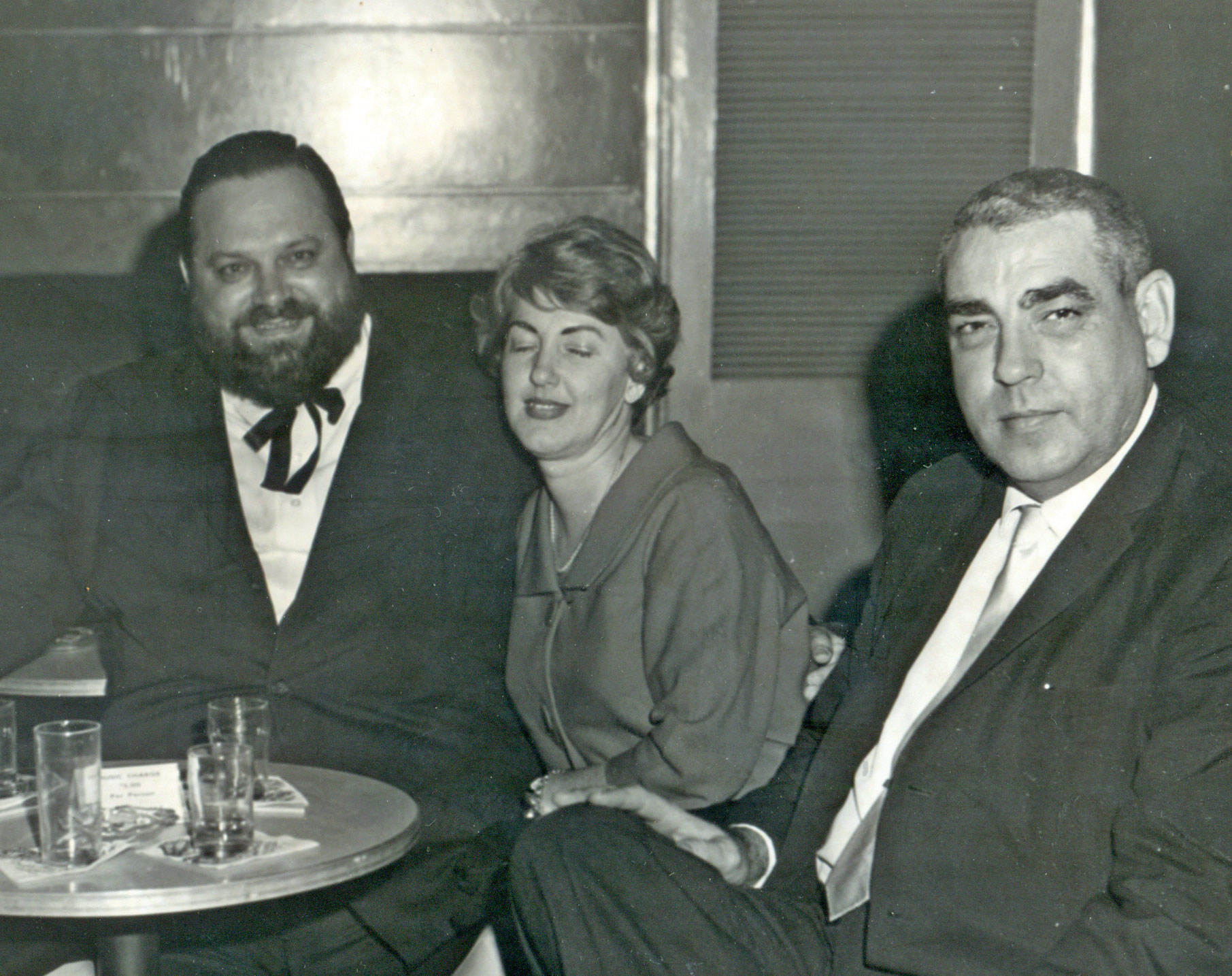
When not driving a Rambler full of kids down Bourbon Street, parents were often inside night clubs like this one with Al Hirt.
My parents with Al Hirt at his club on Bourbon Street.

Back then, locals still went down to Bourbon Street for live music at clubs such as those owned by famous home boys, Al Hirt and Pete Fountain.

The street still offers live music, mostly versatile cover bands capable of playing Rock favorites and cabaret music. The street is an important employment base for local musicians and other performers, according to Brad Rhines’s article, Pride on Bourbon Street.  Also, the restaurant Galatoire’s and Irvin Mayfield’s Jazz Playhouse are two well-regarded establishments on Bourbon that attract a local clientele.  But generally speaking, the locals leave Bourbon Street for the tourists.

Fortunately, New Orleans has another locus of live music that both locals and tourists frequent.  Downriver from the French Quarter is the end of Frenchmen Street located in the Faubourg Marigny neighborhood. Any cabby can get you there. If you’re in the French Quarter, it’s a reasonable walk– head away from downtown on either Decatur or Chartres (pronounced Charter) Streets. After you cross Esplanade, you’ll run into Frenchmen. There are roughly a dozen places offering live music in this three-block area.

If you have watched the wonderful HBO series  “Treme,” then you’ve seen a number of Frenchmen Street clubs featured as settings for the show, including the Spotted Cat, The Blue Nile, and the venerable Snug Harbor. There are music clubs literally next door to each other. In one scene in Treme, band leaders in adjacent clubs go back and forth stealing the other’s audience, illustrating just how easy it is for you to bounce from one music venue to another.

One of my most recent experiences on Frenchmen was almost magical. Kim and I landed on the street one afternoon after a long day of slogging through torrential rains. We walked into The Three Muses tired, wet and hungry. We were just looking for a place to sit and maybe eat.  We ordered a couple of small food plates and there on the tiny stage next to us was a cellist using a digital delay, a loop pedal and other electronic wizardry to create a roomful of haunting music.

In the dozen years that Helen Gillet has lived in New Orleans, she has established herself as an original artist, capable of integrating New Orleans sounds and heritage into her music.  And here she was doing an intimate performance for us as we refreshed ourselves with excellent food and drink.

Cellist Helen Gillet

On your next trip to New Orleans, visit Frenchmen Street. Meanwhile, you can hear Helen Gillet, Al Hirt and Pete Fountain on my next show, Sweeney’s Gumbo YaYa, starting at 10 a.m., Monday, on KAOS, www.kaosradio.org, 89.3 FM.

You needn’t be from New Orleans to say it right

I like to think that I come from the Gershwin school of pronunciations, as in “You like ‘to-may-toes’ and I like ‘to-mah-toes’.” But I have to admit I did ask my daughter-in-law to stop saying New Or-leens. For me, it’s the equivalent of fingernails on the chalkboard.

I couldn’t really blame her. “New Or-leens” is what most people say because its most often sung that way. Probably because it has better rhyming capability as in “Do You Know What It Means to Miss New Orleans.”

Pronunciations in New Orleans can be tricky. Take street names, for instance.

It's easier to pronounce if you do the first syllable as
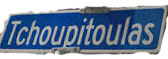
It’s easier to pronounce if you do the first syllable as “Chop”

Tchoupitoulas Street, home of the legendary Tipitina’s club, looks daunting until you know to start it by saying “chop.” Other streets are harder than they look. Carondelet is pronounced with an “et” at the end. Chartres is “Charters.” Even the seemingly easy Burgundy Street ain’t said right unless you accent the “gun.” Here’s a short video on street pronunciations, featuring Soul Rebel drummers Derrick Moss and Lumar Leblanc.

But back to saying “New Orleans”, even natives will say it differently because of the variety of accents that reside in the city. In the 60’s when I was an altar boy for an itinerant priest, we had a gig at St. Alphonsus Church on Constance Street in the Irish Channel. Having never been in the neighborhood before, I remember how shocked I was to hear the other altar boys sound like Bobby Kennedy. And I lived only three miles away.

The expression
The expression “Where Y’at” also is the title of New Orleans entertainment guide magazine.

Then there is “Yat” — considered a unique New Orleans dialect and accent, popularized in the novel, Confederacy of Dunces by John Kennedy Toole. The accent “is hard to distinguish from the accent of Hoboken, Jersey City, and Astoria, Long Island” according to A.J. Liebling author of “The Earl of Louisiana” and quoted in Confederacy of Dunces.

Ray Blount, Jr. in his ode to New Orleans (Feet on the Street) notes that the typical New Orleans accent is particularly noticeable with the word “quarter” as in “French Quarter” (or two bits). “It comes closer to rhyming with ‘porter’ than with ‘garter,’ but it’s more ‘Quo-tah,’ with an ‘o’ sound that’s semi-extended, as if you’re saying ‘oar’ or ‘o’er’ more like it, but not finishing off the ‘r’ sound.”

What were we talking about, oh yea, how to pronounce New Orleans. Oh hell say it, or sing it, the way you want. For me, I prefer extending the “w” into the second syllable as in “Nu-Wah-Lens the way Lil Queenie does it when she sings “My Darlin’ New Orleans.”

Just don’t say “Nawlins” unless you and your companions have downed too many Abitas.

HEAR ME MISPRONOUNCE ALL SORTS OF NEW ORLEANS WORDS ON SWEENEY’S GUMBO YAYA, MONDAY, 10 A.M. TO NOON (PST) ON KAOS, 89.3 FM