Louisiana delta-inspired music taking on a cry for help

Thanks to Bruce Springsteen’s Born to Run, John Denver’s Rocky Mountain High and hundreds of others, there is little doubt that our environment influences music.
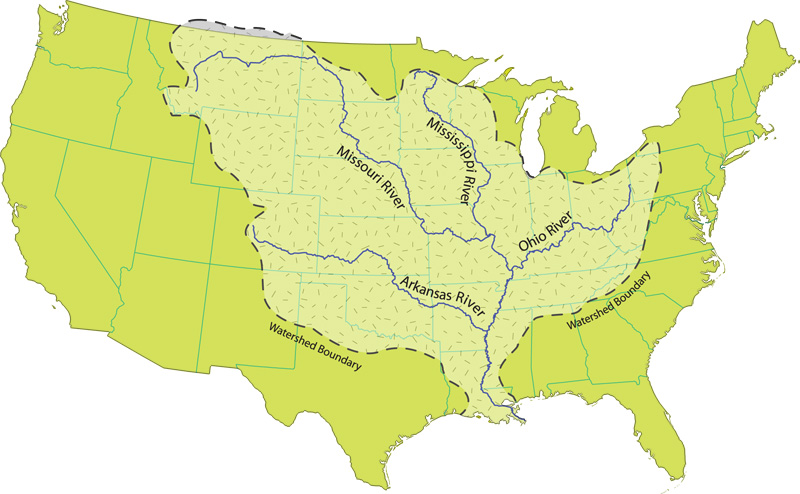
The waters that flow through Louisiana originate in 31 states.

 So it should be no surprise that musicians who reside at the tap end of North America’s largest drainage system write songs about rivers, wetlands, swamps and bayous.

Draining all or part of 31 states, the Mississippi River creates a powerful structure for creatives of all types to tell their stories.

In Louisiana, its the swamp that inpires many to “pole the pirogue down the bayou” (Jambalaya). These musicians may not really have swamp water running through their veins (Fire in the Bayou) but they know how to use the water’s magnetic pull to enliven a song.

Sitting at the soggy end of the 2,300 mile system, Louisiana and its bayou communities (including New Orleans) use the river, and its essential estuaries, as a lush backdrop for setting the mood–from boogie to blue.

In recent years, the music has been paying back in the struggle to restore and revitalize the delta environment. The flow of sediment of the Mississippi is less than half of what it was a century ago due to engineering the river to serve too many purposes. This means essential delta beds are not being replenished. Combine this steady decline in sediment, with the speed of climate change, and the bayou and the life and music it supports becomes more fragile by the day.
Tab Benoit started the Voice of the Wetlands to raise awareness about the importance of revitalizing the river system.

Voice of the Wetlands, started by Louisiana bluesman Tab Benoit, is a non-profit focused on raising awareness about the loss of the wetlands in southern Louisiana.

And as you might expect by an initiative launched by a musician, it uses the music of the Delta to reach the right ears, including performances before Republican and Democratic National conventions and an annual festival in Houma (about 60 miles southwest of New Orleans in bayou country).

The Voice of the Wetlands All-Stars often headlines the festival. Over the years, this recording and live performance ensemble has included Benoit, Dr, John, Cyril Neville, Big Chief Monk Boudreaux, George Porter Jr., Waylon Thibodeaux, Anders Osborn and many others. This year’s festival is in October.
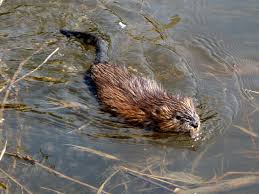
Muskrats, alligators, junebugs, and other critters crawl from the swamp into the music.

I’ve got close to a full two-hour show of songs about the bayou and bayou country so please tune in this Monday on Sweeney’s Gumbo YaYa (or catch it on archive) to hear Muskrat Ramble, Bayou Boogie, Swamp Funk and Junebug Waltz and others.

Also, I’d be honored if you subscribed to this blog. (upper right hand corner of this page.)

Music and history carry on despite rain during French Quarter Festival

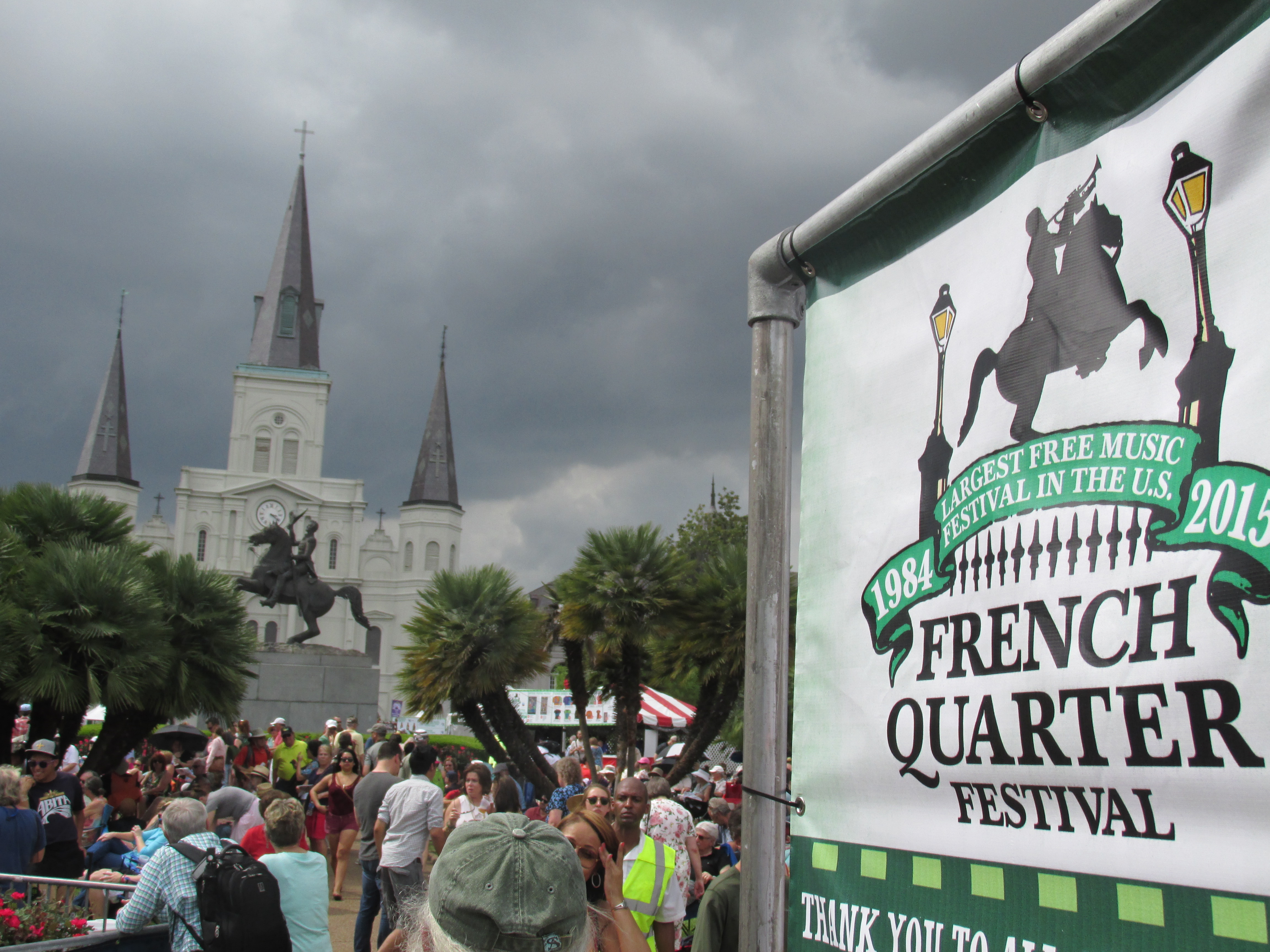
In New Orleans, the show must go on unless you can’t keep the musicians dry or if lightning threatens the audience. Over the course of the 2015 French Quarter Festival in New Orleans, we had a good bit of rain and a few lightning bolts.

So periodically, stages have been closed, including Tricia Boutte’s show right as she was beginning. Bummer!

A hard rain on Friday pushed crowds under cover. Saturday and Sunday also had rained out venues at times.

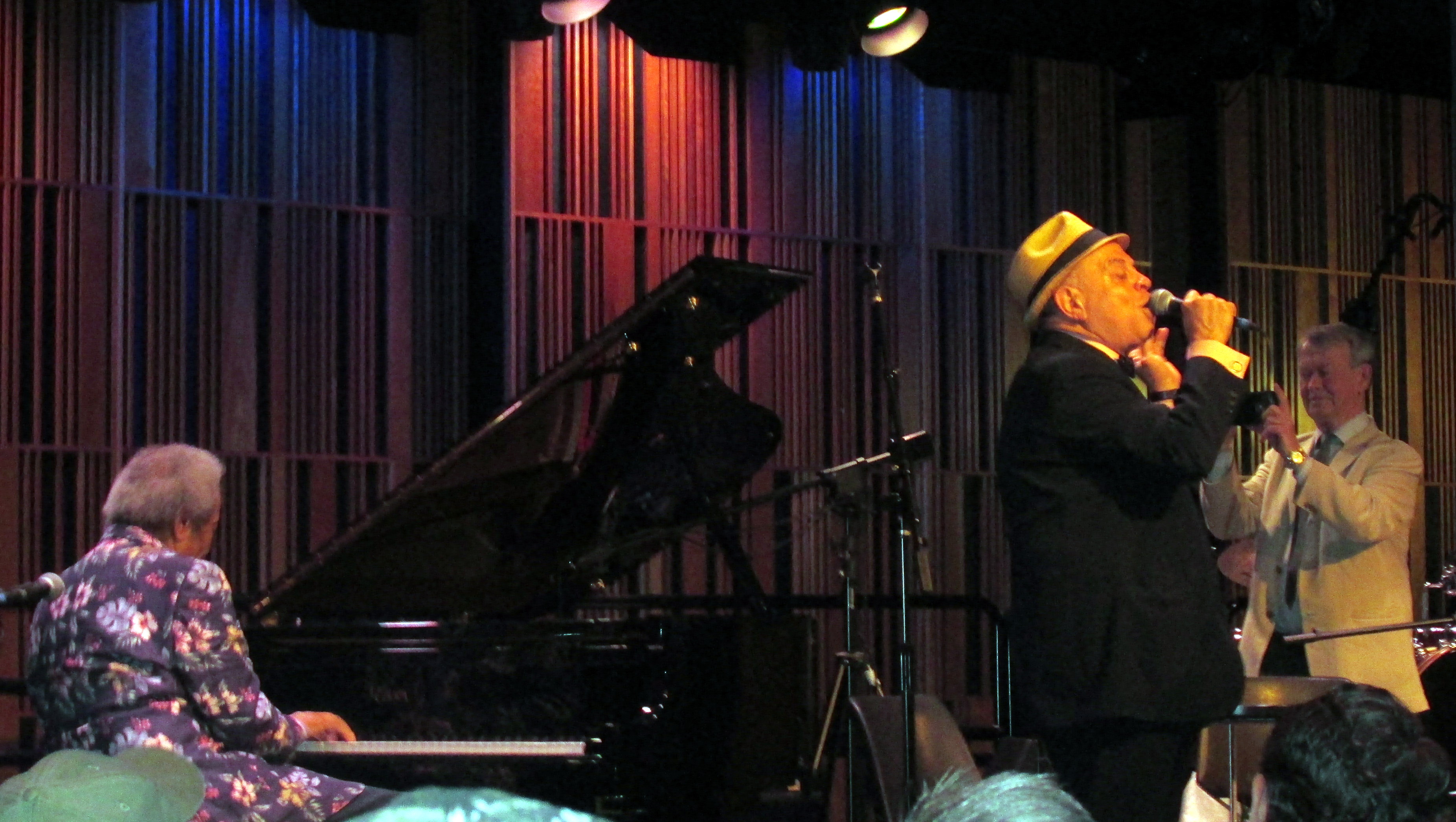
The highlight for me today was indoors though when Allen Toussaint and Deacon John sat down with author John Broven. The one-hour program started with Toussaint going right to the Steinway and banging out his hit originally done by Irma Thomas, “It’s Raining.” This time, Deacon John sang it, with a few appropriate ad libs.

The stated purpose of the program was to reminisce about Cosimo Matassa and the heyday of New Orleans R&B and early Rock n’ Roll–a period of time that launched the careers of both Allen Toussaint and Deacon John. More on Mr. Toussaint and more on Mr. Matassa.

Allen Toussaint (piano) played
Allen Toussaint (piano) played “It’s Raining” and Deacon John sang at the French Quarter Festival Conversations on Louisiana Music.

Of Cosimo and his studio, Toussaint said “It was our doorway and window to the world . . .He and Dave Bartholomew put us on the map. . .He (Cosimo) saw the big picture long before we did cause we were just having fun. “

Deacon John described getting discovered by Toussaint at the Dew Drop Inn one night and the next day going into Matassa’s studio to help Ernie K-Doe record “There’s a will, there’s a way.”

As I mentioned in my previous post, I won’t be hosting this Monday’s show. Anch of Sundrenched will handle affairs and I plan to call in during the show. Consider subscribing to this blog so you can be alerted the next time I post. (see upper right hand of page)

First impressions of French Quarter Festival

With some time to catch up this morning on day three of the 2015 French Quarter Festival, I’ve had a chance to reflect on my first impression of the largest showcase of Louisiana music in the world

The fest started on Thursday with five stages operating mostly in Woldenberg Riverfront Park near the old Jax Brewery and the Audubon Aquarium. Friday, the festival added seven more stages and 11 more open today. This exponential stage growth levels off at 23 stages, otherwise there might not be any place to walk.

IMG_1454

Actually, there’s lots of room to walk. Anyone intent on catching music at all the stages needs to be prepared to hustle or rent a pedicab.  Stages are grouped together but those groups are scattered over the full river length of the French Quarter from Canal to Esplanade and moving away from the river, there are stages on Royal and Bourbon Streets. Like most music festivals, tough choices have to be made cause you cannot catch it all.

In its four days, French Quarter festival attracts more audience than the better known seven-day New Orleans Jazz and Heritage Festival that starts  later in the month.  But now that I’m here, its quite obvious why.  Jazz Fest participants have to make a conscious effort to get out the Fair Grounds and pay the $70 to get in for a day. As a result, I suspect that Jazz Fest is responsible for drawing in more folks to the city specifically for the festival.

John Boutte performing at French Quarter festival this week.

At French Quarter Festival, many of the attendees appear to be here for other reasons. And therein lies the genius of this event. Like a gill net that traps salmon headed to spawning grounds, the free French Quarter Festival snags tourists as they innocently stumble out of their hotels and bars and provides them with a taste of music they might not otherwise catch.

With the exception of one small stage featuring international acts, the French Quarter Festival showcases local talent. This means the festival provides local musicians with a chance to build a following outside the city.  The fact that the festival can keep 23 stages busy with local talent provides some sense of how deep the musical talent. This year’s lineup includes Allen Toussaint, Irma Thomas, Eric Lindell, Hot 8 Brass Band, John Boutte, Flow Tribe, Bonerama, Little Freddie King, Guitar Slim Jr. and on and on.  All music, by the way, that we play on Sweeney’s Gumbo Ya Ya.

I’m still in New Orleans during the next show but I hope to call in with a brief report. You’ll be in capable hands with Anch who hosts Sundrenched on Tuesdays.

Easy to catch a lot of NOLA music in a short period of time

Catching as much music as possible in New Orleans ain’t hard. But some stamina comes in handy at times.

We arrived on Friday night and hustled down to see late night show of the Soul Rebels at d.b.a.  I’ve yet to catch them at their home bar, Les Bon Temp Roule but its always fun to hear and feel this talented brass band.

Saturday, we took the “Freret Jet” (#15 bus) to the annual Freret Street Festival, getting there in time to catch the swinging last half of the Mississippi Rail Company set. This New Orleans  R&B group is on my list to pick up when I get to the Louisiana Music Factory.

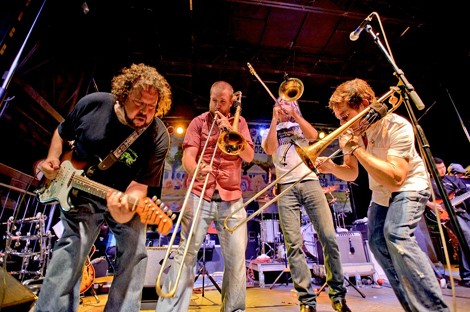
Mark Mullins (left) and Craig Klein are two of the "bones" of Bonerama. Billy Iuso, fronting his own band earlier, added some licks to a Bonerama number.
Mark Mullins (left) and Craig Klein are two of the “bones” of Bonerama. Billy Iuso, fronting his own band earlier, added some licks to a Bonerama number.

One of the advantages of visiting New Orleans is to learn about musicians that don’t get airplay outside of the area. Billy Iuso and the Restless Natives is one of those blues groups that sneaks up on you, starting off without much fanfare but blowing you away by the final beat.

The headliner for the festival was Bonerama — three trombones backed up by guitar, bass and drums. This group, which has played the Winthrop Blues Festival, was in excellent form.

We finished the day back at Frenchmen Street with The Maison’s evening closer Austin soul group The NightOwls.  They put on an energetic show that was almost overshadowed by some of the Spring Break-like antics of the crowd.

On Sunday evening, we braved Northwest-style rains and winds to sit in Bacchanal’s open courtyard to see The Roamin’ Jasmine.  Now, I’ve aired the Jasmine many times on the show but as usual its a delight to see the band in action, particularly with Taylor Smith, bassist and bandleader, singing.

Yesterday, we rented bikes and pedaled uptown to Carrollton, up Jeff Davis Parkway to City Park and back down Esplanade, stopping at Three Muses where Bart Ramsey, who fronts a Gypsy Jazz band called Zazou City, played a solo piano and sang for the early evening audience. I will definitely be playing some of his music when I get back on the  show in two Monday’s from now.

King James & the Special Men at BJ's Lounge
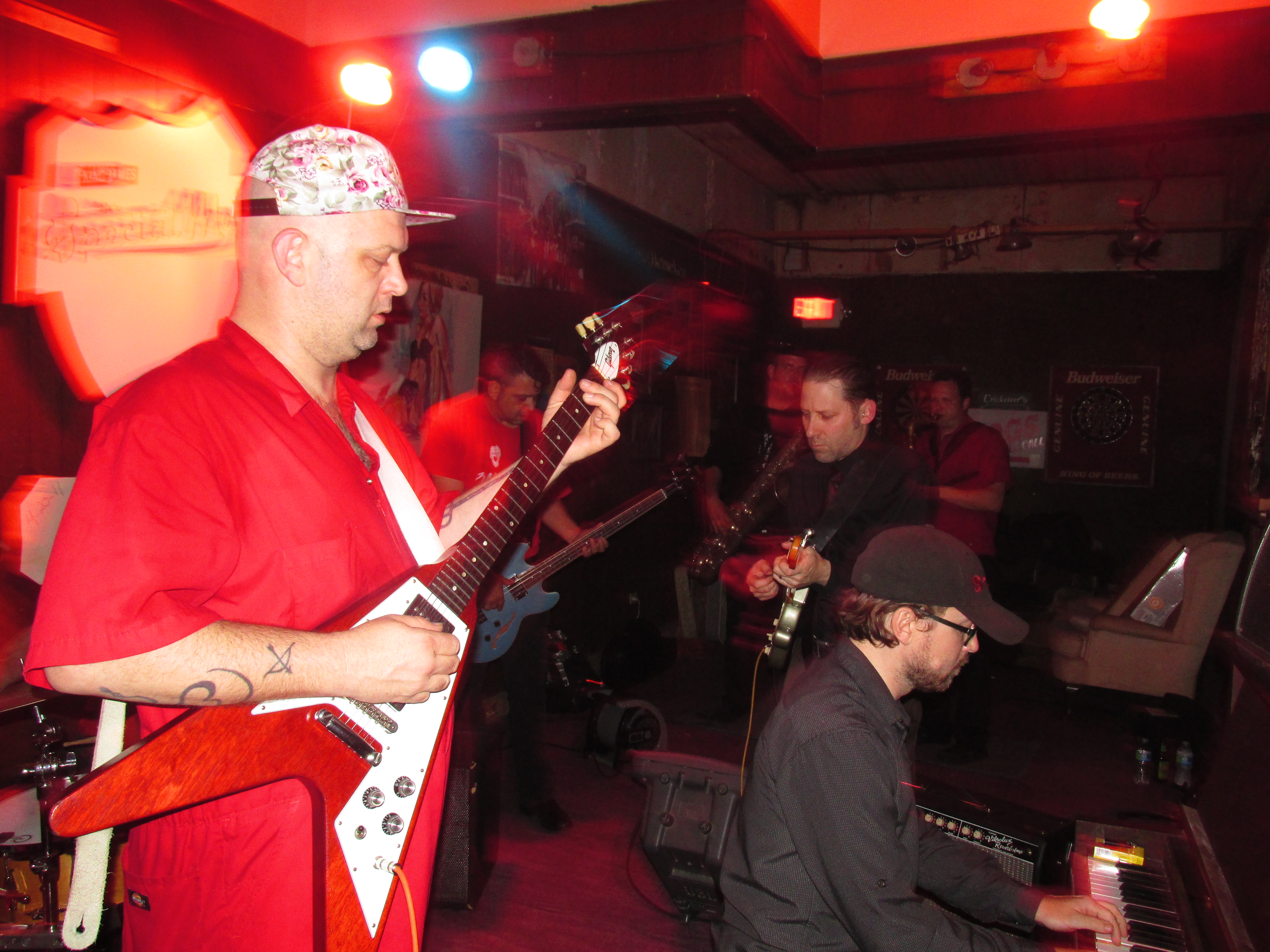
King James & the Special Men at BJ’s Lounge

I can’t close without mentioning my evening at BJ’s Lounge where King James and The Special Men held court for their regular Monday session.  This was bluesy, boogie woogie rock n’ roll fronted by Jimmy Horn,  who lived briefly in Seattle before stumbling into New Orleans in the 90’s. A disciple of Ernie  and Antoinette K-Doe, Horn seems to possess some of that same confident but endearing swagger. There is no stage at BJ’s.  No barrier between audience and musician and the give and take was, to be understated, uniquely entertaining. As his piano player banged out Fats Domino-like triplets on Blue Monday, I marveled at how I was probably no more than two miles from the Ninth Ward neighborhood bar that Antoine “Fats’ Domino was first discovered by Imperial Records while banging out the beat that became part of rock n’ roll history. A special treat was Jason Mingledorff sitting in with his saxophone.

Kim and I are chilling today but we’ll be catching a lot more beats in the days to come. Keep up with my posts by subscribing (upper right hand side of page.)

Freret Street event marks the start of NOLA festival season

If Mardi Gras marks the start of the Lent season, you could argue that the Freret Street Festival marks the end of it.  But Easter tends to wander about on the calendar so some years that just doesn’t work.

Freret Street Festival is usually the first weekend in April. This New Orleans neighborhood event heralds the start of the festival season.

What’s more clear is that the annual Freret Street event heralds the beginning of the New Orleans festival season. Later in the month, New Orleans will kick into festival high gear with the French Quarter Festival and the New Orleans Jazz and Heritage Festival–two events that together attract over a 1 million attendees. You won’t see that mass of humanity on Freret Street this Saturday (April 4), but this is not your usual neighborhood party.  According to organizers, eight blocks of the street will be blocked to car traffic, from Napoleon to Jefferson.  Three music stages will feature Mississippi Rail Company, Tank and the Bangas, New Breed Brass Band and Bonerama (to name a few).

Bonerama will close out the Freret Street Festival.

I’m making it a point to be at this year’s event, even though the festival is 2,600 miles from my house. The corner of Napoleon and Freret is where I went to kindergarten and elementary school when the school there was called Our Lady of Lourdes. Yep, I wore the Catholic student khaki uniform.  (I’m also in town for the French Quarter festival. More on that soon.)

In those days (we’re talking 60’s) my home was a lot closer. I could buy a soft-serve ice cream cone across the street from the school (now a parking lot and site of a monthly art, food and flea market) and then, having spent my bus fare on that treat, walk past an odd assortment of businesses and store fronts to my house on Nashville Avenue. After Katrina, the district was revitalized. New clubs moved in like the acoustically excellent Gasa Gasa and the Freret Street Publiq House. Restaurants like High Hat Cafe, Freret Street PoBoys and Sarita’s Grill headed up a vanguard of excellent eating.

If the technology works for me this weekend, I’ll have a report from Freret Street that will air on my show this Monday. Ruby Ru, KAOS station manager and NOLA music lover, will host the show.

Toussaint infused New Orleans sound into pop music

New Orleans
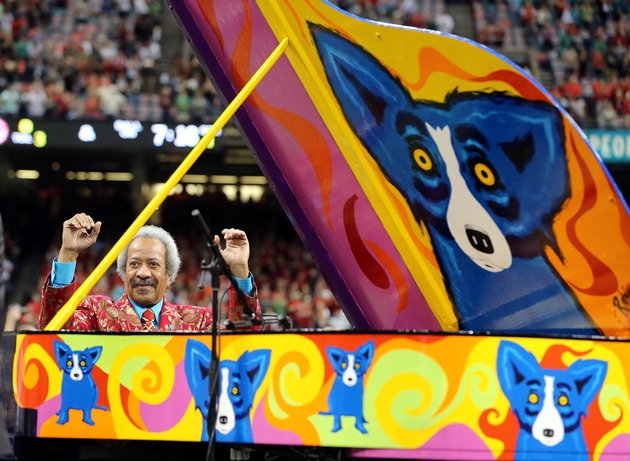
Allen Toussaint plays the National Anthem at the Superdome. Credit: Chuck Cook-USA TODAY Sports

The French Quarter Festival, which showcases local music, could not have scored a better opening headliner this year than with the hometown artist whose creativity has nurtured the New Orleans sound for over a half century. (Listen to the show that complements this post.)

Allen Toussaint was a teenager when he first sat in on Earl King’s band and regularly scored gigs at the legendary Dew Drop Inn.

It wasn’t long before he found his way to the center of the known Rock n’ Roll universe at the time, Cosimo Matassa’s studio, where he laid down piano tracks on recordings by Fats Domino, Huey “Piano” Smith, and Aaron Neville. But it was when he joined Minit Records that his creativity became apparent to the world. Using his parent’s living room as rehearsal space and testing ground for new material, he assembled a parade of hit singles by Jessie Hill, Irma Thomas, Lee Dorsey and this blog’s patron saint, Ernie K-Doe.

Ernie K-Doe best recordings were aided by the songwriting, arranging and producing of Allen Toussaint.

As a keyboard savant, Toussaint could accurately reproduce and synthesize the city’s revered legacy of piano professors, especially the style of Professor Longhair. But as a songwriter and arranger, he was able to weave the full panoply of New Orleans rhythms, vocal traditions and spirit into a clean appealing style for the pop market. In fact, he, along with K-Doe, were responsible for the sole number 1 pop chart hit recorded in New Orleans,  “Mother-in-Law.” (A song written before Toussaint was married and had one.)

Later, he started his own record labels providing a platform for local and national musicians to access the New Orleans sound. With The Meters as his studio house band, Toussaint was a key force behind the New Orleans funk sound that developed in the 70’s. A prolific songwriter, his music has been performed by The Rolling Stones (“Ruler of My Heart”), The Who (“Fortune Teller”), Bonnie Raitt (“What Do You Want the Boy To Do”), Devo (“Working in the Coal Mine”),  Al Hirt (“Java”), The Doors (“Get Out of My Life Woman”),  Jerry Garcia (“I’ll Take a Melody”), Glen Campbell (“Southern Nights”), Robert Palmer (“Sneaky Sally through the Alley”), The Pointer Sisters (“Yes, We Can Can”) and many more.

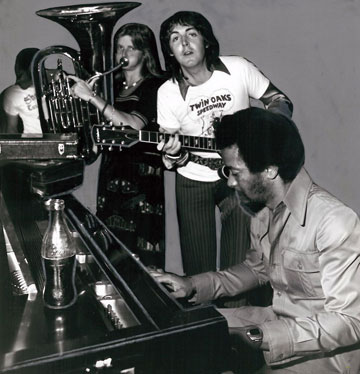
Linda and Paul McCartney performing with Allen Toussaint in his New Orleans studio in 1975.

In 1973, Toussaint had a big hand in producing and performing on Dr. John’s album “In The Right Place.” Two years later, Linda and Paul McCartney moved their entourage to New Orleans to collaborate with Toussaint in his New Orleans studio on their album “Venus and Mars.”

He was inducted into the Rock and Roll Hall of Fame in 1998, the Louisiana Music Hall of Fame in 2009, and the Blues Hall of Fame in 2011. If there’s any question of whether being a senior statesman of New Orleans music has diminished his chops, you need only look as far as his grammy-nominated, post-Katrina collaboration with Elvis Costello, “The River in Reverse,” for evidence that at 77, he still has it.

In addition to being a producer, bandleader, arranger and songwriter, Toussaint is an accomplished pianist and stands with the great New Orleans piano “professors.” Toussaint will take the stage at the French Quarter Festival on April 9 at 3:45 p.m. but you will be able to catch his music on my next show this Monday. (Here’s the recorded show)

Five things to know about the New Orleans Jazz Fest

I originally posted this in 2015 but have updated it so the links are still good and the information is relatively ageless.

It’s never too late to make plans for Jazz Fest.  If you accept this mission, you will join the millions of satisfied music lovers worldwide who have made this pilgrimage during the 50+ year history of the New Orleans Jazz and Heritage Festival.

The 1975 New Orleans Jazz Festival Poster

To help you move from idle curiosity into action, here are a handful of things you should know about the New Orleans Jazz Fest. (Also, here’s a later post as to why you might consider visiting New Orleans when it is not JazzFest.)

1. It’s more than Jazz. The festival combines world-class and national acts with some of the best regional music of all types.  There are stages for blues, gospel, zydeco and cajun, world, kids stuff and, of course jazz. On the rest of the stages you’ll see funk, hip hop, Mardi Gras Indian, rock, folk, latin, pop, brass bands, oh heck,  . . look at the  lineup. Not to mention, you’ll have access to Second Line parade demonstrations, excellent food and local crafts.

2. Last weekend in April and first weekend in May. That’s always the formula. This means that the 2020 festival starts Thursday, April 23 and runs through Sunday May 3, with three-days to recuperate in the middle (no festival shows Monday – Wednesday). Go for the day or the whole fest.

New Orleans Fair Grounds is 145-acres. During Jazz Fest, 12 stages operate.

3. Tickets are easy to get at the gate. You can procrastinate and/or be spontaneous. They will have a ticket waiting for you (unless they book the Rolling Stones again). It’s highly unlikely the festival will sell out. It takes a lot of bodies to fill the Fair Grounds Race Course. Day passes are $75 and sold with efficiency at the entry points. You can buy in at advance if you want. But after Ticketmaster takes its pound of flesh, you save less than a price of beer per ticket.  Or you can buy a brass pass and go all seven days.

4. Hotels can be expensive but plentiful; cheaper further out.  It’s over $300 a night to stay downtown/French Quarter. Cheaper further out. If you have a car, Slidell, Metairie or some other suburb is an affordable option. But not as fun as being in close. Since I like embedding in a neighborhood, I use AirBnB. Yes, almost everyone charges more during Jazz Fest.

5. The best shows are not always the “big” shows.  The New Orleans Jazz & Heritage folks always assemble an intriguing top of ticket with big acts such as  Elton John, The Who, Stevie Wonder, Tony Bennett, Paul Simon and other big touring acts you can see just about anywhere.  I understand if you have to see one of these. However, if you skew your viewing portfolio toward local legends and masters, particularly those who rarely perform together these days, you will reap even bigger dividends.

The founding members of The Meters performed at 2015 Jazz Fest, from left: George Porter, Jr., Art Neville, Leo Nocentelli, , and Joseph “Zigaboo” Modeliste. You can count on unique acts.

Each year, the festival attracts New Orleans centric acts that you might otherwise be able to catch. Try to catch acts that form just for this event (such as musical tributes) or come back together again (the Radiators, Meters)

LagniappeAt some point, you must get your ass in the Economy Hall Tent and shake it.  (Second Line Umbrella optional)Nuff said.

There are lots of other resources for the details, starting with Jazz Fest site.  To hear some of the music that you would hear at Jazz Fest, be sure to tune in on Thursdays.   Also, join me on my journey, learning about the New Orleans music scene by subscribing (upper right side of this page)

Carnival Season ends with a bang on Fat Tuesday

Happy Carnival, y’all!  (Here’s a glimpse at Fat Tuesday in Olympia)

If you’ve been catching my show, you know that carnival season started on January 6. And it ends on Mardi Gras Day (Fat Tuesday), February 17.  One last blowout before Lent begins. In the last week alone, over 20 parades have rolled through the streets of New Orleans. There are so many activities and traditions encompassed by the New Orleans carnival season, that its best if you go to the source.  To get a feel for a street parade, check out the site’s live cameras.

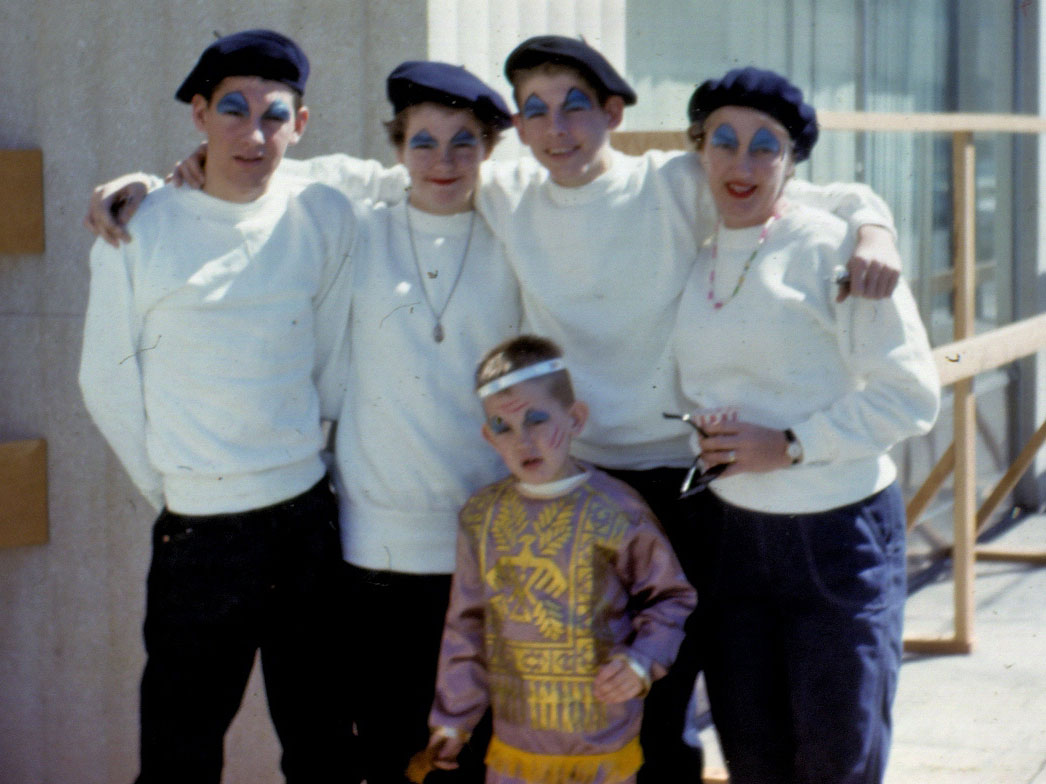
My family (my Dad's taking the picture) as we head to Canal Street for the Mardi Gras parades.  I didn't get to wear a beret.
My family (my Dad’s taking the picture) as we head to Canal Street for the Mardi Gras parades in the early 60s. I didn’t get to wear a beret.

It’s been a long time since my last Mardi Gras in New Orleans. I was 10 years old. Our family tradition was to camp out at my Dad’s office just off Canal Street and watch the major parades pass.

It was quite a party at the office with a potluck table loaded with fried chicken, gumbo, King Cake and a wide variety of liquor bottles. At that time, in the 60’s, the big  parade on Mardi Gras Day was, and perhaps still is, the venerable Rex. However, the parade was referred to as “formaldehyde on wheels” by a character in the HBO series Treme.

The unique Zulu parade was almost mystical to me at the time, an elusive parade with no printed parade route that tossed coconuts and had ass-kicking music. The Times Picayune and MardiGras.com have done a great job of posting photos and videos of parades during the carnival season and I’m impressed by the intimacy of some of the parades.  They remind me of of my favorite parades that used to roll down Freret Street and Carrollton Avenue. Parade routes are more limited now but even still some of the parades offer that neighborhood feeling–quite a contrast from the Bourbon street image of Mardi Gras often portrayed to the rest of the world.

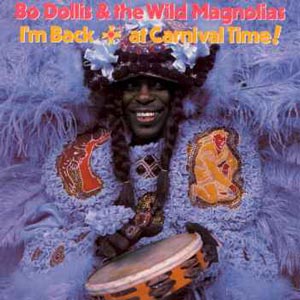
Big Chief Bo Dollis brought the music and rhythms of Mardi Gras Indians to music lovers everywhere. He died January 20 after a long illness.

One tradition that continues to grow in awareness is the Black Indians of Mardi Gras. Even with the growth in popularity, its still a lucky person who can catch sight of a Mardi Gras Indian gang doing their thing on the streets on Fat Tuesday. I’ll be doing Mardi Gras and party music in general on my show on Monday.  If you miss the show, you can catch it later and other episodes, on MixCloud.

Until then, “throw me something, mister!”

You can listen to the Mardi Gras show.

Mardi Gras Indians integral to New Orleans sound

You cannot truly understand New Orleans music without having some awareness of the Black Indians of Mardi Gras, or what is more commonly referred to as “Mardi Gras Indians.”

This more than century-old tradition of certain African Americans in New Orleans wearing elaborately designed, handmade suits in honor of Native Americans on Mardi Gras Day belies any easy explanation.

I like the Folklife in Louisiana tribute to Allison “Tootie” Montana as a good starting point on this unique folk tradition.  (I also highly recommend again the book “Nine Lives” which features Tootie’s story from the perspective of his wife, Joyce Montana).

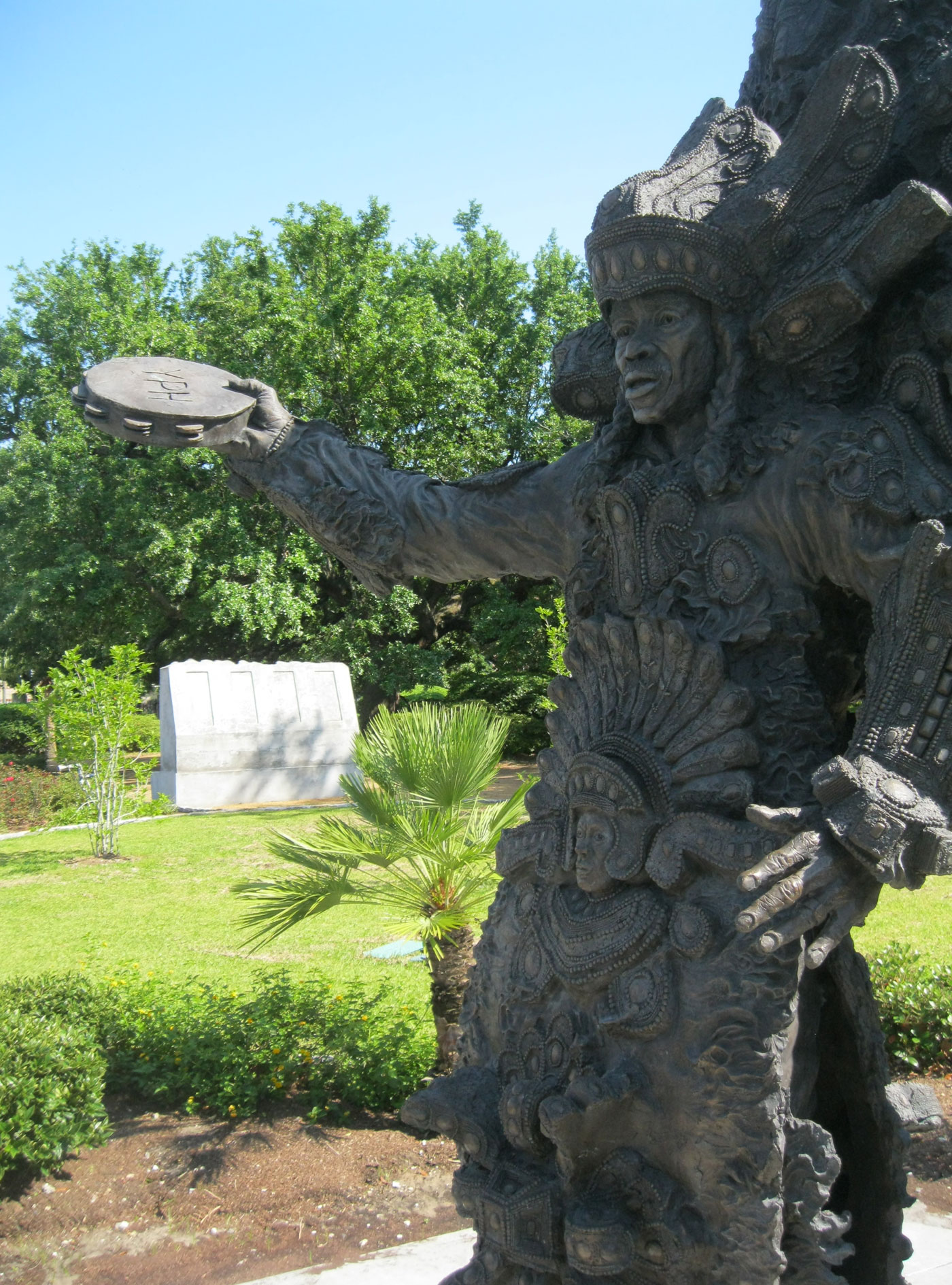
Big Chief Allison "Tootie" Montana is remembered with this statue in Louis Armstrong Park on Rampart Street.
Big Chief Allison “Tootie” Montana is remembered with this statue in Louis Armstrong Park on Rampart Street.

Tootie Montana was known as the Chief of Chiefs for his role in elevating the practice of “masking” and “suiting” up to a high art. In an effort to diminish the violent history of Mardi Gras Indian gangs, Montana incorporated sequins, beads and large garish feathers into his suit, using egg cartons for an undercarriage that provided a three-dimensional look. His stunning suit changed the game by swapping the battlefield weapons of guns and knives with needle and thread.

While you should feel lucky and relatively safe if you ever have a chance to observe a Mardi Gras tribe in full display, the violent tradition still colors their music and rituals. Make no mistake about it, there is still rivalry. But instead of who is the toughest, the goal is who is the prettiest.

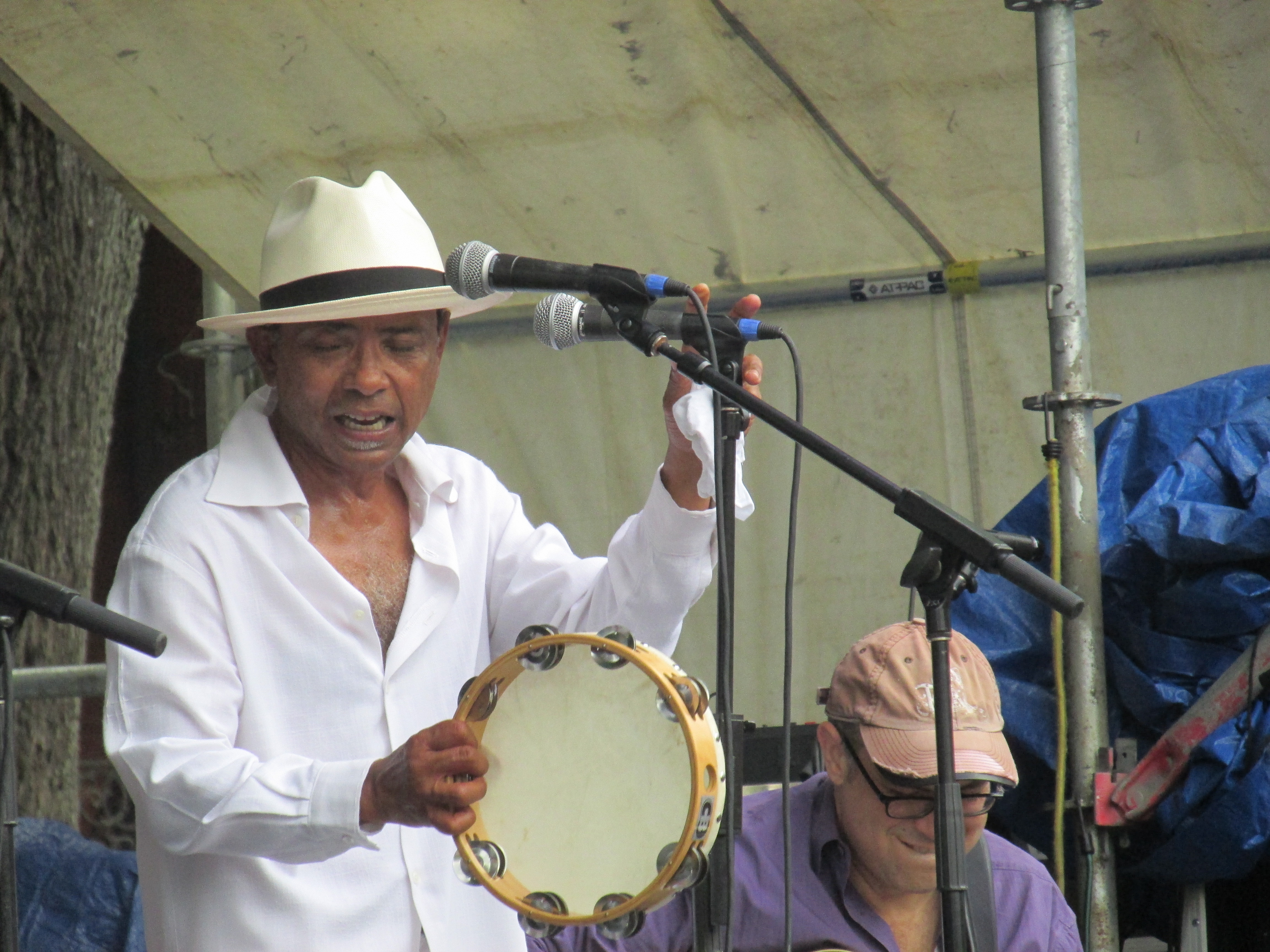
A percussion-driven music is an essential part of this tradition with the tambourine being the most common instrument. The songs speak to the traditions and history of the Mardi Gras Indians, using words with origins that reside deep in the linguistic stew of New Orleans and is more simply stated as “creole.”

Author Jay Mazza who was lucky as an outsider to observe a Mardi Gras Indian practice, describes the music this way in his book Up Front and Center:

“The lyrics of Mardi Gras Indian music are based on boasting and improvised vocal rhymes. Each Indian took a turn until he ran out of words, began repeating himself or was pushed out of the spotlight by another Indian.”

Not surprisingly, the words, rhythms and vibe of the Mardi Gras Indian have worked into New Orleans music in countless ways.

Songs like Jock-O-Mo by Sugar Boy Crawford and Iko Iko by The Dixie Cups  draw their origins from Mardi Gras Indian chants. Earl King’s historic “Big Chief” which was recorded with Professor Longhair has references to the Chief’s “Spy Boy and Flag Boy” both important roles in the tribe. These were musicians who borrowed from the tradition.

Big Chief Bo Dollis brought the music and rhythms of Mardi Gras Indians to music lovers everywhere. He died January 20 after a long illness.

It wasn’t until the early 70s, that the world heard the real thing outside of New Orleans. Bo Dollis, Big Chief of the Wild Magnolias, and Monk Boudreaux of the Golden Eagles collaborated on recordings, starting with the single Handa Wanda and later two albums in 1974 and 1975 respectively. Both continued to record and perform with their own gang and other musicians over the years. Last Tuesday, January 20, Bo Dollis died and the city is mourning.   Monk continues to perform and will be at this year’s New Orleans Jazz & Heritage Festival.

The Wild Magnolias recordings were followed closely by an album release of Wild Tchoupitoulas. George Landry, otherwise known as Big Chief Jolly of the Wild Tchoupitoulas, fronted a powerful group of musicians, including his nephews Cyril, Art, Charles and Aaron Neville, in a seminal album of Mardi Gras Indian songs. On the back and inside cover of the Neville Brothers’ release Fiyo on the Bayou where they reprise some of the songs, you’ll find a tribute to Chief Jolly.

If you are a Treme fan, then you’ve witnessed the fictional story of Albert Lambreaux, the Big Chief of the Guardians of the Flame. The model for this character is the real chief of the Guardians of the Flame, Donald Harrison Sr. whose son, Donald Harrison Jr. has applied his highly regarded jazz musicianship to fusing jazz and Mardi Gras Indian rhythms in some of his recordings, including Spirits of Congo Square.

To get more detail on the music of Mardi Gras Indians, I recommend this article by former WWOZ Show Host Thomas Morgan. To hear more of this music as well as other great New Orleans music, be sure to tune in on Monday for Sweeney’s Gumbo Ya Ya.

Jazzfest, New Music and Tubaluba

I’m stealing an idea from my son, Riley, who uses Fridays to write about various loose ends for his progressive political blog.

So below are three items: Jazzfest lineup, great new music at KAOS and a heads up on my Monday interview.

splash_header_2015New Orleans Jazz and Heritage Festival has announced its 2015 line up. As usual, the music is far from limited to jazz and offers some unique shows and musician pairings. I’ll provide more depth in a later post.  Right now, you need to know the festival is seven days stretched over 10, starting Friday April 24 and ending Sunday, May 3. Be sure to check the line up by day if you’re planning a trip.

While there’s some interesting headliners (e.g. Elton John and The Who), I recommend some of the harder to see local acts like: a reunion of the Radiators; Henry Butler recreating his 2014 album with Steve Bernstein and the Hot 9; a hip hop pairing of Juvenile and Mannie Fresh; Ivan Neville and Dumpstaphunk playing with his uncle, Art Neville; The Dirty Dozen Band; George Porter Jr. & the Runnin’ Pardners, and, best of all,  The Meters with all four founding members–worth the price of admission right there.

New Music in the KAOS Studio – I’m loving the music we’re getting in the studio from

There is lot to love about Lynn Drury’s new album, Come to My House.

New Orleans artists. Since writing about the 2014 releases (Part 1 and Part 2), we’ve received two CDs from Lynn Drury, including her latest one “Come To My House.”  I’m afraid I have a serious music crush on this earthy singer, guitarist, and songwriter. Check out “I Know You Want Me, Baby” and  you’ll know what I mean.

Paul Sanchez has been my hero since he achieved the herculean task of creating a musical out of Nine Lives — a non-fiction book by Dan Baum that unveils the diverse talents and strengths of New Orleans residents. His latest CD instills heart-warming, reflective feelings that are more entertaining and less expensive than therapy.  I’m looking forward to digging deeper into: The World Is Round – Everything that Ends Begins Again.

If you’re worried traditional New Orleans jazz is dying out, look no further than the Shotgun Jazz Band. It’s fourth album Yearning, carries you to Frenchmen Street with a solid mix of standards and less heard wonders.

Josh Wilson (green pants) will be on air with me on Monday talking about his Tubaluba's upcoming performance at Rhythm & Rye.
Josh Wilson (green pants) will be on air with me on Monday talking about his Tubaluba’s upcoming performance at Rhythm & Rye.

Tubaluba – Seattle’s answer to New Orleans brass bands – Josh Wilson, who plays the bass drum and keyboards for Seattle’s Tubaluba, will be on the phone with me during Sweeney’s Gumbo YaYa this Monday (just after 11 a.m.). I caught Tubaluba at the 2013 Seattle Honkfest. The band members are clearly fans of New Orleans brass band music. Wilson even has a WWOZ sticker on his bass drum.  The interview will highlight the band’s upcoming performance in Olympia at Rhythm & Rye on January 24.

That’s your heads up and preview for my next show. Join me, won’t you?