Brass Bands Make You Move Your Body

Sorry if you missed my interview of Rebirth Brass Band founder and sousaphone player Phil Frazier on the November 3 Gumbo YaYa show. Rebirth comes out to the Northwest next week, playing in Seattle on November 13 and Portland on November 14. Also, WWOZ is doing its pledge drive this week.  Here’s why its important to support community radio.

Live music has the potential to freeze time for me–particularly cool new music. Keep in mind, it doesn’t have to be unique to anyone else. Just to me.

So when I stumbled into the Jazz Tent at my first New Orleans Jazz and Heritage Fest in 2006, I was oblivious that brass bands had undergone a major makeover. I was a couple decades behind the times. Having grown up around Dixieland jazz and watching brass bands at Mardis Gras in the 60’s, I wasn’t expecting the addition of funk, rock and R&B that the New Orleans Nightcrawlers were throwing at me from the stage. The music was unexpected, danceable and down right entertaining.  I can pretty much trace my radio show and this blog to that moment in the jazz tent.
cropped-blog11.jpg
Many New Orleans brass bands blend tradition with newer styles to keep the music fresh and unique.

Returning home with their live album hot in my hand, I started learning more about this music which seems to have one toe in tradition and the rest of its toes in hip hop, bepop, funk, and rock.

When I got back to New Orleans later in the year, I made a point to catch Rebirth Brass Band at their home base, the Maple Leaf — which for this brass band band fan is the equivalent of a devout Catholic getting to meet the Pope in the Vatican.

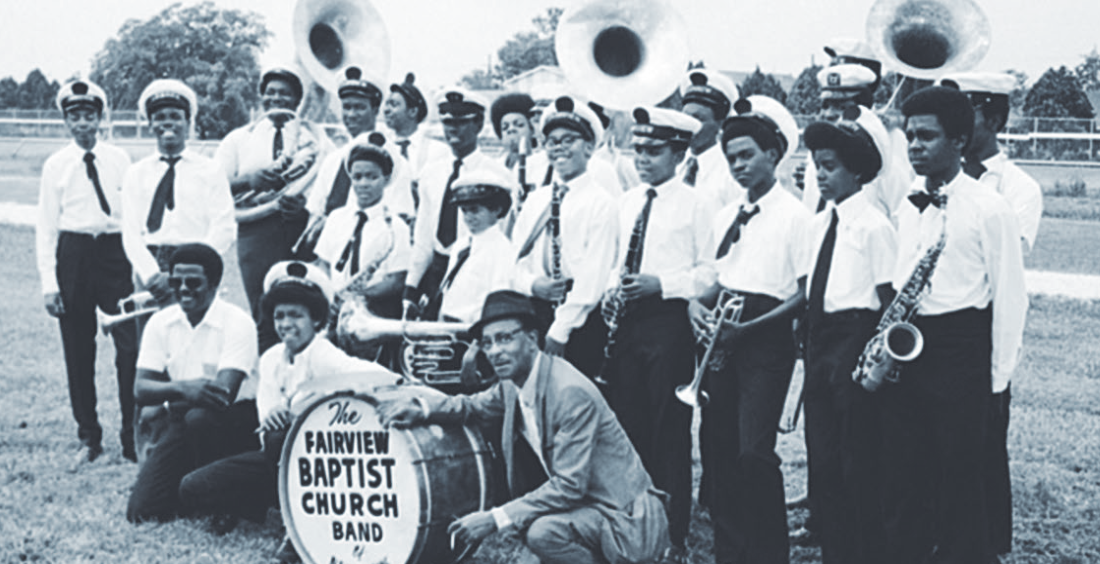
I wish I could tell you first hand how this music has transformed over the years. But I wasn’t there. I can tell you that an important part of it was keeping the brass band tradition alive. Mentors like Danny Barker who formed the Fairview Baptist Marching Band were key. From that youth band, a new generation of musicians, schooled in the tradition, but open to other styles, rose up the ranks.

What do I like about this music? Just about everything.
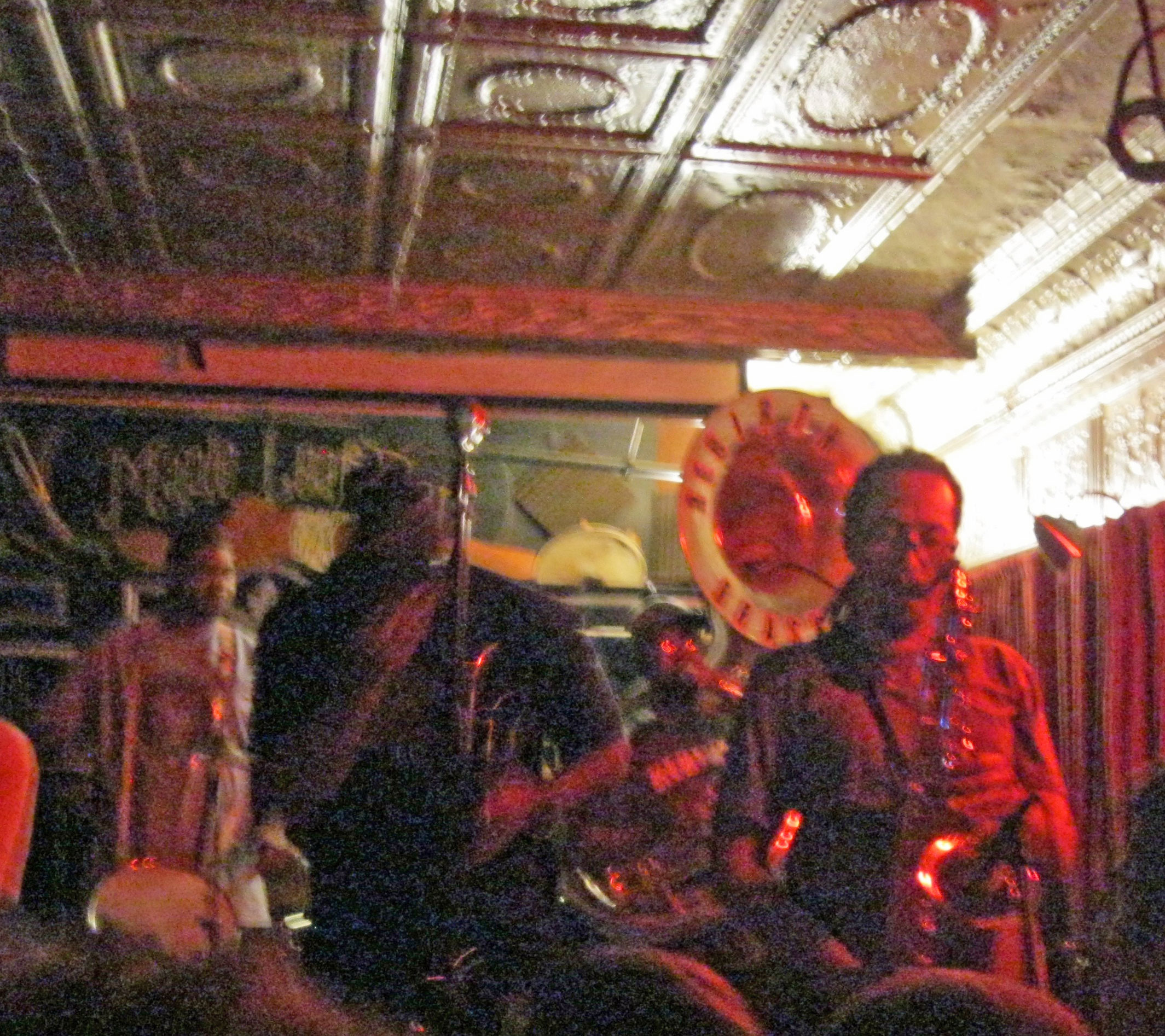
Rebirth Brass Band at the Maple Leaf Bar in Uptown New Orleans every Tuesday night except when the band tours..

But I’ll use Rebirth’s “What Goes Around Comes Around” from their grammy-winning CD as an example.  Vincent Broussard on tenor sax applies a simple but catchy melody. Then the drummers kick in, keeping a beat but also playing around the beat in a totally engaging way. Founding band member Phil Frazier enters with the bass line on sousaphone while the other horns add depth. Broussard then takes the melody to new territory on another solo before the harmonizing horns kick in with a full breath rendition of the original melody, and I feel it right in my chest, a total uplift. There’s a give and take between the sax and the horns with the trumpet and trombone doing their own solo turns before a sort of controlled chaos breaks loose. At around the 4:20 mark, with about minute left, the band members begin to sing or sort of chant: “What goes around comes around in its time. We’re going to dance around, smoke a bong and get on down.”

Okay, so its party music. Music that definitely works best performed live, with a favorite libation nearby and some room to boogie. In fact, brass bands are designed to move, to march in parades, lead second lines and get people dancing wherever they are.

A couple of years ago, while waiting in line to eat lunch at Casamento’s, I got into a discussion with the guy ahead of me about The Soul Rebels who had just put out “Unlock Your Mind” that year. He was quite insistent that the only way to hear a New Orleans brass band is at their home base, which for the Rebels is Les Bon Temps Roule on Thursday nights. Given that the guy talking was David Simon, creator of Treme who has filmed a number of brass bands including the Rebels in action, I took it as sound advice.  And its true. While I’ve always enjoyed catching Rebirth wherever I can (the band plays the Tractor in Ballard on November 13), I’ve had the best times with them at the Maple Leaf.
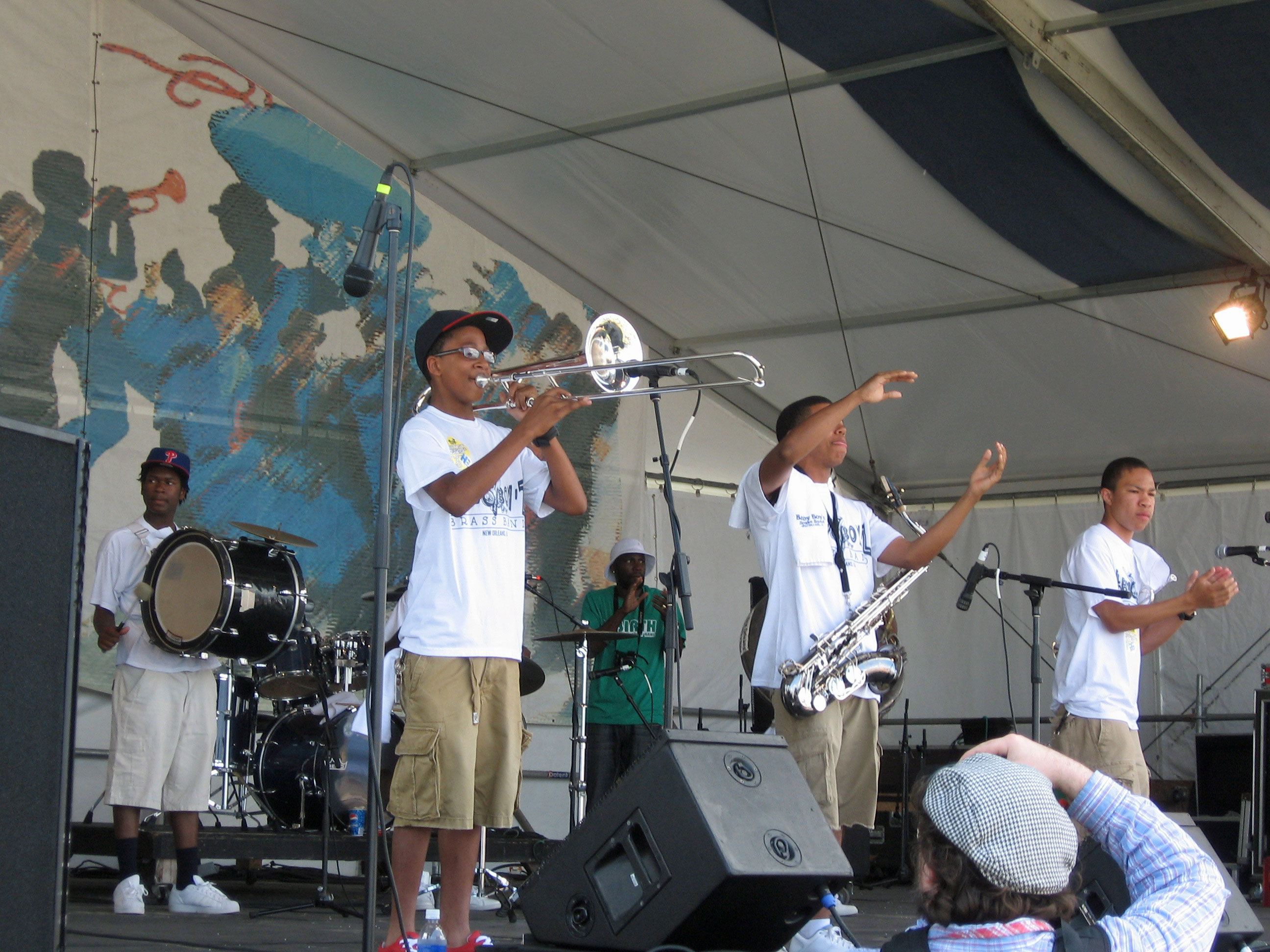
Baby Boyz at Jazz Fest. No longer the province of  old men, brass bands provide a path for young musicians to gain professional experience
Baby Boyz at Jazz Fest. No longer the province of old men, brass bands provide a path for young musicians to gain professional experience

Here’s some simple tips for catching a brass band in New Orleans. Do what Simon says, catch them on their home turf if possible. Or catch them leading a second line parade (schedule). If you catch them at a club, be ready to stay up late cause if you’re lucky, the show will start by 11 p.m. Be prepared for a crowd and know that many bars still allow indoor smoking. Finally, if you’re worried about your ears, bring some ear plugs. You’ll still be able to hear them well.

You can also hear them well on Sweeney’s Gumbo YaYa, every Monday from 10 a.m. to noon on KAOS, 89.3 FM Olympia
Focus on Tradition and Youth Ignites a Musical Rebirth

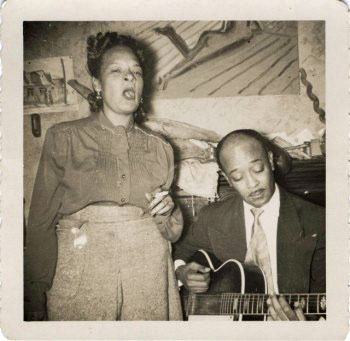
It’s not every retirement that results in a musical revitalization. But that’s what happened when veteran jazz performers Danny and Blue Lu Barker returned to New Orleans in 1965.

MRDannyLuBarker
Louise “Blue Lu” and Danny Barker were life partners who performed together as an act. One of their most famous numbers was Don’t You Feel My Leg

I suspect they sought a slower pace after 35 years of performing with Jelly Roll Morton, Louis Armstrong, Cab Calloway, Billie Holiday and a long list of other jazz notables. But retirement for Danny Barker didn’t mean doing nothing.

Danny went to work as an assistant curator for the New Orleans Jazz Museum– gone now but the collection resides in the Old U.S. Mint building.  He also continued his reputation for performing and writing bawdy songs like the one that made him and Blue Lu famous, Don’t You Feel My Leg.

Danny continued to perform with his guitar and banjo regularly around town, even maintaining a weekly spot with the band at the Palm Court Jazz Café until near his death in 1994.   (The gig inspired his song Palm Court Strut. See it performed at Seattle’s Fremont Solstice Parade.)

But it was volunteer work organizing a youth band for his 7th Ward neighborhood church at the request of his pastor that would leave a lasting impact on New Orleans music.

When Barker began recruiting young musicians for the Fairview Baptist Church Christian Marching Band in 1970, brass bands were the province of old men. There was some concern whether the tradition would get carried forward. Fortunately, there were plenty of young musicians developing through the public school’s music system. All they needed was some guidance.

Leroy Jones, who lived only an Archie Manning pass away from the church, was one of the first to get recruited. Danny found the future member of the New Orleans Jazz Hall of Fame practicing in his parent’s garage. Years later, Jones described his initial impressions of Barker this way to Offbeat Magazine:

“We didn’t really know who Danny was in terms of his status. I just thought he was a cool guy. He wore a nice hat and these slick, creased pants and Stacy Adams shoes. He had a cool, hip walk. He was the epitome of coolness. These guys today have nothing on Danny Barker.” (Hear Leroy Jones describe his meeting with Barker on this WWOZ podcast.)

The list of band members that Barker assembled makes it clear he had eye for talent because it reads like a “whose who” of New Orleans musicians: Wynton Marsalis, Gregg Stafford, Herlin Riley, Michael White, Lucien Barbarin, Kirk Joseph, Alton “Big Al” Carson,  and Anthony “Tuba Fats” Lacen, among others.

The Fairview Band played for about four years before Barker had to quit the project because of concerns raised by the local music union. But the band continued, evolving into the Hurricane Brass Band and then Tornado Brass Band–names suggestive of the power produced by these young lungs.

use of union issues, Danny Barker had to stop leading the church band which was renamed Hurricane Brass Band. Here the young band members are marching on St. Denis toward the church.

Three of the band members, Gregory Davis, Kirk Joseph, and Kevin Harris, would form the the Dirty Dozen Brass Band which captured the attention of music lovers all over the world by blending traditional brass sounds with funk, bepop and R&B.  The band was a major inspiration for the founding members of the Rebirth Brass Band and other brass bands that followed. Without Danny Barker’s efforts with Fairview, the brass band scene in New Orleans would not be as robust as it is today.

Also, many of the Fairview band members such as Jones, Stafford and White, would carry on the tradition of New Orleans jazz, helping to sustain and grow the city’s reputation as the birthplace of jazz.

In reading the many articles about the Fairview Brass Band and Barker’s influence (a good example), I’m struck by how a string musician could affect so dramatically brass band music. He did it by teaching these young players the history and tradition of jazz. particularly New Orleans jazz. He demonstrated the importance of showing up on time, dressing appropriately and being prepared to perform–what workforce professionals now call the “soft skills.” In short, he taught kids who had musical talent how to be professional musicians.

You’ll hear some of Danny’s proteges in this week’s edition of Sweeney’s Gumbo YaYa.  See you on the radio.

Street music can be magical if you let yourself enjoy it

There is an element of excitement when listening to a street performer–it creates an unplanned moment that forces me to choose between carrying on with whatever I was doing or allow for the aural equivalent of “stop and smell the roses.”

The moment can be magical or quite painful depending on the quality of busker. The beauty of a street performance is you can vote with your feet but if your feet don’t move, you should definitely vote with your wallet.

On Monday’s show, I’ll feature musicians who have played on the streets of New Orleans.

Artesian Rumble Arkestra creates street music magic for Olympia.

But before I go there, let me say that I’ve had many wonderful moments, listening to musicians on sidewalks and parks in Seattle and Olympia. A favorite street event is HonkFest West which has featured one of Olympia’s finest purveyors of street magic, Artesian Rumble Arkestra.

But it’s hard to compete with a 300-year-old city that gave birth to Jazz. New Orleans has a rich tradition of buskers which attracts musicians from all over the world. The city even seems to have its own apprenticeship program.

The wandering Alynda Lee Segarra had not played an instrument until she found a discarded washboard in New Orleans and settled into a routine of playing with street performers. She found her niche, learned banjo and guitar, started singing and wrote her own songs. Now with four major release albums, the singer/songwriter of Hurray for the Riff Raff is playing in venues all over the world.

Alynda Lee Segarra began her music career on the streets of New Orleans. As part of Hurray for the Riff Raff, she now plays larger venues.

Tuba Skinny, a band that plays rag time and traditional jazz, is touring Australia right now but when home, the band often plays on Royal Street.

Meschiya Lake also played with various street bands including Loose Marbles but moved to the night clubs when she formed The Little Big Horns Jazz Band.  You can usually catch her amazing act live at Chickie Wah Wah on Canal Street on Wednesday nights.

The most widely known street performers of New Orleans are the brass bands. With a long tradition of parades, second lines and musical funeral processions, the city has developed a very strong community of brass musicians and bands.  Treme Brass Band and the Rebirth Brass Bands tour the world but can still be found on occasion playing on the streets of New Orleans. The street provides a great place for budding musicians to learn their craft and over time achieve success as evidenced by the Baby Boyz Brass Band and TBC Brass Band.

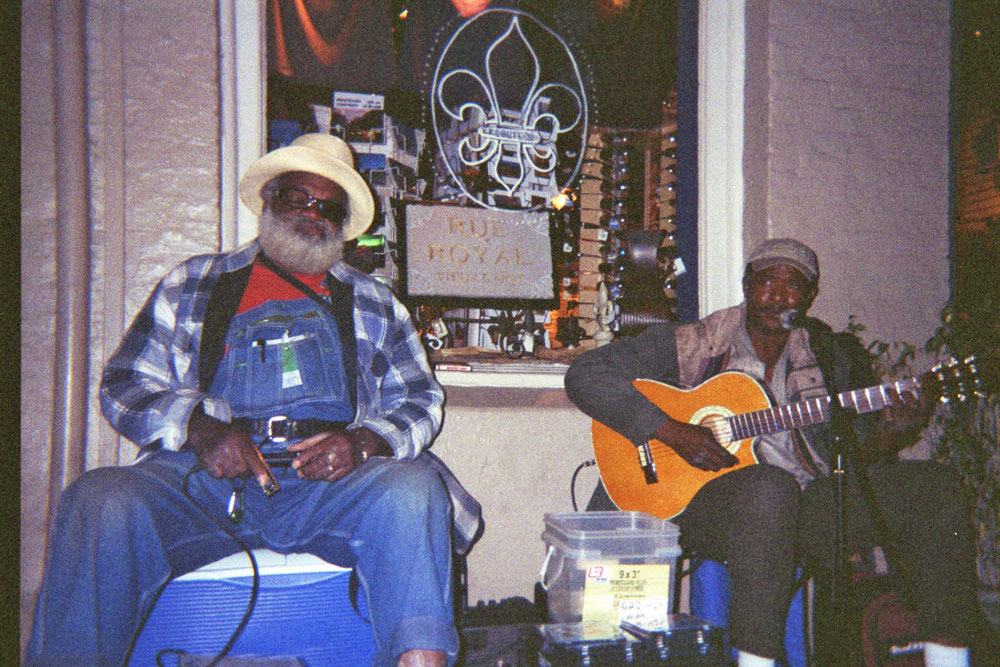
Grandpa Elliott (Elliott Small) and Stony B (Michael Stone) performing at a corner on Royal Street.

One of my favorite street music moments occurred when I was walking along Royal Street in April 2006. The guitarist sounded a little like Robert Cray and the harmonica player had a deep bass voice and looked distinctive in his thick grey beard, farmer overalls, straw hat and sunglasses with one lens punched out.  I listened for several songs and talked with them between songs. I bought their CD and had them sign it—a practice I still do with street performers I enjoy.  Stoney B, the guitarist, has since moved to San Diego where he and his band play regularly at festivals and night clubs. Grandpa Elliott, the harmonica player, became famous as a regular with the Playing For Change band and recordings.

It’s easy to find street musicians while in New Orleans. But you don’t have to visit NOLA, to hear them. I’ll be featuring several sets of music from NOLA street performers, Monday, October 6, starting at 10 a.m. on KAOS, 89.3 FM.  We stream.