2015 created great opportunities to explore NOLA music

I use this blog as way to prepare for my radio show on the Olympia community radio station, KAOS. Here’s some of the things I learned this year.
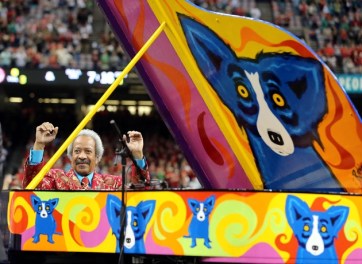
New Orleans "Professor" Allen Toussaint
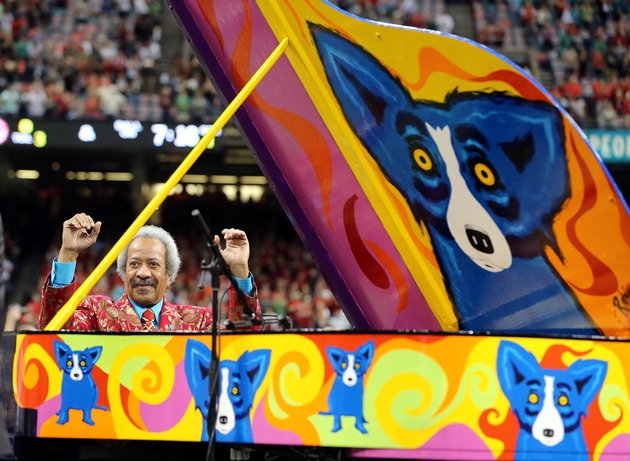
Allen Toussaint was a featured “professor” in my ongoing series of New Orleans piano players.

Fascinated by the role of the piano in New Orleans, I started a series on New Orleans piano players that now includes James BookerAllen Toussaint, Professor Longhair, Tuts Washington,  and Dr. John. (More to follow).

During the carnival season, I explored the traditions and music of Black Indians of Mardi Gras .  That story led me to write about the importance of African American musicans from New Orleans in creating rock n’ roll.  I followed that up with Fats Domino and the role his performances played in getting black and white audiences to dance to the same beat.

Speaking of Mardi Gras, I provided a personal reminiscence then added a new Mardi Gras experience of bar hopping with the local brass band, Artesian Rumble Arkestra.
All You Need Is Love
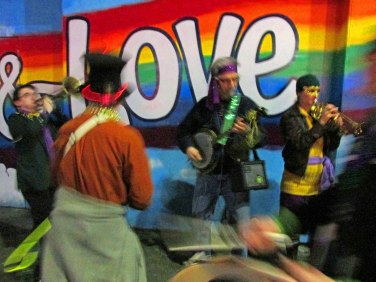
Artesian Rumble Arkestra brought a “Mardi Gras” vibe to downtown Olympia as part of bar tour on Fat Tuesday.

My entry on New Orleans women in music resulted in one of my favorite radio shows of the year and helped me grow my knowledge of New Orleans music and the many wonderful women who create it.

I chose my Valentines show to dive into the history of the often recorded “Careless Love.”  Later I looked into the history of another New Orleans standard,  L’il Liza Jane. I also tracked down  songs about “sugar” which, as you’ll find, really are not about sweet granules.  I  also explored the Afro-Cuban connection or what Jelly Roll Morton called the “Spanish Tinge.” (Last year, I wrote an entry on the classic and checkered history of St. James Infirmary.)

One of my more popular entries was about the Galactic tour of 2015 when it played Bellingham, Seattle and Portland. Interestingly, the funk band is playing Seattle and Portland about the same time in February of 2016.
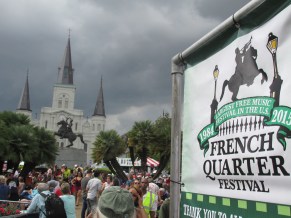
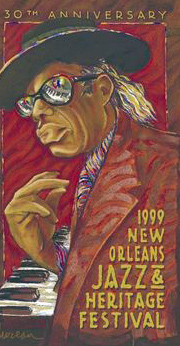
IMG_1454As you might expect, I have several entries on New Orleans institutions, including the New Orleans Jazz and Heritage Festival, Preservation Hall, the jazz funeral,  the Freret Street Festival, French Quarter Festival, and the end of smoking in New Orleans nightclubs.

Drawing on my April trip to New Orleans, I wrote about the magnetic pull of New Orleans to young musicians of all genres. I  also shared my experience of touring the currently closed Dew Drop Inn with the grandson of its founder.

The 10-year anniversary of Hurricane Katrina inspired a couple of entries, including this one that chronicled the activities of some of New Orleans better known musicians. This entry also has links to my two radio shows honoring that anniversary with music and excerpts from Spike Lee’s documentary.

And I finished off the year, as I did last year, with a short catalog of the 2015 New Orleans music releases featured on my show.  Part 1.  Part 2.

I hope you enjoyed the music and the little bit of information I learn and share. I know I do. Subscribe if you’d like to follow what I learn in 2016. Happy New Year.
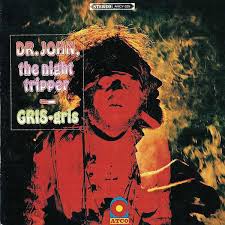
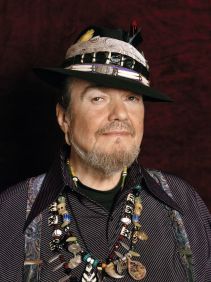
 

Dr. John turns 75

Dr. John turns 75 this Saturday (November 21, 2015).  Still active as a performer (nine shows last month) and recording artist (releasing Ske-Dat-De-Dat last year), Malcolm John “Mac” Rebennack’s career goes back to the late 1950’s when as a guitarist he worked with Earl King, James Booker, Professor Longhair and other denizens of the J& M studio.

Like Earl Palmer who laid down the beats to the New Orleans R&B sound before migrating to Los Angeles to become part of the fabled “Wrecking Crew,”  Rebennak was a well regarded studio musician both in New Orleans (before having to leave the state) and California.

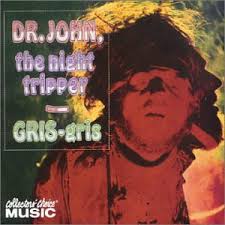
However, unlike Palmer, Rebennak stepped out in front of a band when he created the spiritually-infused persona, Dr.  John Creaux the Night Tripper, based on a New Orleans hoodoo practitioner.  This new character debuted on the “Gris Gris” album released in 1968.nite tripper

To hear Harold Battiste tell the story, the whole thing was just a lark. Another New Orleans musician who migrated to California, Battiste was a record producer and Sonny and Cher’s musical director in the 60’s. He approached Rebennak who had played on tour with Sonny and Cher to see if he had any concepts for a new album.

“Mac told me that he had been reading up on this character called Dr. John from the New Orleans voodoo tradition and wanted to work something around that.”  Actually, the character was a “hoodoo” practitioner which I understand is different than voodoo — kind of like a competitive alternative to voodoo.

“This was not to be a proper production with music arrangements and everything by the numbers. We would have to create a vibe in the studio where the spirit led the way,” wrote Battiste in his autobiography “Unfinished Blues: Memoirs of a New Orleans Music Man.”

Rebennak had created the concept for singer Ronnie Barron but according to Battiste, Barron’s agent nixed it. So Mac took the role. Battiste wrote that he envisioned the “the whole concept as a tongue-in-cheek thing.”

The album included a cast of New Orleans musicians working in southern California such as John Boudreaux, Ronnie Barron on keyboards, Jessie Hill and Shirley Goodman.

dr.john“The studio was like a Mardi Gras reunion, everybody laughing and talking, telling stories all at the same time. But once we got settled, the vibe was there and the music just flowed.”
For the album cover, Mac needed an outfit and Battiste arranged for Cher’s seamstress to arrange “odd pieces of animal skins tacked onto colorful clothes. She made him a snakeskin crown, and he found various trinkets and accessories to validate his voodoo status.”

The album’s release was delayed by about a year while record company executives tried to figure out what to do with it. But it received strong reviews upon release, creating a new problem. Now Mac really had to become Dr. John and perform as him.

His first live performance as Dr. John was at the Filmore West with Thelonious Monk.  That’s right! Mac and Monk.  Almost three dozen albums later, “Dr. John” (Mac Rebennak) is still going strong.

You can catch Dr. John’s music and much more in my next show (recorded here).

Afro-Cuban rhythms make New Orleans music move

I often explain my radio show’s place in the KAOS world music line up as offering music from the most international cities in our country: New Orleans. And this week’s show provides lots of examples.

I’m not alone in my assessment of the city’s international flair. New Orleans is routinely described as the northernmost Caribbean city. I’ve also heard it described as the most African city in the U.S.

New Orleans affinity to the Caribbean dates back to the Haitian revolution in the early 1800’s which generated an influx of French-speaking whites and free people of color into the city along with their slaves.

As a southern port, New Orleans experienced daily inbound traffic from all over the world, but particularly the Caribbean and Central America. The New Orleans Cuban connection was fueled twice daily by ferry departures and arrivals from Havana.

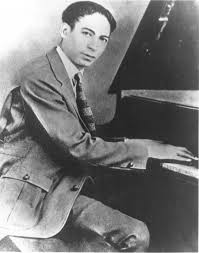
JFerdinand Joseph LaMothe, Jelly Roll Morton, first coined the term
JFerdinand Joseph LaMothe, Jelly Roll Morton, first coined the term “Spanish Tinge” which he described as an essential ingredient in jazz.

Tresillo and habanero rhythms are apparent in the jazz and brass band music of New Orleans, notably second line parade songs. Jelly Roll Morton referred to this as the “Spanish tinge” which can be heard in his “New Orleans Blues.”  However, I think he would have been more accurate to have called it the Afro-Cuban Tinge.

In Professor Longhair’s “Mardi Gras in New Orleans,” you can hear the Cuban Clave rhythm in his piano playing. Henry Byrd (Longhair) described his style as incorporating rumba, mambo and Calypso.

And while its relatively easy to find Caribbean influences in New Orleans rhythm and blues, its not as well known that the cultural exchange went both ways.  Fats Domino, Smiley Lewis and other New Orleans R&B artists were routinely played in Jamaican street parties influencing the development of Ska.

And the free trade of rhythm continues in the post-Katrina era with an active Brazilian community contributing Samba, Forro’ and other beats to the ever evolving gumbo that is New Orleans music.

In this show. you’ll be hearing those rhythms, including Brazilian-New Orleans music. I also will be honoring the anniversary of Jelly Roll Morton’s birthday. (Show originally broadcast live on October 19.  2015.) Listen to the latest show. 

Tuts Washington holds solid place in New Orleans piano legacy

The rich creative humus that nurtures New Orleans music is built upon generations of musicians who, mostly in historical anonymity, shared their art and craft with younger musicians. (Here’s the edited version of the radio based on this post.)

If not for one solo recording and a fortuitous film that captured his brilliance and his legacy, Isidore “Tuts” Washington might have easily have been lost to future audiences. But his contribution to New Orleans music will not be forgotten

Isidore
Isidore “Tuts” Washington at New Orleans Jazz and Heritage Festival

Born in 1907, Washington was old enough to follow the early jazz masters perform on the streets of his hometown. Mostly self-taught on the piano, he would whistle the brass band tunes he would hear until he could work them out on the keyboard.

At an early age, he excelled in the boogie woogie, improvisational style of piano common in the New Orleans clubs called barrelhouse. He played with a number of New Orleans bands throughout the 1920’s and 3o’s, including backing up a singer whose missing front teeth got him dubbed “Smiling” Lewis.

In the late 30’s while playing in these clubs, Washington nurtured a young pianist named Roy. He even painted a charcoal mustache on his face to help him get into clubs under age so he could perform with him.  Years later, Roy, otherwise known as Professor Longhair, would talk fondly of his mentor’s clean playing style and the long stretch of his fingers on the keyboards.

Cover of Tuts Washington's only solo recording
Cover of Tuts Washington’s only solo recording

After the war, when the now “Smiley” Lewis began to record, first with DeLuxe Records and then with Imperial Records, Washington found himself at the vanguard of Rhythm & Blues, playing piano on songs like “Turn On Your Volume,” “Tee-Nah-Nah,” and “Gumbo Blues.”  But recordings would be a rare experience for Washington who would not return to the studio again until he was deep into his 70’s.

Washington left the city and was gone for most of the J&M Studio R&B heyday.  When he returned to New Orleans, he played jazz with Papa Celestin and the Clyde Kerr Orchestra and held down regular gigs at places like the Court of Two Sisters Restaurant–solidifying his reputation in the 60’s and 70’s as a New Orleans institution.

He regularly performed at the New Orleans Jazz and Heritage Festival and collapsed from heart failure while performing at the 1984 New Orleans Worlds Fair.

As mentioned above, he was a direct influence on Professor Longhair but also other New Orleans piano players, including James Booker and Allen Toussaint. This is evident when you watch this excerpt from Piano Players Rarely Ever Play Together.  This film by Stevenson Palfi captures Tuts Washington and Professor Longhair near the end of their lives and Toussaint in his mid-40s.

Professor Longhair (top), Allen Toussaint (middle) and Tuts Washington performing Boogie Woogie in Piano Players Rarely Play Together

The film features interviews and historical footage but the most exciting part of the film is the three masters playing pianos all lined up so the camera can catch them in the same shot.  While the YouTube version is muddy, the film has been digitally restored.

If you don’t want to watch the whole film, skip to the end when the filmmaker shows the three playing a boogie woogie tune to its full length. The number (available on Longhair’s anthology) starts with Professor Longhair giving a little coaching, scatting a bit to describe how to avoid cutting in on his master, Tuts Washington.

Hear this amazing artist on my next show, (recording of the show) Monday at 10 a.m.

L’il Liza Jane rises to whatever the occasion demands

‘Fore I die, I’d like to meet (Little Liza Jane)
Gal who made us shake our feet (Little Liza Jane)

Okay I made that part of the song up but therein lies the beauty of the song, L’il Liza Jane. It so engaging and adaptable. Meeting her is definitely on my bucket list. Wouldn’t you like to meet the woman has inspired so many people over the years to sing, chant, dance and make up lyrics on the fly?

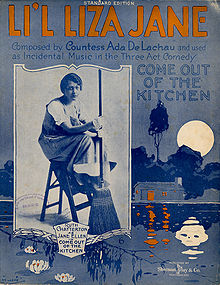
First printed in 1916, L'il Liza Jane's history likely dates back to minstrel shows.
First printed in 1916, L’il Liza Jane’s history likely dates back to minstrel shows.

According to the Preservation Hall Foundation, the song  L’il Liza Jane “has been established as a New Orleans jazz standard since as far back as the 1910s.” Without doubt, the song was making the rounds before Sherman, Clay & Co. of San Francisco printed it up in 1916, describing it as a “Southern Dialect Song.”

But who was she? One theory is that Liza (and sometimes Eliza) Jane was a common character name in minstrel shows. If so, then its no surprise that her moniker got attached to a simple song that could be easily adapted to whatever dramatic or comedic situation was required.

The simple structure of each line of a couplet set off by a choral response of “L’il Liza Jane” makes it a communal experience where others on stage and audience members can participate.

In true folk tradition, the song has been played in many musical styles from big brass bands to bluegrass pickers, with lyrics added and amended based on the occasion. There is something about the couplet structure of the lyrics that invites embellishments.

The call and response part is easy to follow. No need to rehearse ahead of time, just figure it out as the song proceeds.

Most of the time, the song is about the attraction and joy of having Liza Jane as your life partner. “I got a gal that I adore”  (this is where you sing “L’il Liza Jane”) “Way Down South in Baltimore. “I don’t care how far we roam (Little Liza Jane) Where she’s at is home sweet home.

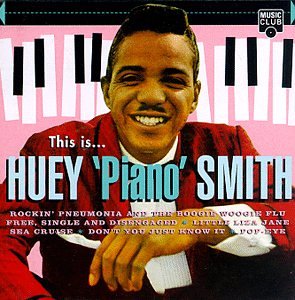
Huey Smith, an early New Orleans rocker, recorded a version of L'il Liza Jane in 1956.
Huey Smith, an early New Orleans rocker, recorded a version of L’il Liza Jane in 1956.

Huey Piano Smith, an early R&B and rock and roll performer inspired by Professor Longhair, cut a version of the song with his own set of lyrics but stayed true to the song’s theme.

Hey pretty baby can we go strollin’?
(Little Liza Jane)
Yes, you got me rockin’ When I ought to be rollin’
(Little Liza Jane)

The Black Indians of Mardi Gras use the song with lyrics appropriate to their unique practices but the response part is still the same –“L’il Liza Jane.”

Another Sweeney’s Gumbo YaYa is coming up on Thursday so imagine that song playing in your head right now (cause I’ll definitely be playing then). I’ll call; you respond.

Got some sweet songs you should hear (L’il Liza Jane)
Bout a Lady I hold dear (L’il Liza Jane)

Tune in Thursday, KAOS radio (L’il Liza Jane)
Sweeney’s Gumbo YaYa Show (L’il Liza Jane)

Or you can listen to the recording of the show on Mixcloud now!

Professor Longhair “tralla walla” makes us feel fine

This week’s post (and my focus on this week’s radio show) is about the man who sang “we gonna hoola tralla walla malla dalla drink some mellow wine.”

Henry Roeland Byrd, aka Professor Longhair

Henry Roeland Byrd was a tap dancer, card shark, soldier, cook, laborer and general street hustler. He also was one of the greatest New Orleans piano professors of all time – Professor Longhair.

His iconic “Tipitina” inspired the likes of Fats Domino, Allen Toussaint, James Booker, Dr. John and countless others.

Professor Longhair’s style has been described as a rhumba crossed with a blues shuffle.In an interview with Peter Stone Brown not long before he died in 1980, he said:

” I was around a lot of honky-tonk musicians, barrelhouse musicians, blues musicians, and bebop musicians, jazz musicians. I just got a little bit from everybody and used it with what my mother taught me. She played a lot of ragtime music. . . I just mix my ideas up and call it a gumbo. There’s no certain thing at all. It’s just rockin’ rhythm.”

Fess was there at the beginning of the New Orleans Rock and Roll era in New Orleans, cutting his first singles in the J&M Studio (Cosimo Matassa) in 1949.  And in November 1953 with Alvin “Red” Tyler, Lee Allen, Earl Palmer, and Edgar Blanchard backing him up, he recorded “Tipitina” for the first time.

“Girl you hear me calling you. Well you’re three times seven, baby. Knows what you want to do.”

Calibration
Calibration

Born in Bogalusa but raised in New Orleans, Professor Longhair never made the hit parade and never really experienced financial success. By the late 60’s, his career had folded and he was living in poverty. In 1970, Quint Davis and Alison Minor sought him out with the intention of getting him to perform at their fledgling music festival, the New Orleans Jazz and Heritage Festival.

Who they found was a frail, weak man who didn’t seem capable of pounding out his trademark rhythms. But with the help of Davis and Minor, he recovered enough to perform at the second JazzFest in 1971 and demonstrate that, if anything, his playing had gotten better.  His hometown and the world embraced him and his career flourished. Until his death in 1980, he recorded and performed, including at the nightclub created for the purpose of providing him and other aging R&B artists a place to play, named appropriately Tipitina’s.

Join me, won’t you for some Fess and Fess-inspired music this Memorial Day.   Sweeney’s Gumbo YaYa kicks off at 10 a.m. on Monday. Here’s a recording of that show on Mixcloud.

Toussaint infused New Orleans sound into pop music

New Orleans
Allen Toussaint plays the National Anthem at the Superdome. Credit: Chuck Cook-USA TODAY Sports

The French Quarter Festival, which showcases local music, could not have scored a better opening headliner this year than with the hometown artist whose creativity has nurtured the New Orleans sound for over a half century. (Listen to the show that complements this post.)

Allen Toussaint was a teenager when he first sat in on Earl King’s band and regularly scored gigs at the legendary Dew Drop Inn.

It wasn’t long before he found his way to the center of the known Rock n’ Roll universe at the time, Cosimo Matassa’s studio, where he laid down piano tracks on recordings by Fats Domino, Huey “Piano” Smith, and Aaron Neville. But it was when he joined Minit Records that his creativity became apparent to the world. Using his parent’s living room as rehearsal space and testing ground for new material, he assembled a parade of hit singles by Jessie Hill, Irma Thomas, Lee Dorsey and this blog’s patron saint, Ernie K-Doe.

Ernie K-Doe best recordings were aided by the songwriting, arranging and producing of Allen Toussaint.

As a keyboard savant, Toussaint could accurately reproduce and synthesize the city’s revered legacy of piano professors, especially the style of Professor Longhair. But as a songwriter and arranger, he was able to weave the full panoply of New Orleans rhythms, vocal traditions and spirit into a clean appealing style for the pop market. In fact, he, along with K-Doe, were responsible for the sole number 1 pop chart hit recorded in New Orleans,  “Mother-in-Law.” (A song written before Toussaint was married and had one.)

Later, he started his own record labels providing a platform for local and national musicians to access the New Orleans sound. With The Meters as his studio house band, Toussaint was a key force behind the New Orleans funk sound that developed in the 70’s. A prolific songwriter, his music has been performed by The Rolling Stones (“Ruler of My Heart”), The Who (“Fortune Teller”), Bonnie Raitt (“What Do You Want the Boy To Do”), Devo (“Working in the Coal Mine”),  Al Hirt (“Java”), The Doors (“Get Out of My Life Woman”),  Jerry Garcia (“I’ll Take a Melody”), Glen Campbell (“Southern Nights”), Robert Palmer (“Sneaky Sally through the Alley”), The Pointer Sisters (“Yes, We Can Can”) and many more.

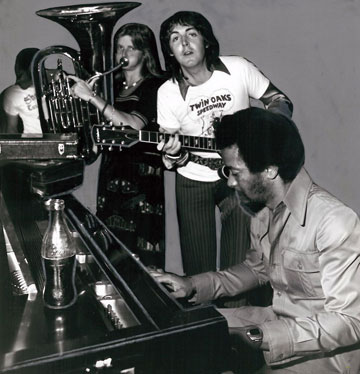
Linda and Paul McCartney performing with Allen Toussaint in his New Orleans studio in 1975.

In 1973, Toussaint had a big hand in producing and performing on Dr. John’s album “In The Right Place.” Two years later, Linda and Paul McCartney moved their entourage to New Orleans to collaborate with Toussaint in his New Orleans studio on their album “Venus and Mars.”

He was inducted into the Rock and Roll Hall of Fame in 1998, the Louisiana Music Hall of Fame in 2009, and the Blues Hall of Fame in 2011. If there’s any question of whether being a senior statesman of New Orleans music has diminished his chops, you need only look as far as his grammy-nominated, post-Katrina collaboration with Elvis Costello, “The River in Reverse,” for evidence that at 77, he still has it.

In addition to being a producer, bandleader, arranger and songwriter, Toussaint is an accomplished pianist and stands with the great New Orleans piano “professors.” Toussaint will take the stage at the French Quarter Festival on April 9 at 3:45 p.m. but you will be able to catch his music on my next show this Monday. (Here’s the recorded show)

James Booker carried the piano tradition forward in his own way

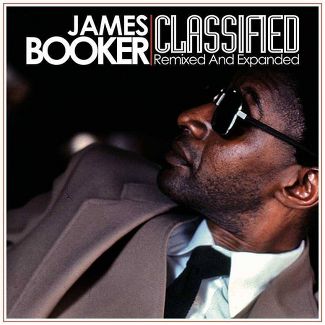
If there is justice in the music world, James Booker would be better known for the genius and artistry of his piano playing.  The fact that his music is still played 30 years after his untimely death in New Orleans offers some hope that justice may ultimately be served.

Classically trained but also taught by Tuts Washington and influenced by Professor Longhair, Booker came of age in the heyday of New Orleans R&B era when Fats Domino, Dave Bartholomew and Huey Smith were rocking the jukebox with singles recorded at Cosimo Matassa’s studio.

Booker got in on the act as a studio musician as well as fronting his own songs with “Doin’ the Hambone” and “Thinkin’ About my Baby.”  His song “Gonzo” charted nationally and his playing style, sometimes described as a nest of spiders on the keyboards, was admired by many, including music lovers in Europe where he spent some time and built a following.

But while Booker was a versatile musician, capable of playing a wide range of styles, including working with Freddie King, Aretha Franklin, Ringo Starr, the Doobie Brothers, Maria Muldaur, and Jerry Garcia, his star never quite rose to the level of his talent and genius. (Check out this sound recording of a rehearsal session with Booker and Garcia.)

It’s a sad but familiar story; he had his issues. Some, in retrospect, have pondered whether he suffered from a mental malady that in our current day might have been more successfully treated by means other than with heroin and alcohol.

He died way too young in the emergency room of Charity Hospital in 1983 at the age of 43.

Booker was able to bring elements of many musical genres together and his interpretations of familiar songs are unique and probably difficult to duplicate given his skill.

Booker’s “absolutely unique style is a polyglot mix of gospel, boogie-woogie, blues, R&B and jazz, all executed with a thrilling virtuosity,” wrote Tom McDermott who is himself an amazing pianist from New Orleans.

When I listen to Booker’s music, I hear shades of the “Spanish Tinge” made famous by Jelly Roll Morton. His hyperactive right hand razmatazz and left hand syncopation are reminiscent of Professor Longhair. And yet, his style builds on those masters rather than replicates.  And he passed the tradition on by tutoring Dr. John and Harry Connick Jr.

As always, its best if you hear for yourself. I’ll be playing from a few of his solo recordings on Monday but if you have time, consider checking out his last recorded performance at the Maple Leaf. He had a regular gig at the Uptown New Orleans bar, often playing to sparse and disinterested audiences. The Booker you see in this video contrasts sharply with the more flamboyant Booker of earlier years. His teeth are fixed, he’s wearing a suit and not wearing his trademark patch with a star on it over his left eye. Here’s a video of that period in his life.

Helping to bring the world’s eye to Booker’s talent is a documentary called the Bayou Marahaja by New Orleans filmmaker Lily Keber.

“Bayou Maharajah explores the life and music of New Orleans piano legend James Booker, the man Dr. John described as “the best black, gay, one-eyed junkie piano genius New Orleans has ever produced.” A brilliant pianist, his eccentricities and showmanship belied a life of struggle, prejudice, and isolation. Illustrated with never-before-seen concert footage, rare personal photos and exclusive interviews, the film paints a portrait of this overlooked genius.”

I have none seen this film; no distributor yet. I’m hoping it can be shown at the Olympia Film Society’s Capitol Theater. But you can check out the trailer and join me in honoring and enjoying his talent. I’ll be spinning some Booker tunes along with my usual mix of New Orleans music this Monday on Sweeney’s Gumbo YaYa.

Tipitina’s keeps the legacy alive while contributing to the future

Professor Longhair may have memorialized the corner of Rampart and Dumaine in “Mardi Gras in New Orleans” but his memory and spirit live on at a different street corner, Napoleon and Tchoupitoulas, in a music venue that bears the name of another of his classics, “Tipitina.”

A bust of Professor Longhair (Henry Roeland Byrd) sculpted by Coco Robicheaux stands guard at the entrance of the New Orleans music venue that bears the name of his song Tipitina. – Photo by Alex Brandon / Times-Picayune archive

Rampart and Dumaine is the original location of J&M Studios, run by Cosimo Matassa. The location is recognized by the Rock and Roll Hall of Fame as a landmark site and it’s a laundromat – with mixed but generally positive Internet reviews.

Tipitina’s, on the other hand, is a great example of how cool stuff can happen out of love for music and doing the right thing. Just as Preservation Hall is dedicated to keeping New Orleans jazz alive, Tipitina’s was conceived with the notion of honoring the city’s early R&B and Rock ‘n Roll legacy.

When the venue opened in 1977, it’s goal was to provide a public performance space for aging and almost forgotten R&B and Blues artists like Fess (Henry Roeland Byrd), Jessie Hill, Snooks Eaglin, Earl King and others. Tips was born from an act of love by a group of investors who collectively and affectionately became known as the “fabulous fo’teen.”

Neville Brothers in front of the Longhair mural at Tipitina’s. Photo by Leon Morris from the WWOZ website.  WWOZ’s early years were spent located above Tip’s in the beer storage room.

The venue also provided a platform for other local musicians, such as the Radiators, Little Queenie and the Percolators, the Dirty Dozen Brass Band, the Continental Drifters and the Neville Brothers.

Tipitina’s in those earlier years was quite a bit different than it is today.  Music author Jay Mazza described a summer show this way:  “Sometimes it was so humid in the place that the clouds of smoke seemed to be seeded with water.  The smoke hung low in the room. Both bands and patrons alike were soaked to the bone within minutes. A trick learned early on was to bring extra shirts for changing between sets. . . Still everyone loved the place . . there always has been an amazing vibe associated with Tipitina’s.”

While the venue provided many great musical moments in the late 70s and early 80s, it struggled financially and eventually shuttered for about a year and a half. When it reopened in 1986, a major renovation made it far more attractive for musicians and their patrons. The warehouse-like building was opened up, creating a balcony level with higher ceilings, better circulation, improved bathrooms, and air conditioning.

Tacoma band Girl Trouble performing at the Capitol Theater this month. Like Tipitina's the theater has a history of providing local groups a platform to perform.
Tacoma band Girl Trouble performing at the Capitol Theater this month. Like Tipitina’s the theater has a history of providing local groups a platform to perform.

This is a nice example of how some key changes could make an Olympia venue more attractive.

Tipitina’s also kicked up their bookings, continuing to stage local artists but adding national and international acts to the mix, building a worldwide reputation.

To get an idea of the artists who have performed at Tipitina’s, check out its index of musicians, some of whom are honored with additional recognition on the sidewalk outside: the New Orleans Walk of Fame.

Tipitina’s honors New Orleans musical legacy inside and outside with its Walk of Fame.

Another cool feature of Tipitina’s is its Foundation. It’s not every place where you can rock out to amazing music, with the understanding that profits go to support the very music scene you’re enjoying.  The Foundation purchases instruments for Louisiana schools, provides ongoing youth music workshops, offers an after school jazz and digital recording program under the artistic direction of Donald Harrison, Jr. and provides a a statewide network of workforce development and job skills training centers for musicians, filmmakers and other media professionals.

Jazz artist Donald Harrison, Jr. heads up the Tipitina’s internship program.

And you never know what you’ll find at Tips. An Olympia friend told me about how she and her partner on a NOLA visit wandered into the uptown bar on a late Sunday afternoon, ordered a beer and found themselves drawn into a Cajun Fais Do Do.

So next trip to NOLA, put Tips on your list. Until then, you can catch many of the musicians who perform there on Sweeney’s Gumbo YaYa, every Monday from 10 a.m. to noon on your community radio station, KAOS.

Cajun Throwdown raises questions about music and food

Food and music go together rather nicely. Or as Satchmo would say: “red beans and ricely.”

I bring this up because on Friday, October 3, I’ll be a tasting judge at the Cajun Throwdown at Centro (formerly Alpine Experience – 408 Olympia Ave NE) starting at 7 p.m. during the Olympia Fall Arts Walk.

Upstart Joe Hyer (left) goes up against the pro, Rodney O'Neill in Friday's Cajun Throwdown.
Upstart Joe Hyer (left) goes up against the pro, Rodney O’Neill in Friday’s Cajun Throwdown.

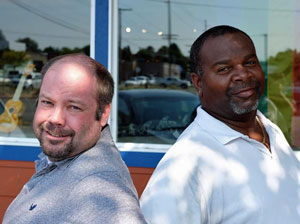
Rodney O’Neal, barbecue and Southern cook extraordinaire and owner of Barb’s Soul Cuisine, will be challenged by the upstart, usurper Joe Hyer who claims that because he’s visited New Orleans a few times, he can cook like a cajun.  We’ll see.  (I guess I’ll be the judge of that.) It’s all for a good cause with proceeds from food sales benefiting the charitable organization, Barb O’Neill’s Family and Friends.

While this is mostly an assignment for my taste buds, I have been preparing my ear buds. After all, this is a blog about a show called “Gumbo YaYa.”

Food about music is fairly boundless.  Jimmy Buffet’s Cheeseburger in Paradise and the Presidents of the United States’ Peaches, come to mind. But, as usual, I’ll stick to New Orleans music.

Jelly Roll Morton’s name didn’t come from a pastry

The tricky part is what might sound like food isn’t always the case. Ferdinand Joseph LaMothe didn’t take up the name Jelly Roll Morton because of a fondness for sponge cake. The moniker of the piano player who began his career performing in Storyville whorehouses has more do with a woman’s private parts than a pastry. Given that context, I’m leaving his 1923 song, Big Fat Ham, alone.

Similarly, the New Orleans jazz standard “Struttin’ with Some Barbecue”  originally recorded by Louis Armstrong and his Hot Five likely has nothing to do with ribs. According to Cab Calloway’s Jive Dictionary, “barbecue” was jive for a girlfriend or beauty.  I imagine Lil Hardin, the piano playing composer of the song and Armstrong’s wife at the time, was thinking she was the “barbecue” that Pops was strutting with.

When Satchmo and his Hot 5 recorded “Struttin with Some Barbecue,” his barbecue was likely his wife, piano player and song composer Lil Hardin.

Dan Raye, who added lyrics to the music years later, took the song at face value. “And mister waiter if you please, Another rib or two. And I’ll go strut, strut, struttin’, Struttin’ with some barbecue.”

Zydeco King Clifton Chenier was more transparent when he recorded, Hot Tamale Baby. There’s absolutely no reason to believe his song is about a starchy food wrapped in a corn husk.

But a classic Cajun song , “Jambalaya.” is about food, right? Well, true, the singer has to say goodbye to Joe (me oh my oh) so he can go see his girl (ma cher amio). But he also waxes rather poetically about “Jambalaya, and a crawfish pie and file’ gumbo.”

While I doubt Hank Williams ever poled “a pirogue down the bayou,” he did manage to capture a slice of cajun life, albeit a caricature, in this often covered song.

I think Professor Longhair got it right when he sang “Got my red beans cookin” in the aptly named song “Red Beans.” Not much to the lyrics except him cooking red beans–which can take some time to do right. I have to say, though, I’m not sure how pure his intent was when he finished with “I’m gonna have all these women, jumping for joy.”

gumboyaya johnNot surprisingly, songs about gumbo are my favorite. Gris Gris Gumbo YaYa, the first cut off of  Dr. John’s debut album, was partly the inspiration for the name of my radio show. This creole dish is a perfect example of the melange of cultures that come together to form New Orleans cuisine and music.  In a pot of gumbo, you’ll find hints of West Africa, France, Spain, the Caribbean, Germany and Choctaw.

My favorite gumbo song is the quirky “Shrimp and Gumbo” by Dave Bartholomew. At the height of his reputation as a talent scout and R&B music producer, Bartholomew cranked out this little mambo ditty, heavy on percussion (thank you Earl Palmer) and a three saxophone melody reminiscent of the theme song of “I Dream of Jeannie.” Recorded in 1955, Shrimp and Gumbo predates the 60’s TV sitcom. The lyrics are rather limited playing off the fun of singing “mambo” and “gumbo” in tandem.

Well, I’ve given you a “taste” of what to expect on my Monday show (Sept. 29), 10 a.m. to noon (PST) on KAOS, 89.3 FM. But for a real taste, stop by Centro next Friday during Arts Walk for the Cajun Throwdown where you just might find jambalaya, a crawfish pie and file’ gumbo.