My Dad’s Legacy: A strong affinity for music from New Orleans!

Just about every time I spin a Satchmo number, I think of my Dad.  I just can’t separate my thoughts of Pop from the sound of “Pops.”
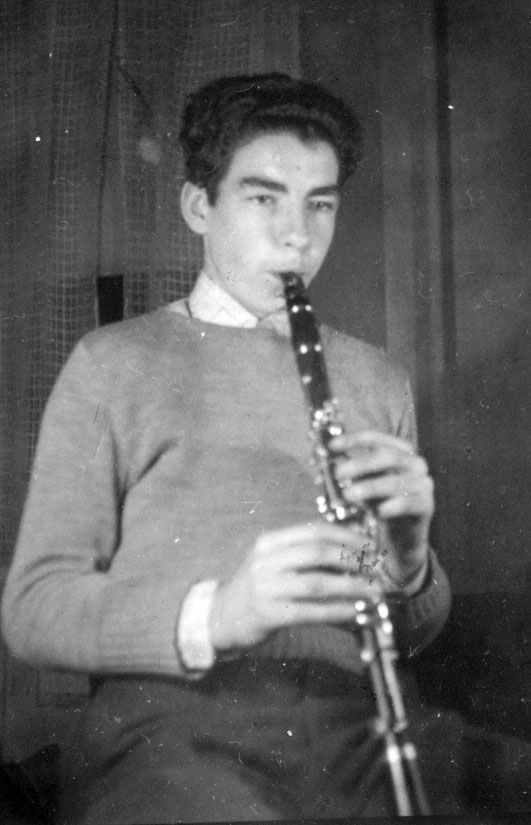
dad-clarinet
My Dad played clarinet up until he entered the Navy in 1943. He played briefly with Tommy Dorsey until the bandleader told him to go back to school. (A story that still made him sad to retell 30 years later)

Jim Sweeney was born in 1923 about a year after Louis Armstrong moved to Chicago to join King Oliver and his band. So he would have been a young pup when Armstrong released his Hot Five and Hot Seven recordings. But that didn’t keep him from digging them.

While he held a lifelong passion for Armstrong,  it was most likely Glenn Miller and his way of using reed instruments to carry the melody and Benny Goodman who inspired him as he came of age playing the saxophone and clarinet in the 30’s.

My musical foundation was solidly laid by Dad’s love of music, his stereo and his collection of swing, jazz and big band records. His taste in music became the soundtrack of my childhood.

I wouldn’t have been born in New Orleans if my Dad hadn’t taken a teaching post at Tulane in the 50’s.  As someone who once played with the Tommy Dorsey band, albeit briefly, he must have thought he hit the jackpot when he got that assignment.

My Dad at his organ, next his record player. Later, he would create a wall niche for the organ and shelves for his records and player. He also added central air conditioning.
My Dad (and me) at his organ, next to his record player. Later, he would create a wall niche for the organ and shelves for his records and player. He also added central air conditioning but he still walked around the house in his briefs.

But by then his clarinet was packed away. He bought an organ instead and remodeled the downstairs of our house on Nashville Avenue, just a few blocks from Freret.  There he and my Mom would hold parties, digging deeply into his music collection and inevitably ending up playing the organ or having others play and people would sing and dance. He was a fan of local musicians like Pete Fountain and Al Hirt, and a frequent visitor to their Bourbon Street clubs as well as a new spot called Preservation Hall.

My Dad’s career blossomed in New Orleans allowing him to get to know a wide range of people, particularly those active in labor and justice issues. As a result, our downstairs parties became a safe haven for activists such as Loyola faculty Louis Twomey and Joseph Fichter, Jesuit priests and academics who played a key role in school integration. Other visitors included the poet, John Beecher (“To Live and Die in Dixie”), the journalist John Griffin (“Black Like Me”) and, so I’ve been told, the Singing Nun.
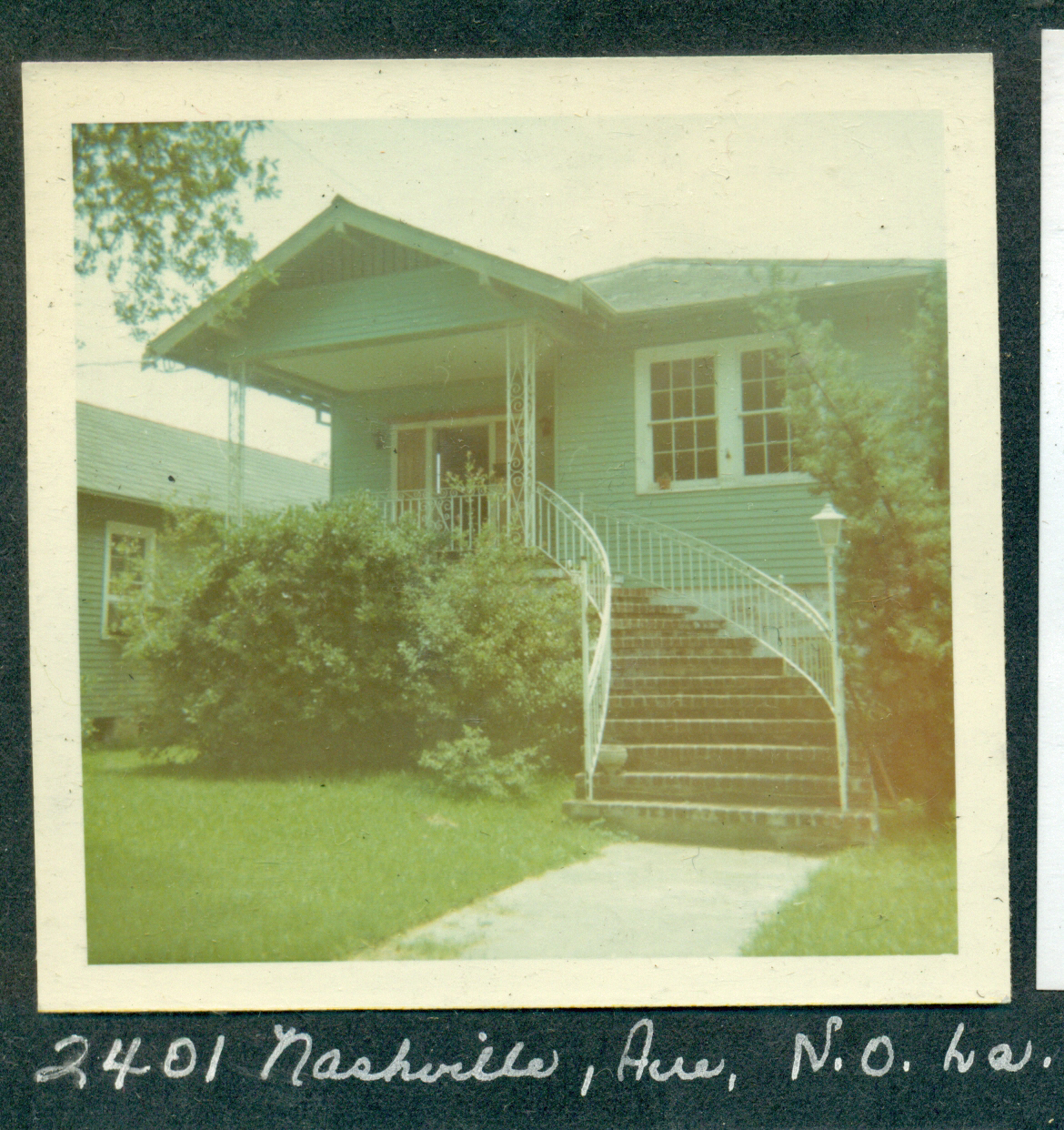
We live in Uptown New Orleans where my Dad remodeled the downstairs with a room designed for music and partying.
We lived in Uptown New Orleans where my Dad remodeled the downstairs with a big room designed for listening, playing and dancing to music.

I was too young to absorb most of this. But I did soak up the music. After we moved away from New Orleans, my Dad still loved to listen to hot jazz and swing. He almost always had music on whenever he was home. But it wasn’t quite the same.

This Monday, I’ll be spinning a lot of music my Dad played in his day and perhaps would have played (more current stuff) had he had the chance.  Please join me.

Happy Father’s Day!

Listen to the show –
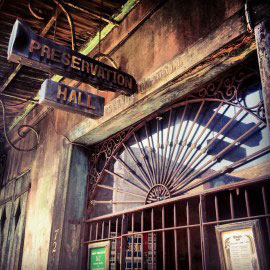
Art dealer’s love of jazz inspires creation of Preservation Hall

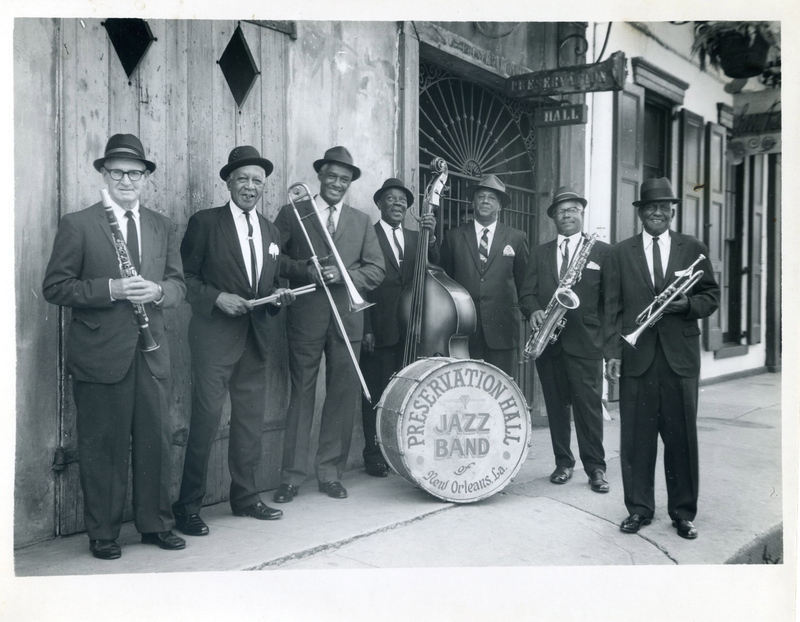
Perhaps no single entity has helped keep New Orleans jazz alive into the 21st Century more than Preservation Hall and the band its spawned.

Just off Bourbon Street is a longstanding venue dedicated to keeping New Orleans jazz alive
Just off Bourbon Street is a longstanding venue dedicated to keeping New Orleans jazz vibrant

Like many great ideas, Preservation Hall started out as a simple solution to an understandable need. In 1952, Larry Borenstein opened an art gallery in an 18-century building that to this day seems to have not changed over the years. It’s location, just off Bourbon Street (726 St. Peter) and its nightclubs, meant staying open late preventing Borenstein from pursuing his other passion: listening to jazz. So he took matters into his own hands.

Borenstein hauled an old piano into his gallery, bought some beer and invited musicians to play for him and his guests and gallery customers. To avoid conflict with the musician union, the sessions were called rehearsals.

In an article, written by Borenstein in the 60’s, he related how the session grew organically.

“The concerts took place regularly.  Punch Miller, back from his long years on the road, brought a band to the Gallery Tuesday nights.  Kid Thomas had a “rehearsal” every Thursday night.  Sundays Noon Johnson often stopped by with his trio.

Preservation Hall became sanctuary for jazz musicians of all backgrounds to play together and keep the spirit alive.

“Piano “professors” Stormy Weatherly (sic – Kid Stormy Weather), John Smith (I’m guessing this John Smith) and Isadore (sic – Isidore “Tuts”) Washington often dropped in as did busking guitarists, banjoists and harmonica virtuosos.  Often impromptu sessions got underway just because Lemon Nash dropped in to say “hello” and just happened to have his ukelele with him.”

The informal venue allowed whites and African Americans to mingle at a time when the South still practiced, and enforced, apartheid. Police occasionally raided the jam sessions and hauled the musicians to jail.

“The bands frequently included white and Negro musicians and it was simpler to charge them with ‘disturbing the peace’ than with breaking down segregation barriers.”

The music experience continued to grow though. Eventually, Borenstein moved his gallery next door and in 1961 the venue was officially christened Preservation Hall–an appropriate name for a jazz lover sanctuary.

A couple years later, the Hall’s managers,  Allen and Sandra Jaffe, organized a road tour for Preservation Hall regulars. The success of the the band’s concerts provided additional income for the musicians and helped maintain fan support outside of New Orleans. The band, in various iterations over the last 50 years, has continued to tour, perform and record, building a worldwide audience.

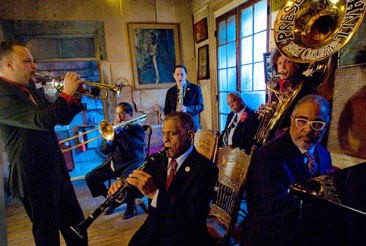
Not a lot of room inside means that every performance is an intimate one.

The Jaffe’s son, Ben took over leadership of the venue and band. A tuba player like his dad, Ben Jaffe has widened the band’s horizons through collaborations with other artists such as Blind Boys of Alabama, the Del McCoury Band, Keb’ Mo’, Dr. John and Tao Seeger. The band’s latest album, “That’s It,” features all original compositions.

Over 50 years after its forming, Preservation Hall entertains locals and tourists alike from it St. Peters Street location with three 45-minute shows every night. The band is drawn from a collective of musicians, many of whom are descendants of early New Orleans jazz musicians.

You can purchase tickets in advance that ensure a front or second row seat or you can pay $15 for general admission. The performances are acoustic and the venue is small. You might need to stand in line for a while but it will be worth the wait.

Tune in to my next show (listed to a recorded edited version) and you will hear what I’m talking about.

Tuba players key to NOLA music and the next Gumbo YaYa

I doubt the Census Bureau can tell us where we might find the highest concentration of tuba players, but if it could, I’d guess that New Orleans would be near the top.

Just think of all those Second Lines with sousaphone players blasting the beat out over the heads of dancers.

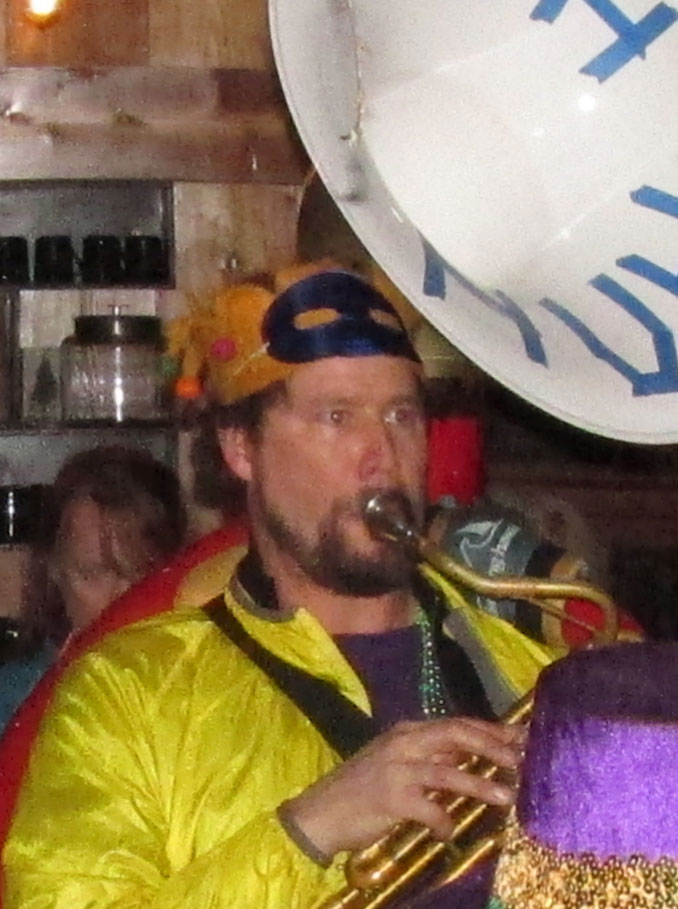
David Moseley, sousaphonist for Olympia's Artesian Rumble Arkestra and KAOS Deejay, will host Sweeney's Gumbo YaYa Monday.
David Moseley, sousaphonist for Olympia’s Artesian Rumble Arkestra and KAOS Deejay, will host Sweeney’s Gumbo YaYa Monday.

A quick trivia detour: The sousaphone is the wrap around version of the tuba, making it easier to carry and project sound forward. From what I’ve read, the sousaphone, named after military-band extraordinaire John Philip Sousa was a modified version of  a tuba-like instrument, called a helicon, designed to be played while riding a horse. Tally Ho!

The sousaphone/tuba is on my mind today because the next Sweeney’s Gumbo YaYa will be guest hosted by David Moseley. In addition to being the host of KAOS’s world music show Xenophilia, David is the sousaphone player for Olympia’s own Artesian Rumble Arkestra.

In honor of David filling in for me while I screw off on the beach, here are five notable tuba/sousaphone players from New Orleans.

Anthony
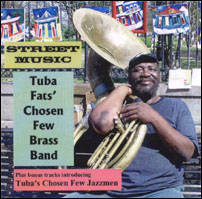
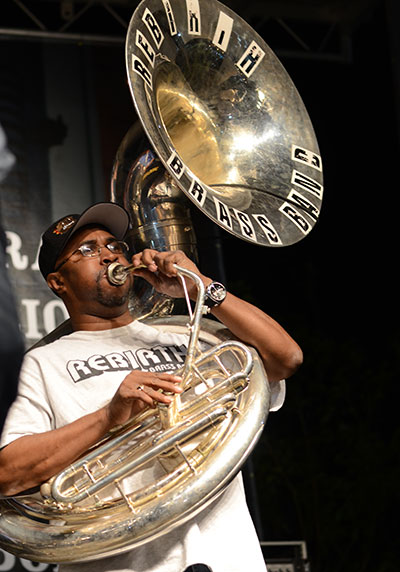
Anthony “Tuba Fats” Lacen is revered in New Orleans.

Anthony “Tuba Fats” Lacen –  Mr. Lacen was part of Danny Barker’s Fairview Baptist Church band and became a bandleader and mentor to many. Famous for playing the streets, he also toured the world.  Over a decade after his passing in 2004, Tuba Fats is still fondly remembered in New Orleans with a special day of recognition (Tuba Fats Tuesday after JazzFest) and a square named in his honor in the Treme.

Kirk Joseph – Another alumnus of Barker’s band of youthful brass players, Mr. Joseph was one of the founders of the Dirty Dozen Brass Band which reinvigorated the New Orleans brass band sound.  He continues to play today mixing tradition with the contemporary and maintaining his credentials as the hip godfather of brass music.

Phil Frazier, founding member and anchor of Rebirth Brass Band.

Phil Frazier – Founding member of my favorite brass band, Mr. Frazier, along with his brother Keith, have been keeping the beat for Rebirth Brass Band since 1983. Influenced by the two previously mentioned tuba players, Phil has charted his own territory with Rebirth, laying down funky bass lines for the band that scored a grammy in 2012 with its album “Rebirth of New Orleans.”

Ben Jaffe – As the Creative Director of Preservation Hall, Mr. Jaffe perhaps isn’t always thought of as a tuba player. But that’s what he often plays for the Preservation Hall Jazz Band. While his blood directly links him to the small French Quarter venue his parents started in the 1961, his talent has kept this venerable institution and its band from being a museum piece. Ben co-produced the 2013 album “That’s It!” which was the band’s first release to feature completely original music, including Jaffe’s tuba-booming title track.

Matt Perrine – It’s hard to avoid Mr. Perrine if you watch any number of New Orleans acts such as Bonerama and the New Orleans Nightcrawlers. But to catch his latest work, check out “Linger Til Dawn” featuring awesome vocals by his wife Debbie Davis and some tasty interpretations of classics like “Sunny Afternoon” and “Dream a Little Dream of Me.”

What makes New Orleans drummers and drumming unique?

There’s something special about New Orleans drummers.  A statement I read and hear regularly and while my untrained ear suggests that is true, I cannot in my own words explain why.

Drum Magazine has made it easy for me though by interviewing four of New Orleans top drummers. (The article is no longer available online). The magazine pulled together musicians who have handled the beat for The Meters, Professor Longhair, Wynton Marsalis, Papa Grows Funk, Galactic and countless other projects.  Some of the conversation gets a little beyond my understanding.  Here’s a lay summary of it:

While New Orleans wasn’t much different as other Southern locales for discouraging the continuation of African culture, the city was unique in that it did allow for New Orleans slaves and people of color to congregate at a central location, known as Congo Square, on Sundays to share, among other things, music.  From this setting, Caribbean and African rhythms and syncopation met European harmonies and melodies.

The key distinction of New Orleans drumming is an emphasis on the bass drum which in the New Orleans parade tradition is the heart and soul of the show.  The bass “is the main voice; and the snare drum is the polish.” Interestingly, in the marching band, second line tradition, the bass drummer and snare drummer are two separate musicians.

“Bottom line is it has to be a pelvic thing. . . What makes me unconsciously decide whether it’s good or bad is when I’m having a conversation [at a gig] far away from the music with someone who’s totally distracting me, and in the meantime I’m moving my butt. Then I know it’s the science of true, organic swing.”