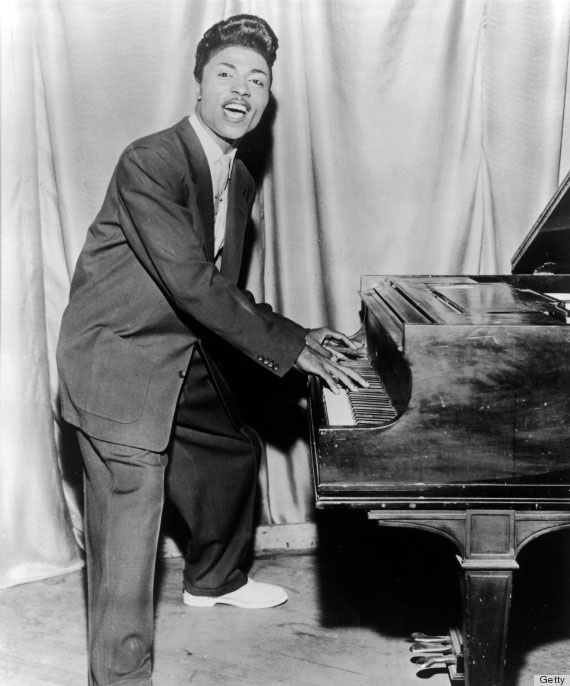
In honor of Allen Toussaint

toussaint14
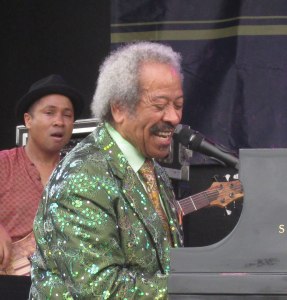
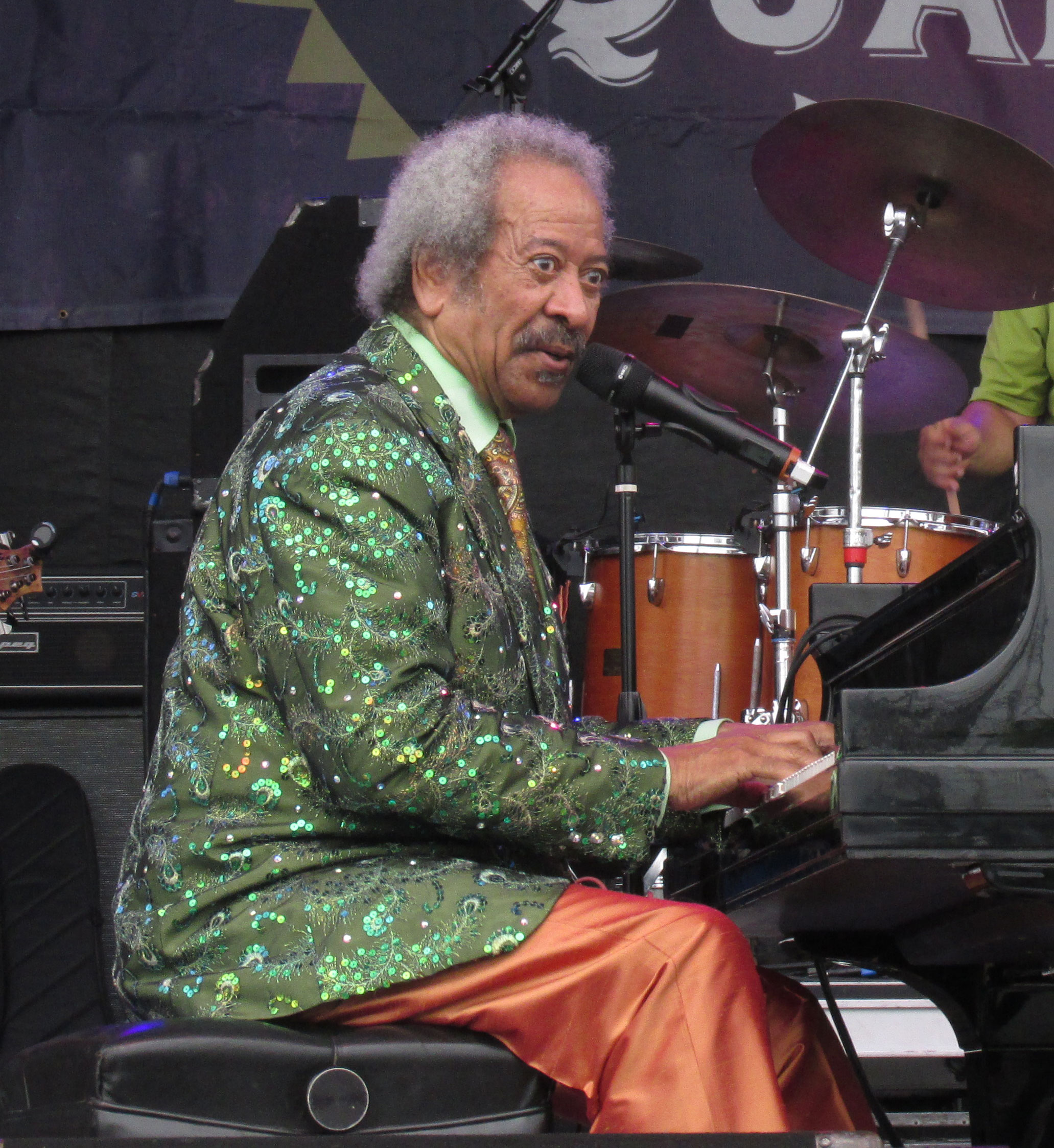
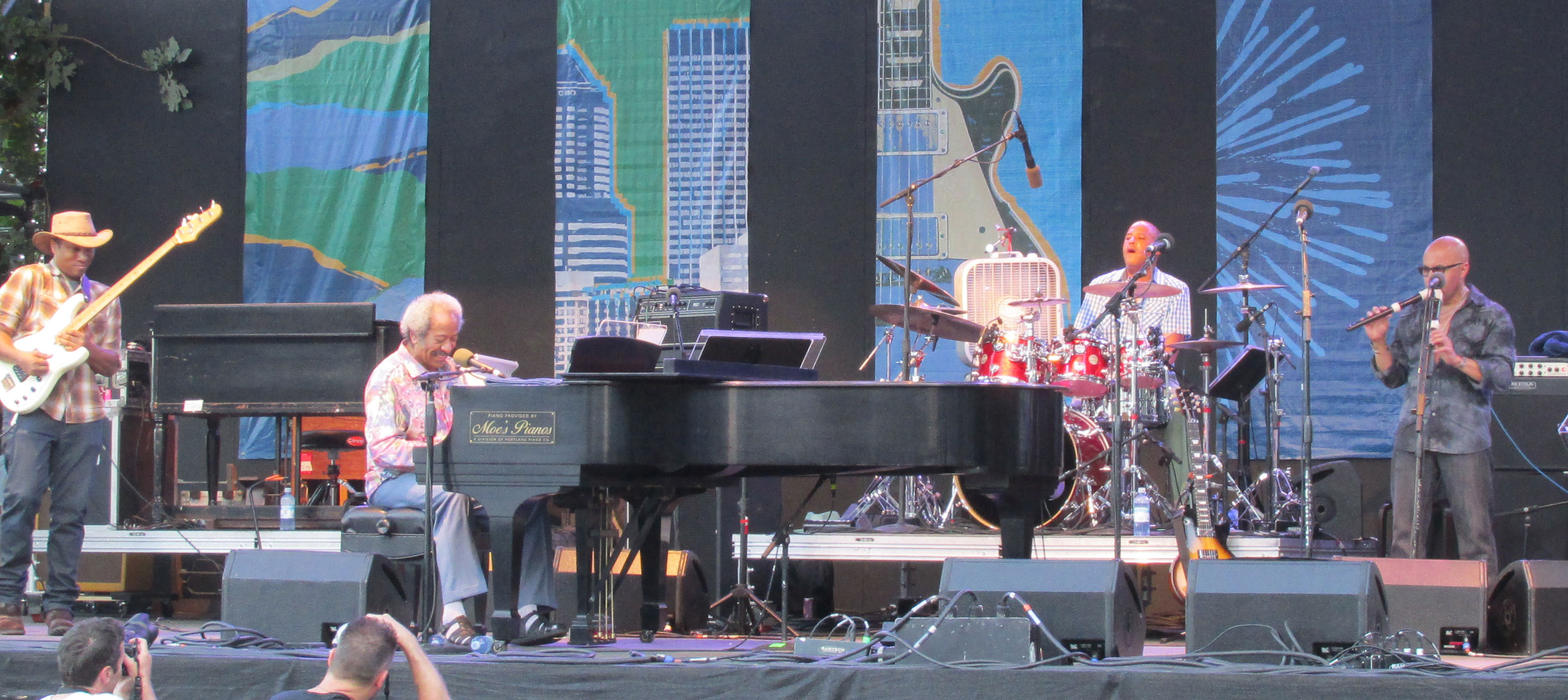
Allen Toussaint at piano with his band at the Portland Blues Festival this summer.

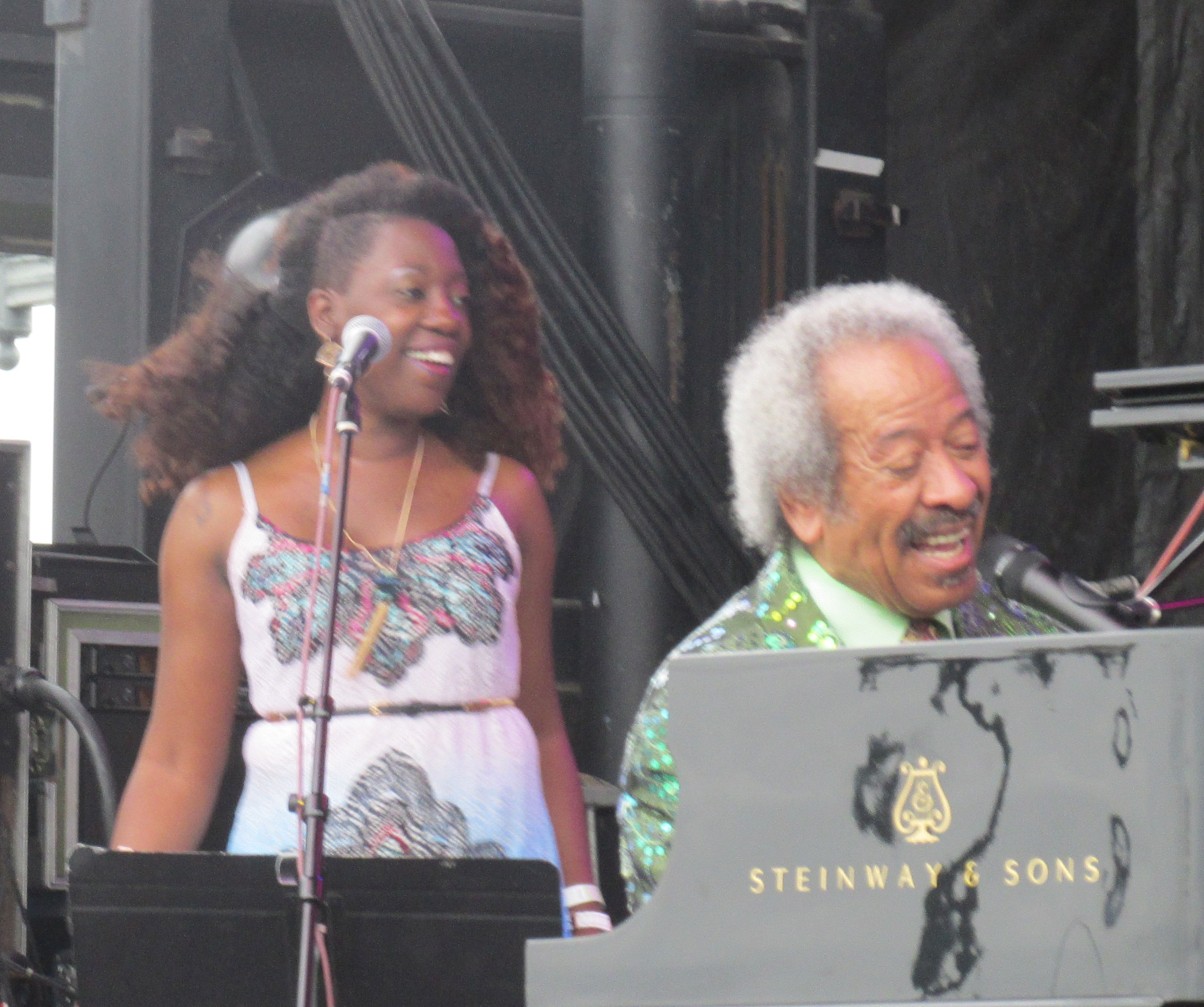
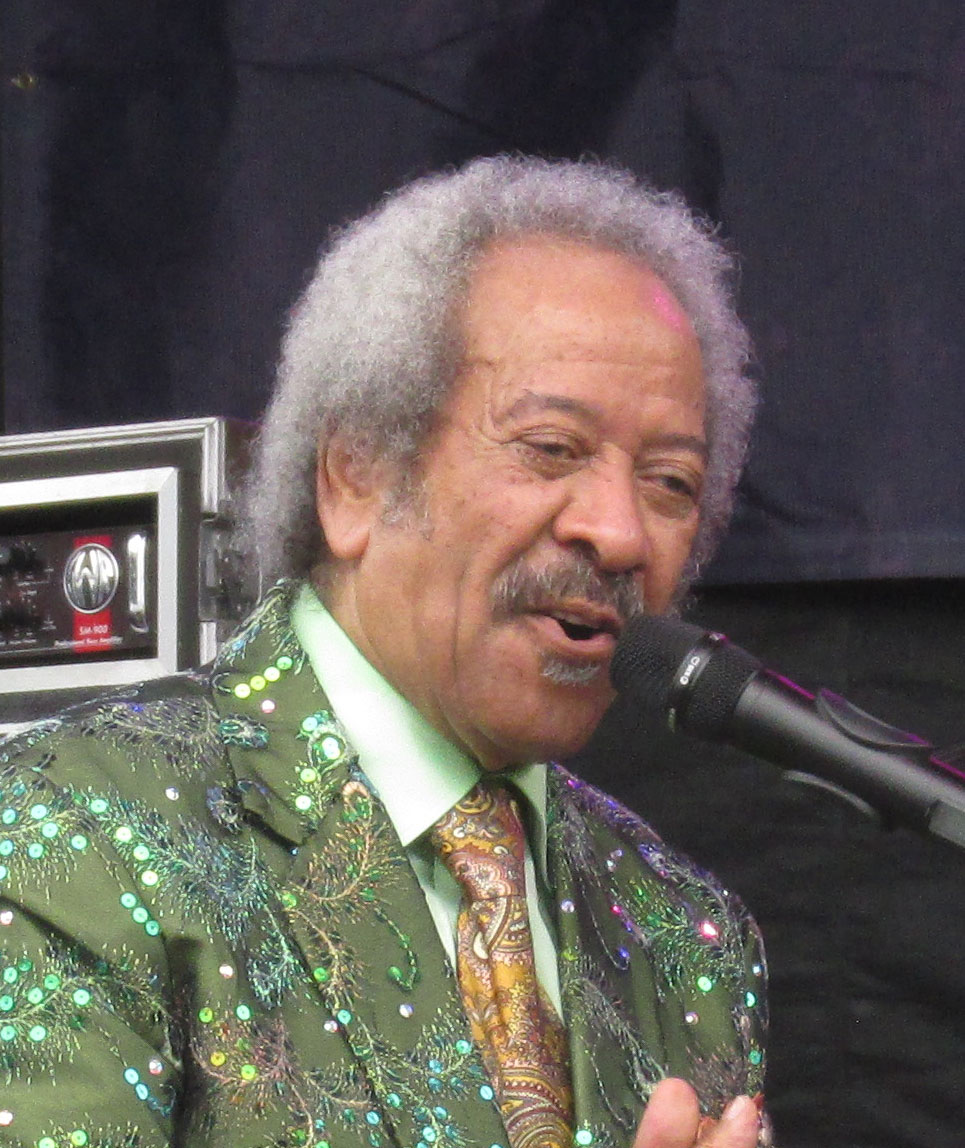
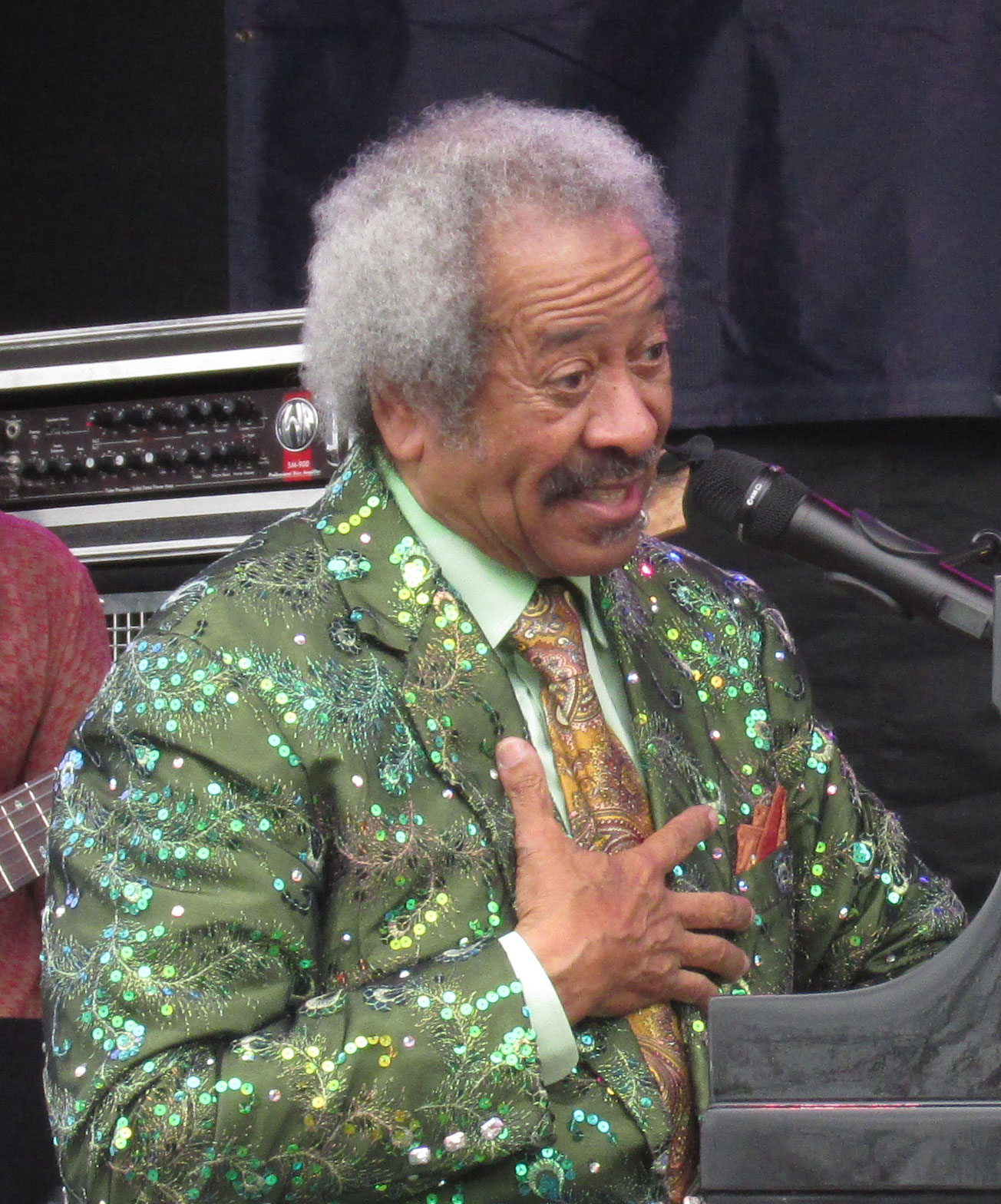
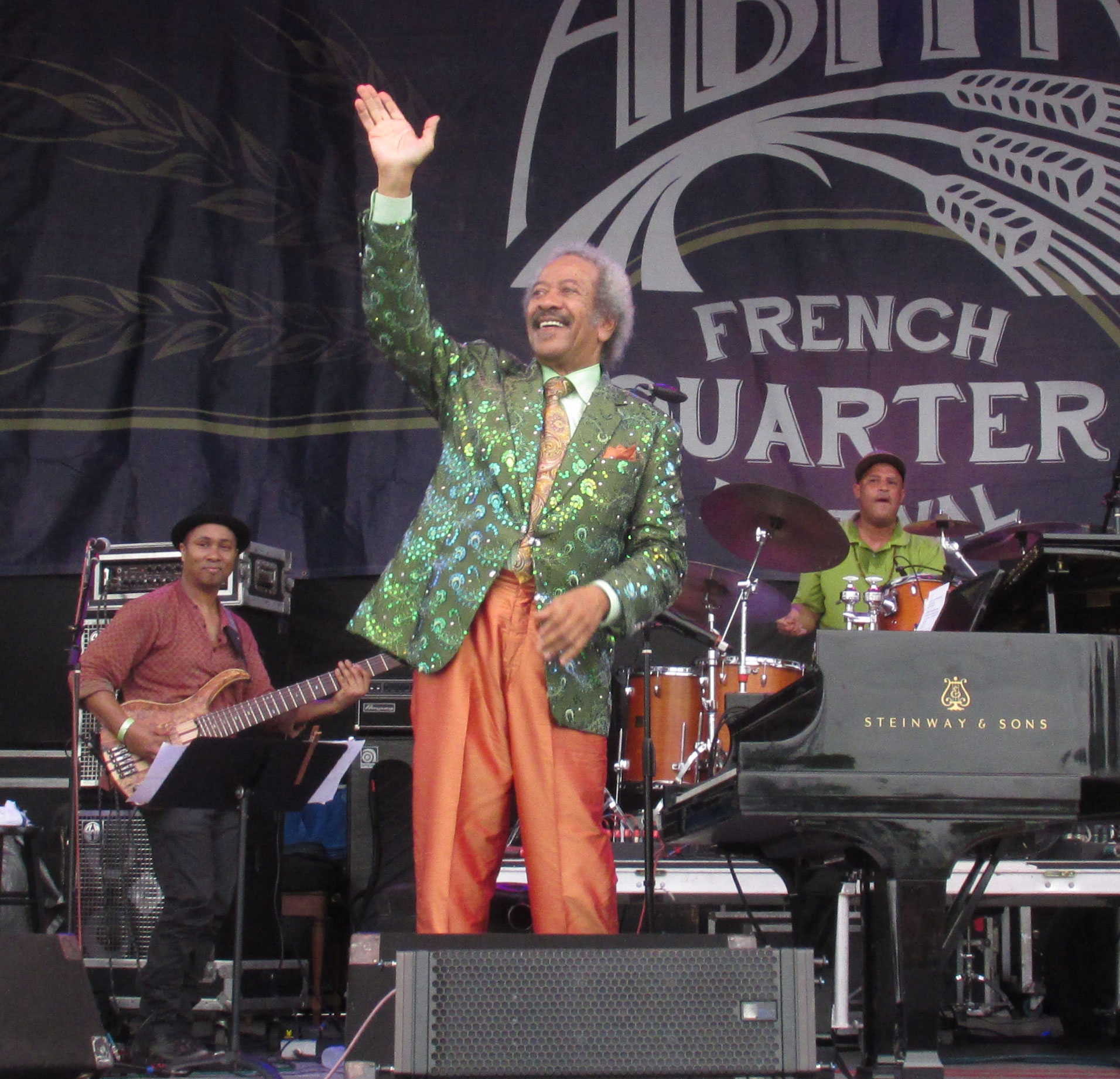
Allen Toussaint died last night (November 9, 2015) while on tour in Spain. There are many fine testimonials to his life and career. I can only say that when I met him this spring at the French Quarter Festival, he seemed so kind and gentle, hardly the megastar that he is (was). Here are some shots I took of him during his French Quarter Festival 2015 performance.

toussaint6
Toussaint with Erica Falls singing back up behind him.

toussaint10

toussaint8 toussaint5 toussaint4 toussaint2toussaint3

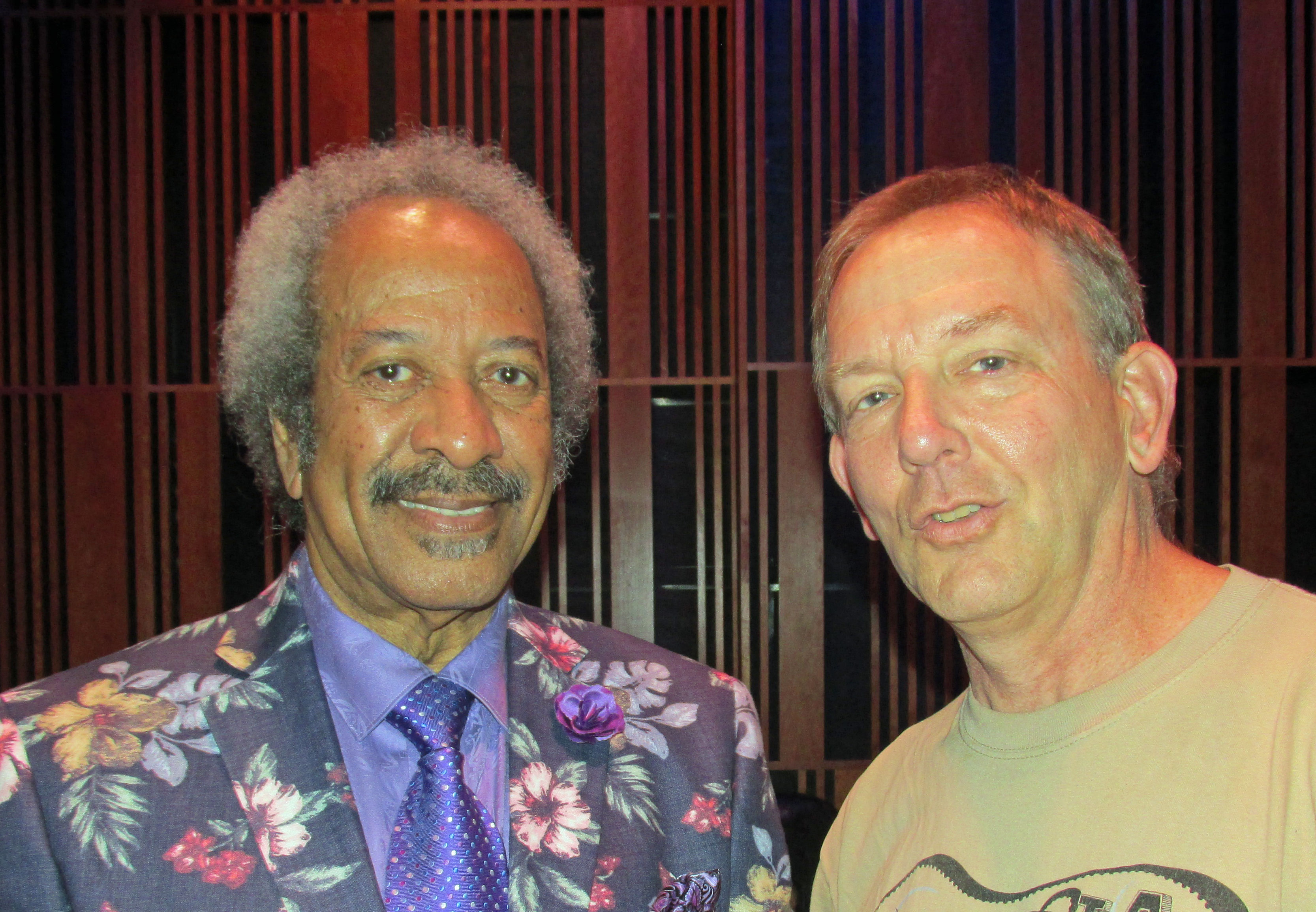
Toussaint generously posed for a photo with me before he took the interview stage at the Old Mint during the French Quarter Festival

Tuts Washington holds solid place in New Orleans piano legacy

The rich creative humus that nurtures New Orleans music is built upon generations of musicians who, mostly in historical anonymity, shared their art and craft with younger musicians. (Here’s the edited version of the radio based on this post.)

If not for one solo recording and a fortuitous film that captured his brilliance and his legacy, Isidore “Tuts” Washington might have easily have been lost to future audiences. But his contribution to New Orleans music will not be forgotten

Isidore
Isidore “Tuts” Washington at New Orleans Jazz and Heritage Festival

Born in 1907, Washington was old enough to follow the early jazz masters perform on the streets of his hometown. Mostly self-taught on the piano, he would whistle the brass band tunes he would hear until he could work them out on the keyboard.

At an early age, he excelled in the boogie woogie, improvisational style of piano common in the New Orleans clubs called barrelhouse. He played with a number of New Orleans bands throughout the 1920’s and 3o’s, including backing up a singer whose missing front teeth got him dubbed “Smiling” Lewis.

In the late 30’s while playing in these clubs, Washington nurtured a young pianist named Roy. He even painted a charcoal mustache on his face to help him get into clubs under age so he could perform with him.  Years later, Roy, otherwise known as Professor Longhair, would talk fondly of his mentor’s clean playing style and the long stretch of his fingers on the keyboards.

Cover of Tuts Washington's only solo recording
Cover of Tuts Washington’s only solo recording

After the war, when the now “Smiley” Lewis began to record, first with DeLuxe Records and then with Imperial Records, Washington found himself at the vanguard of Rhythm & Blues, playing piano on songs like “Turn On Your Volume,” “Tee-Nah-Nah,” and “Gumbo Blues.”  But recordings would be a rare experience for Washington who would not return to the studio again until he was deep into his 70’s.

Washington left the city and was gone for most of the J&M Studio R&B heyday.  When he returned to New Orleans, he played jazz with Papa Celestin and the Clyde Kerr Orchestra and held down regular gigs at places like the Court of Two Sisters Restaurant–solidifying his reputation in the 60’s and 70’s as a New Orleans institution.

He regularly performed at the New Orleans Jazz and Heritage Festival and collapsed from heart failure while performing at the 1984 New Orleans Worlds Fair.

As mentioned above, he was a direct influence on Professor Longhair but also other New Orleans piano players, including James Booker and Allen Toussaint. This is evident when you watch this excerpt from Piano Players Rarely Ever Play Together.  This film by Stevenson Palfi captures Tuts Washington and Professor Longhair near the end of their lives and Toussaint in his mid-40s.

Professor Longhair (top), Allen Toussaint (middle) and Tuts Washington performing Boogie Woogie in Piano Players Rarely Play Together

The film features interviews and historical footage but the most exciting part of the film is the three masters playing pianos all lined up so the camera can catch them in the same shot.  While the YouTube version is muddy, the film has been digitally restored.

If you don’t want to watch the whole film, skip to the end when the filmmaker shows the three playing a boogie woogie tune to its full length. The number (available on Longhair’s anthology) starts with Professor Longhair giving a little coaching, scatting a bit to describe how to avoid cutting in on his master, Tuts Washington.

Hear this amazing artist on my next show, (recording of the show) Monday at 10 a.m.

Professor Longhair “tralla walla” makes us feel fine

This week’s post (and my focus on this week’s radio show) is about the man who sang “we gonna hoola tralla walla malla dalla drink some mellow wine.”

Henry Roeland Byrd, aka Professor Longhair

Henry Roeland Byrd was a tap dancer, card shark, soldier, cook, laborer and general street hustler. He also was one of the greatest New Orleans piano professors of all time – Professor Longhair.

His iconic “Tipitina” inspired the likes of Fats Domino, Allen Toussaint, James Booker, Dr. John and countless others.

Professor Longhair’s style has been described as a rhumba crossed with a blues shuffle.In an interview with Peter Stone Brown not long before he died in 1980, he said:

” I was around a lot of honky-tonk musicians, barrelhouse musicians, blues musicians, and bebop musicians, jazz musicians. I just got a little bit from everybody and used it with what my mother taught me. She played a lot of ragtime music. . . I just mix my ideas up and call it a gumbo. There’s no certain thing at all. It’s just rockin’ rhythm.”

Fess was there at the beginning of the New Orleans Rock and Roll era in New Orleans, cutting his first singles in the J&M Studio (Cosimo Matassa) in 1949.  And in November 1953 with Alvin “Red” Tyler, Lee Allen, Earl Palmer, and Edgar Blanchard backing him up, he recorded “Tipitina” for the first time.

“Girl you hear me calling you. Well you’re three times seven, baby. Knows what you want to do.”

Calibration
Calibration

Born in Bogalusa but raised in New Orleans, Professor Longhair never made the hit parade and never really experienced financial success. By the late 60’s, his career had folded and he was living in poverty. In 1970, Quint Davis and Alison Minor sought him out with the intention of getting him to perform at their fledgling music festival, the New Orleans Jazz and Heritage Festival.

Who they found was a frail, weak man who didn’t seem capable of pounding out his trademark rhythms. But with the help of Davis and Minor, he recovered enough to perform at the second JazzFest in 1971 and demonstrate that, if anything, his playing had gotten better.  His hometown and the world embraced him and his career flourished. Until his death in 1980, he recorded and performed, including at the nightclub created for the purpose of providing him and other aging R&B artists a place to play, named appropriately Tipitina’s.

Join me, won’t you for some Fess and Fess-inspired music this Memorial Day.   Sweeney’s Gumbo YaYa kicks off at 10 a.m. on Monday. Here’s a recording of that show on Mixcloud.

Toussaint infused New Orleans sound into pop music

New Orleans
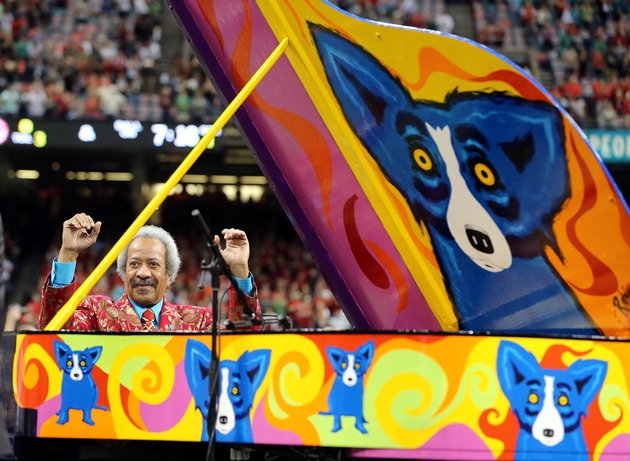
Allen Toussaint plays the National Anthem at the Superdome. Credit: Chuck Cook-USA TODAY Sports

The French Quarter Festival, which showcases local music, could not have scored a better opening headliner this year than with the hometown artist whose creativity has nurtured the New Orleans sound for over a half century. (Listen to the show that complements this post.)

Allen Toussaint was a teenager when he first sat in on Earl King’s band and regularly scored gigs at the legendary Dew Drop Inn.

It wasn’t long before he found his way to the center of the known Rock n’ Roll universe at the time, Cosimo Matassa’s studio, where he laid down piano tracks on recordings by Fats Domino, Huey “Piano” Smith, and Aaron Neville. But it was when he joined Minit Records that his creativity became apparent to the world. Using his parent’s living room as rehearsal space and testing ground for new material, he assembled a parade of hit singles by Jessie Hill, Irma Thomas, Lee Dorsey and this blog’s patron saint, Ernie K-Doe.

Ernie K-Doe best recordings were aided by the songwriting, arranging and producing of Allen Toussaint.

As a keyboard savant, Toussaint could accurately reproduce and synthesize the city’s revered legacy of piano professors, especially the style of Professor Longhair. But as a songwriter and arranger, he was able to weave the full panoply of New Orleans rhythms, vocal traditions and spirit into a clean appealing style for the pop market. In fact, he, along with K-Doe, were responsible for the sole number 1 pop chart hit recorded in New Orleans,  “Mother-in-Law.” (A song written before Toussaint was married and had one.)

Later, he started his own record labels providing a platform for local and national musicians to access the New Orleans sound. With The Meters as his studio house band, Toussaint was a key force behind the New Orleans funk sound that developed in the 70’s. A prolific songwriter, his music has been performed by The Rolling Stones (“Ruler of My Heart”), The Who (“Fortune Teller”), Bonnie Raitt (“What Do You Want the Boy To Do”), Devo (“Working in the Coal Mine”),  Al Hirt (“Java”), The Doors (“Get Out of My Life Woman”),  Jerry Garcia (“I’ll Take a Melody”), Glen Campbell (“Southern Nights”), Robert Palmer (“Sneaky Sally through the Alley”), The Pointer Sisters (“Yes, We Can Can”) and many more.

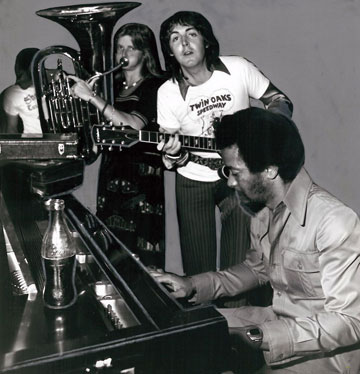
Linda and Paul McCartney performing with Allen Toussaint in his New Orleans studio in 1975.

In 1973, Toussaint had a big hand in producing and performing on Dr. John’s album “In The Right Place.” Two years later, Linda and Paul McCartney moved their entourage to New Orleans to collaborate with Toussaint in his New Orleans studio on their album “Venus and Mars.”

He was inducted into the Rock and Roll Hall of Fame in 1998, the Louisiana Music Hall of Fame in 2009, and the Blues Hall of Fame in 2011. If there’s any question of whether being a senior statesman of New Orleans music has diminished his chops, you need only look as far as his grammy-nominated, post-Katrina collaboration with Elvis Costello, “The River in Reverse,” for evidence that at 77, he still has it.

In addition to being a producer, bandleader, arranger and songwriter, Toussaint is an accomplished pianist and stands with the great New Orleans piano “professors.” Toussaint will take the stage at the French Quarter Festival on April 9 at 3:45 p.m. but you will be able to catch his music on my next show this Monday. (Here’s the recorded show)

James Booker carried the piano tradition forward in his own way

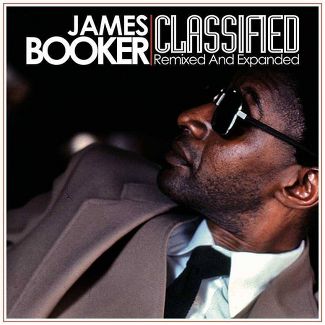
If there is justice in the music world, James Booker would be better known for the genius and artistry of his piano playing.  The fact that his music is still played 30 years after his untimely death in New Orleans offers some hope that justice may ultimately be served.

Classically trained but also taught by Tuts Washington and influenced by Professor Longhair, Booker came of age in the heyday of New Orleans R&B era when Fats Domino, Dave Bartholomew and Huey Smith were rocking the jukebox with singles recorded at Cosimo Matassa’s studio.

Booker got in on the act as a studio musician as well as fronting his own songs with “Doin’ the Hambone” and “Thinkin’ About my Baby.”  His song “Gonzo” charted nationally and his playing style, sometimes described as a nest of spiders on the keyboards, was admired by many, including music lovers in Europe where he spent some time and built a following.

But while Booker was a versatile musician, capable of playing a wide range of styles, including working with Freddie King, Aretha Franklin, Ringo Starr, the Doobie Brothers, Maria Muldaur, and Jerry Garcia, his star never quite rose to the level of his talent and genius. (Check out this sound recording of a rehearsal session with Booker and Garcia.)

It’s a sad but familiar story; he had his issues. Some, in retrospect, have pondered whether he suffered from a mental malady that in our current day might have been more successfully treated by means other than with heroin and alcohol.

He died way too young in the emergency room of Charity Hospital in 1983 at the age of 43.

Booker was able to bring elements of many musical genres together and his interpretations of familiar songs are unique and probably difficult to duplicate given his skill.

Booker’s “absolutely unique style is a polyglot mix of gospel, boogie-woogie, blues, R&B and jazz, all executed with a thrilling virtuosity,” wrote Tom McDermott who is himself an amazing pianist from New Orleans.

When I listen to Booker’s music, I hear shades of the “Spanish Tinge” made famous by Jelly Roll Morton. His hyperactive right hand razmatazz and left hand syncopation are reminiscent of Professor Longhair. And yet, his style builds on those masters rather than replicates.  And he passed the tradition on by tutoring Dr. John and Harry Connick Jr.

As always, its best if you hear for yourself. I’ll be playing from a few of his solo recordings on Monday but if you have time, consider checking out his last recorded performance at the Maple Leaf. He had a regular gig at the Uptown New Orleans bar, often playing to sparse and disinterested audiences. The Booker you see in this video contrasts sharply with the more flamboyant Booker of earlier years. His teeth are fixed, he’s wearing a suit and not wearing his trademark patch with a star on it over his left eye. Here’s a video of that period in his life.

Helping to bring the world’s eye to Booker’s talent is a documentary called the Bayou Marahaja by New Orleans filmmaker Lily Keber.

“Bayou Maharajah explores the life and music of New Orleans piano legend James Booker, the man Dr. John described as “the best black, gay, one-eyed junkie piano genius New Orleans has ever produced.” A brilliant pianist, his eccentricities and showmanship belied a life of struggle, prejudice, and isolation. Illustrated with never-before-seen concert footage, rare personal photos and exclusive interviews, the film paints a portrait of this overlooked genius.”

I have none seen this film; no distributor yet. I’m hoping it can be shown at the Olympia Film Society’s Capitol Theater. But you can check out the trailer and join me in honoring and enjoying his talent. I’ll be spinning some Booker tunes along with my usual mix of New Orleans music this Monday on Sweeney’s Gumbo YaYa.

New Orleans and the piano – A good team.

As part of my ongoing education on New Orleans music, I’ve been reading about the use of the piano in New Orleans music. (Please note: I’m not a real musician but I operate a CD player at home)

While the piano wasn’t invented in New Orleans, several styles of piano playing are derived from the city’s musicians.  So much so that “one can easily claim the piano as the prime choice of innovators in New Orleans music,” according to an article by Tom McDermott who innovates on the piano on a daily basis in New Orleans.

This versatile instrument combines melody and rhythm and makes it possible for every parlor or living room to become a concert hall.

As Jon Cleary, another fine keyboard purveyor of New Orleans music, said, the piano is “a hip little tool because it allows you to reproduce all the elements of what a band would do.”

littlerichard
It was on a piano in the Dew Drop Inn in New Orleans during a recording break that Little Richard connected with his mojo, banging out Tutti Frutti.

What Jelly Roll Morton and others that followed did was translate the sounds of the New Orleans street bands to a piano, delivering their own interpretation to the customers of night clubs and sporting clubs and ultimately to a global audience.

The piano is so important to New Orleans music that a premiere annual event is Piano Night held around the time of the New Orleans Jazz and Heritage Festival.  The host of this event, WWOZ, has created a compendium of videos that explore that New Orleans piano tradition.

Here’s Jon Cleary providing a quick run down of the various piano playing styles. 

My goal is to focus on New Orleans piano players from time to time. Next week’s article will feature the amazing, but often overlooked, James Booker. (I have since added:  Professor LonghairAllen Toussaint, Jon Cleary, and Isidore Tuts Washington).  For my next show though, I’ll offer a wide range of New Orleans piano players.